 Bellingham
 Building Decks for York's Corner of Bellingham
York is one of the quieter, established pockets of Bellingham, with a mix of older single-story homes and newer builds tucked among mature trees. A deck built here has to do more than look good on a sunny afternoon — it has to hold up to the reality of Whatcom County weather: salt-tinged air off Bellingham Bay, long stretches of driving rain, and a moss season that can run most of the year in shaded yards. We build custom decks for York homeowners with that reality in mind from the first sketch to the final board.
A deck that's designed for a dry climate and simply dropped into a Bellingham backyard will show problems within a few seasons — soft spots near the house, rusted fasteners bleeding through the boards, slick green film on the walking surface. A deck designed for this climate, on the other hand, sheds water on purpose, uses hardware that won't corrode, and stays out of the moss's favorite conditions as much as good design allows.
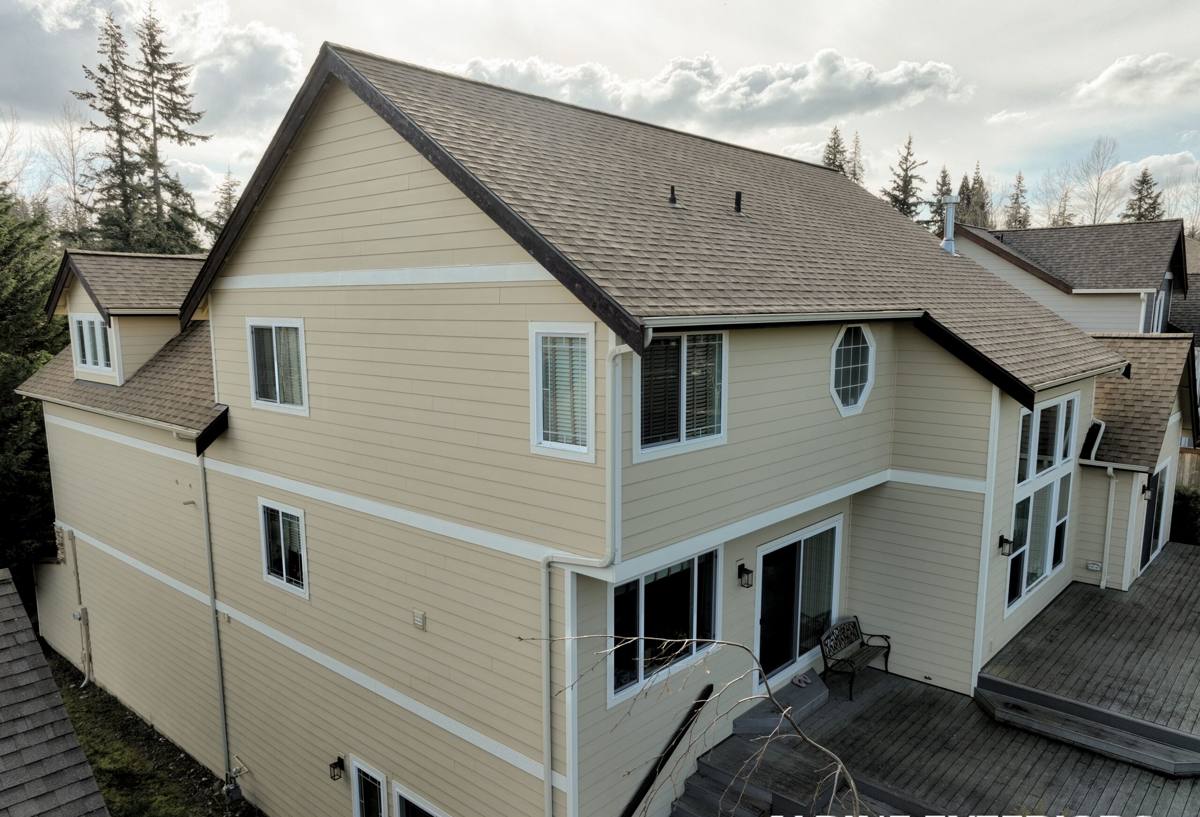
What Local Weather Actually Does to a Deck
Salt Air and Metal Fatigue
Bellingham sits close enough to salt water that airborne salt is a real factor for anything metal outdoors. Standard zinc-coated fasteners and generic hardware can start showing rust streaks within a couple of years in exposed spots. That corrosion isn't just cosmetic — it weakens the connection between your deck boards and the frame underneath, and a corroded ledger bolt or joist hanger is a structural problem, not a cleaning problem.
Driving Rain and Ledger Rot
Rain here doesn't always fall straight down. Wind-driven rain gets pushed sideways into the joint where a deck ledger board attaches to the house, and that's the single most common place we find rot on decks we're asked to repair or replace. Without proper flashing, water works its way behind the ledger, into the rim joist, and sometimes into the wall framing itself.
The Long Moss Season
Shaded yards, mature trees, and months of damp weather add up to a long moss and algae season. Moss on a deck isn't just an eyesore — it holds moisture against the wood surface and turns your deck into a skating rink the first cold, wet morning. Board spacing, surface texture, and sun exposure all factor into how bad this gets and how often you'll be cleaning it off.
Getting the Structure Right From the Ground Up
Footings
Everything above ground depends on what's below it. Footings need to be sized and set deep enough to meet the frost-depth and load requirements in the local building code, and set on solid, well-drained soil — not just poured wherever is convenient. We check ground conditions before we finalize footing placement rather than assuming a standard layout will work on every lot.
Ledger Board Attachment
Because ledger rot is the problem we see most often, this is where we spend extra care. That means proper flashing behind and over the ledger board, a water-resistant barrier between the ledger and the house sheathing, and structural fasteners rated for the connection — not just deck screws. Done right, this joint sheds water instead of trapping it against your siding.
Choosing a Decking Material That Fits the Climate
There's no single "best" decking material — there's the right material for your budget, your maintenance appetite, and how much sun and shade your deck actually gets. Here's how the common options hold up in a wet, mossy climate like ours:
| Material | Upfront Cost | Moisture & Moss Behavior | Maintenance |
|---|---|---|---|
| Pressure-treated lumber | Lowest | Resists rot when properly sealed, but absorbs water and can cup or check if left untreated | Needs periodic sealing/staining; regular moss cleaning in shaded areas |
| Cedar | Mid-range | Naturally rot- and insect-resistant, but still an organic material that will gray and can hold moss without upkeep | Needs periodic oiling or sealing to keep its color and resist moisture |
| Composite / PVC decking | Highest | Doesn't rot or absorb water the way wood does; moss and algae can still grow on the surface film and need washing off | Low — occasional cleaning, no sealing or staining |
Homeowners who want the lowest upfront cost and don't mind a maintenance routine often go with pressure-treated lumber. Homeowners who want a natural look with less long-term movement often choose cedar. Homeowners who want to spend as little time as possible on upkeep, especially on a shaded lot, often land on composite. We'll walk through the honest trade-offs for your specific yard rather than pushing one option.
Fasteners and Hardware: The Detail Most Decks Get Wrong
This is the part of a deck build that's invisible once the project is done — and it's the part that decides whether the deck is still solid in ten years or starting to fail in three. In a salt-air, high-rain climate, we use stainless steel or heavy-duty coated fasteners rated for exterior and coastal-adjacent exposure, along with joist hangers and structural connectors built for the same conditions. Mixing incompatible metals (for example, the wrong fastener with certain composite decking) can actually accelerate corrosion, so matching hardware to the decking and framing material matters as much as the quality of the hardware itself.
Designing for Drainage and Airflow
A deck that can't shed water and get air moving underneath is a deck that stays damp longer than it should, which is exactly what moss and rot need. A few design choices make a real difference:
- Proper board spacing so water drains through instead of pooling on the surface
- Decking run in a direction and pattern that sheds water away from the house
- Adequate clearance and airflow underneath the deck instead of sealing it against the ground
- Gutters or drainage systems positioned so roof runoff isn't dumping directly onto or under the deck
- Sun-aware layout where possible, since shaded corners will always need more attention regardless of material
None of these fixes moss and rot completely — this is Whatcom County, and some maintenance is part of owning an outdoor structure here — but good design cuts down how often you have to deal with it.
Permits and Code for a York Deck Project
Most decks that are attached to the house or built more than about 30 inches above grade require a building permit, along with inspections at key stages like footings and framing. Guardrail height, stair rise and run, and structural connection details are all spelled out in code for good reason — those are the parts of a deck that keep people safe. We handle the permit process as part of the job rather than leaving it for the homeowner to sort out, and we build to pass inspection the first time, not to just get by.
Our Process for a York Deck Build
- Site visit and design conversation — we look at your yard's sun and shade, drainage, soil, and how you actually plan to use the space
- Material and layout decisions — honest trade-offs on decking material, footing plan, and any features like built-in seating or stairs
- Permitting — we prepare and submit what's required and schedule inspections
- Build — footings, framing, ledger flashing, decking, and railings, in that order, with attention to the details that don't show once it's finished
- Final walkthrough — we go over the finished deck with you, including what maintenance it will and won't need
Why a Local Crew Matters
A deck built in York faces different conditions than one built on an open, sunny lot across town — more shade in some yards, different wind exposure depending on where the property sits relative to the water, and often an older home with its own quirks where the deck ties in. A crew that regularly works this side of Bellingham has already seen how ledger connections age on homes like yours, which corners of a yard hold moss the longest, and what actually needs to change from a generic deck plan to hold up here. That's not something you get from a crew that's building the same deck design in a completely different climate.
Keeping Your New Deck in Good Shape
A well-built deck still needs some seasonal attention. A short routine goes a long way toward getting the full lifespan out of it:
- Sweep debris and standing leaves off the surface regularly, especially in fall
- Clean moss and algae off the walking surface before it builds up, particularly in shaded areas
- Check and reseal or restain wood decking on the schedule recommended for your specific product
- Inspect the ledger board area and any visible fasteners once a year for early signs of rust or moisture damage
- Keep gutters and downspouts clear so roof runoff isn't draining onto or under the deck
- Trim back overhanging branches that keep the deck surface shaded and damp longer than necessary
If you're planning a new deck or replacing one that's showing its age, we're happy to come take a look and give you a straightforward, no-pressure estimate — just fill out the form below.