 Bellingham
 Windows on South Hill Face a Different Kind of Weather
South Hill sits up above the flatter parts of Bellingham, and that elevation comes with tradeoffs. Homes here catch more wind off Bellingham Bay, more direct driving rain during winter storms, and more of the low, wet cloud cover that Whatcom County holds onto for months at a time. Add in mature tree cover on many lots, and you get long stretches where window frames stay damp and shaded, which is exactly the environment moss and mildew need to take hold.
Older homes on the hill were often built with single-pane wood windows or early-generation aluminum units that were never designed for this level of sustained moisture exposure. Even newer vinyl windows installed poorly — without the right flashing or sealant detail — can fail years ahead of schedule once wind-driven rain finds a gap. Window replacement here isn't just a cosmetic upgrade; it's a chance to correct how the window meets the wall, which matters more in this climate than almost anywhere else in the state.
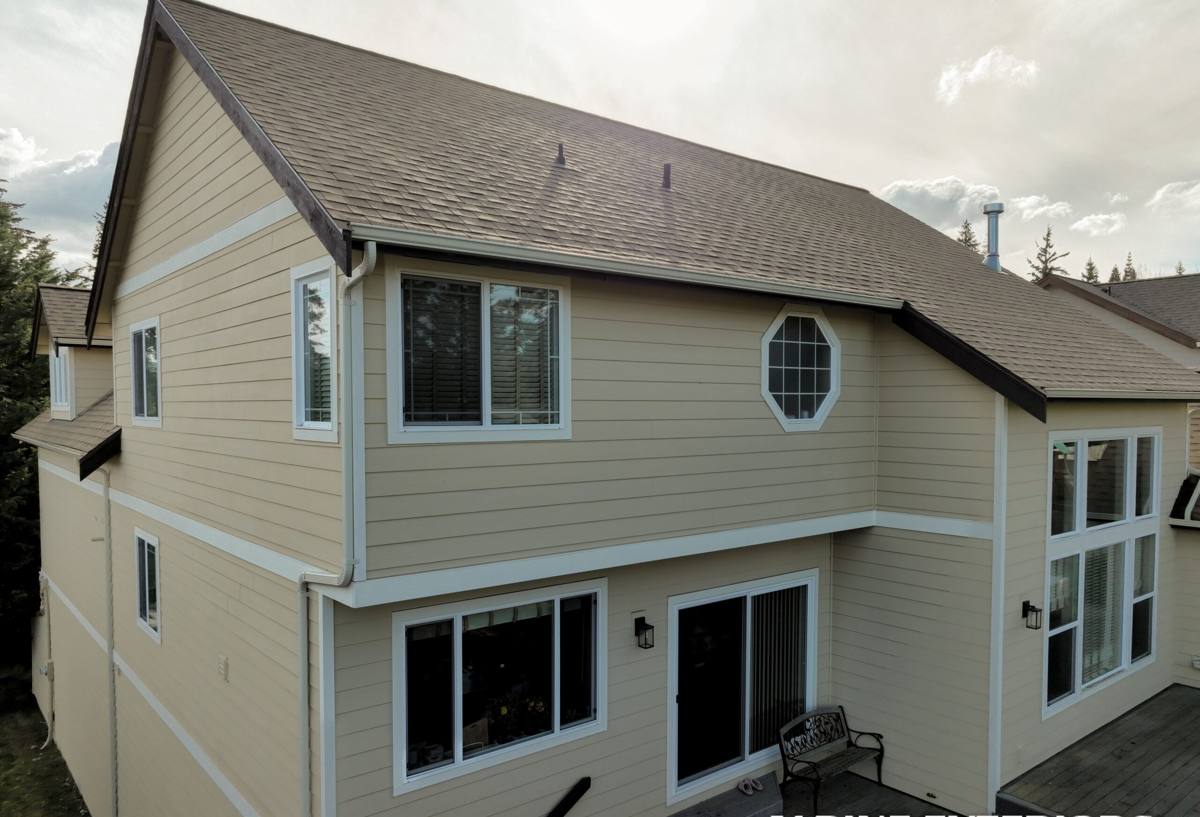
Signs a South Hill Home Needs Window Replacement
Some problems are obvious. Others show up gradually and get blamed on "just an old house" when they're actually a window doing its job poorly. Common signs we see on service calls in this neighborhood include:
- Fogging or a milky haze between the panes of double-pane glass — the seal has failed and moisture is trapped inside
- Soft, discolored, or spongy wood at the sill or bottom corners of the frame
- Visible daylight or a noticeable draft along the frame edge, especially during winter windstorms
- Windows that are difficult to open, close, or lock — often a sign the frame has swollen or shifted
- Moss or black streaking building up on the exterior sill and lower frame faster than on the rest of the siding
- Condensation forming on the inside of the glass regularly, even with normal heating
Any one of these can be a minor fix. Several at once, especially on a home that's had the original windows for 20-plus years, usually points to replacement being the more honest recommendation than another round of caulk and paint.
What a Correct Window Replacement Actually Involves
Swapping a window sounds simple, but the part that determines whether it lasts happens before the new unit ever goes in. On a hillside home exposed to driving rain, the details around the opening matter more than the window itself.
Removal and Inspection
We remove the old window carefully and inspect the rough opening — the framing, sill, and any existing flashing — before assuming it's ready for a new unit. On older South Hill homes, this is often where we find water damage that's been hidden behind trim for years. If the framing is soft or rotted, that gets addressed before anything new goes in. Installing a new window into a damaged opening just guarantees a repeat problem.
Flashing and Moisture Management
This is the step that separates a window that lasts 20-plus years from one that fails in five, and it's the step that matters most given how much rain this area sees. Proper sill pan flashing, correctly lapped water-resistive barrier, and the right sealant at the right layers keep water moving out and away from the wall assembly instead of pooling behind the frame.
Setting, Shimming, and Insulating
The window has to be shimmed level and square, fastened per the manufacturer's instructions, and insulated around the perimeter without over-packing the cavity (which can bow the frame and cause operational problems later). Low-expansion foam or backer rod and sealant, used correctly, seals out air and moisture without distorting the unit.
Exterior and Interior Finish
Trim, caulking, and paint or stain get finished to match the home, and the final seal at the exterior perimeter is checked. On homes with heavy moss growth nearby, we also point out any spots where surrounding trim or siding is already holding moisture, since that's often the real source of a "window" problem.
Choosing the Right Frame Material for This Climate
There's no single "best" window material — the right choice depends on the home's age, style, and how much upkeep the owner wants to take on. For South Hill's damp, shaded conditions, moisture behavior and maintenance burden matter as much as upfront cost.
| Frame Material | Moisture Performance | Maintenance | Typical Fit |
|---|---|---|---|
| Vinyl | Won't rot; handles sustained damp exposure well | Low — no painting or sealing required | Most cost-effective option for full-home replacement |
| Fiberglass | Excellent — very stable in wet, temperature-swinging conditions | Low | Good for homes wanting a longer-term, higher-end upgrade |
| Wood-clad | Good if the exterior cladding is intact; interior wood needs a dry environment | Moderate to high — cladding seams need periodic checking | Homes prioritizing a traditional wood interior look |
| Aluminum | Prone to condensation and thermal transfer in this climate unless thermally broken | Low, but performance tradeoffs | Generally not our first recommendation for full-time Whatcom County exposure |
We'll walk through these options honestly, including where a lower-cost material is genuinely the right call and where spending more up front saves money in maintenance over the next decade.
What Drives Cost on a South Hill Window Job
Every home is different, and we won't quote a number without seeing the job, but the main factors that move price up or down are consistent:
| Factor | Why It Matters |
|---|---|
| Number and size of windows | More glass and larger openings mean more material and labor |
| Frame material and glass package | Fiberglass and upgraded low-E glass cost more than standard vinyl |
| Condition of the existing opening | Hidden rot or damaged framing found during removal adds repair time |
| Access and hillside terrain | Steep lots and second-story access can require additional staging or care |
| Trim and siding work | Matching or replacing exterior trim adds to the scope |
Our Process for South Hill Homeowners
We keep the process straightforward because a confusing quote doesn't help anyone make a good decision.
- On-site assessment — we look at the actual condition of each window and opening, not just the glass, and point out anything moisture-related we find along the way.
- Honest recommendation — full replacement where it's warranted, repair where that's genuinely the better call. We'd rather keep a customer for the next job than oversell this one.
- Clear, itemized quote — material, labor, and any additional repair work broken out separately so there are no surprises.
- Scheduled install — we work efficiently to minimize how long openings are exposed, which matters in a climate where an unplanned rain event can show up on short notice.
- Final walkthrough — every window is checked for smooth operation and a clean, sealed finish before we consider the job done.
Why Local Experience on South Hill Matters
A window installer who mostly works drier inland areas will approach flashing and sealant differently than a crew that installs windows in Bellingham year-round. We know which directions on a hillside lot tend to catch the worst of the winter wind, which older home styles common to this neighborhood need extra attention at the sill, and how much shade and moss pressure a given lot is realistically dealing with. That local familiarity shows up in small decisions — flashing details, sealant choice, timing work around the wetter months — that add years to how long a window replacement actually lasts.
What to Ask Before Hiring a Window Contractor
Whether you call us or someone else, these are worth asking any contractor bidding a window replacement in this area:
- Will you inspect the rough opening for hidden moisture damage before installing, and what happens if you find some?
- What flashing and sealant approach do you use, and why?
- Is the quote itemized by window, material, and labor, or a single lump sum?
- What's the warranty on both the window product and your installation labor — are they the same length?
- Do you carry liability insurance and are your installers direct employees or subcontractors?
- Can you explain, in plain terms, why you're recommending one frame material over another for this specific home?
Comfort and Energy Costs Through a Long Wet Season
Whatcom County winters aren't extreme in temperature, but they're long, damp, and gray, which means heating systems run for months at a stretch. Old, leaky windows lose heat constantly and let cold, damp air creep in around the frame, which shows up as both higher energy bills and a house that just feels harder to keep comfortable. A properly installed, well-sealed replacement window addresses both at once — it's not just about the glass, it's about closing the gaps that let the outside climate in.
If you're seeing fogged glass, drafts, sticking frames, or moss building up around your windows, we're happy to take a look and give you a straight assessment of what's actually needed. Reach out for a free, no-pressure estimate using the form below.