 Bellingham
 New-Construction Windows Are a Different Job Than Replacement
When people hear "new windows," they usually picture a crew popping old sashes out of an existing wall. New-construction window installation is a different task entirely. It happens while a Sudden Valley home is still framed and open — before siding, before trim, sometimes before the house wrap is fully lapped. The window unit itself is different too: it has a nailing flange built into the frame that ties directly into the wall's water-resistive barrier, rather than being an insert that fits inside an old frame.
That difference matters because it's your one real shot to get the water management right. On a replacement job, a contractor is working around what's already there. On new construction, the flashing, the sealant lines, and the way the window integrates with the wall assembly can all be built correctly from scratch — but only if whoever is setting the windows understands the whole wall system, not just how to screw a frame into a rough opening. Get it wrong here and the mistake gets buried under siding and trim, where it won't show up until there's a moisture problem years down the road.
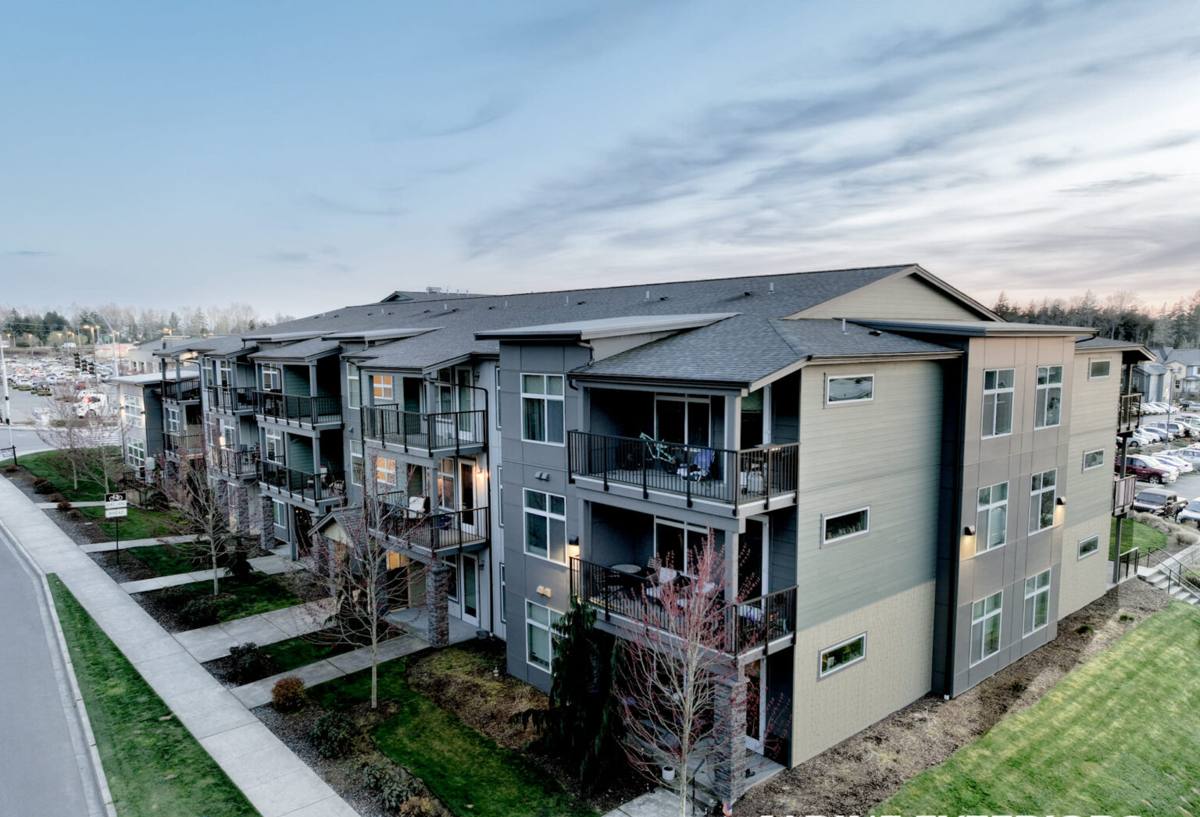
What Sudden Valley's Climate Asks of a Window Install
Sudden Valley sits in a wooded, lake-adjacent setting in Whatcom County, and that setting works against a house in a few specific ways. Tree cover keeps siding and window trim shaded and slow to dry after rain. The same marine-influenced weather that defines the rest of Whatcom County brings driving, wind-pushed rain rather than gentle vertical rainfall, which pushes water sideways into gaps that would stay dry in a calmer climate. And the long stretch of damp, low-light months from fall through spring gives moss and algae a real head start on any surface that stays wet — trim boards, sills, and the caulk lines around windows included.
None of that is exotic. It's the normal cost of building in this part of Washington. But it does mean a window install has less margin for error than it would in a drier region. A sill that's pitched wrong, a flashing lap installed backwards, or a gap sealed with caulk instead of properly lapped materials will hold water against the frame and the surrounding framing for months at a time rather than drying out between storms. In a climate this wet, small installation shortcuts compound instead of forgiving themselves.
What a Correct New-Construction Window Install Involves
Flashing and the Water Path
Every rough opening needs a sill pan that directs any water that gets past the window — and some always will, eventually — back out to the exterior rather than down into the wall cavity. Above the window, the house wrap needs to lap over the top flange in shingle fashion, the same way roof shingles overlap, so water always sheds outward and downward rather than finding a seam to work into. Side flashing ties the sill pan to the head flashing so the whole assembly works as one continuous water path, not a series of separate patches.
Air and Water Sealing at the Frame
The gap between the window frame and the rough opening needs to be sealed for air and insulated, but not sealed so tightly on both the inside and outside that any moisture that does get in has nowhere to escape. We use backer rod and sealant at the exterior face and a separate air seal at the interior, which lets the assembly manage incidental moisture instead of trapping it against wood framing that can't dry out.
Frame Materials: What Holds Up in This Climate
Sudden Valley homes come in a range of window budgets and architectural styles, and the right frame material depends on both. Here's how the common options compare for a wet, shaded, moss-prone site.
| Frame Material | Moisture Behavior | Maintenance | Typical Cost Position |
|---|---|---|---|
| Vinyl | Won't rot; seams and corners need good factory welds to stay watertight long-term | Low — occasional cleaning | Lower |
| Fiberglass | Dimensionally stable in temperature swings; holds paint and finishes well | Low to moderate | Mid to upper |
| Wood-clad | Good performance if the cladding and flashing details are done right, but any breach exposes wood to moisture | Higher — finish and joints need periodic attention | Upper |
| Aluminum | Durable but conducts cold and can condense in our damp winters without a thermal break | Low | Varies |
We don't push homeowners toward one material across the board. We do steer people away from wood-clad units on heavily shaded elevations unless the flashing detail and maintenance plan are both solid, because that's where moss and slow-drying surfaces put the most sustained moisture load on a frame.
Our Process on a Sudden Valley New Build
- Review the plans and window schedule with the builder or homeowner before framing is finished, so rough openings come out correct the first time.
- Verify each rough opening is square, level, and sized to the manufacturer's tolerance before any window goes in.
- Install sill pan flashing and lap the house wrap in the correct sequence at every opening.
- Set the window plumb and level, fasten per the manufacturer's schedule, and seal the frame-to-opening gap correctly on both faces.
- Coordinate the timing with the siding and trim crews so flashing laps end up under the siding, not exposed or reversed.
- Walk every window with the builder or homeowner before we consider the job finished.
Mistakes We Won't Let Slide
Most window problems we get called to look at later trace back to a handful of repeat issues. These are the ones we build our process specifically to avoid:
- Skipping the sill pan and relying on caulk alone to keep water out — caulk fails long before flashing does.
- Lapping house wrap or flashing tape in the wrong order, which channels water into the wall instead of away from it.
- Sealing the interior and exterior of the frame gap equally tight, trapping any moisture that does get in.
- Setting windows before the rough opening has been checked for square, leading to operational problems later.
- Poor coordination between the window crew and the siding crew, leaving flashing laps exposed or backwards under the finish material.
Choosing the Right Windows for a Sudden Valley Home
Beyond frame material, a few things are worth thinking through before you finalize a window order for a new build in this area:
- Look for a solid condensation-resistance rating — shaded, tree-covered lots stay cooler and more humid, which shows up as interior condensation on undersized glass packages.
- Confirm the window's design pressure rating is appropriate for its exposure, especially on elevations that take the brunt of wind-driven rain.
- Check egress requirements for bedroom windows early, since egress-sized units affect framing dimensions.
- If Sudden Valley's community architectural guidelines apply to your build, confirm exterior color and grid patterns before ordering — window returns on custom colors take time.
- Ask what the manufacturer's warranty actually covers — glass seal failure, frame defects, and finish issues are often covered differently.
Why Local Experience in Sudden Valley Matters
A window installed correctly on paper can still underperform if the crew doesn't understand how the site behaves. We've worked enough homes in and around Sudden Valley to know which elevations stay shaded and damp longest through the fall and winter, how tree cover changes drying time after a storm, and how the area's driving rain pattern differs from what a crew coming from a drier inland job might expect. That's not a guess — it's the accumulated pattern of doing this work on this terrain, in this county, season after season.
It also means fewer surprises during the build. We know how to sequence with local builders, what inspection expectations look like in Whatcom County, and how to keep a window schedule moving without holding up the siding or trim crews behind us.
Cost Factors on a New-Construction Window Job
We won't quote a number without seeing the plans, but these are the main variables that move a project's cost up or down:
| Factor | How It Affects Cost |
|---|---|
| Number and size of openings | More and larger windows mean more material and labor hours |
| Frame material | Vinyl runs lower; fiberglass and wood-clad run higher |
| Glass package | Upgraded Low-E coatings and gas fills add cost but improve comfort and condensation resistance |
| Home height and access | Second-story and steep-lot openings take more time and equipment |
| Custom colors or shapes | Non-standard exterior colors or specialty shapes add lead time and cost |
Generally, homeowners should expect new-construction window packages to fall in a broad mid-to-upper range compared to a single replacement window, simply because the whole-house scope and the added flashing and coordination work are more involved — but the specifics depend entirely on your plans.
If you're framing a new build or a major addition in Sudden Valley, we're glad to walk the plans with you and give a straightforward, no-pressure estimate — just fill out the form below.