 Bellingham
 Roofing for York Homes in a Marine Climate
Homes in and around the York neighborhood sit close enough to the Salish Sea and the wet air moving off Bellingham Bay that roofing here plays by different rules than it does inland. Salt-laden air accelerates corrosion on exposed metal fasteners and flashing. Driving rain off winter storms finds every weak seam, nail pop, and undersized flashing detail. And the shade from mature conifers and the marine humidity that never really lets up between October and May combine to grow moss on roofs that would stay clean almost anywhere else in the state. An asphalt shingle roof built for York has to account for all three at once, not just one of them.
That's the difference between a roof that looks fine on installation day and one that's still performing correctly in year twelve. We've worked enough roofs in this part of Whatcom County to know which details actually matter here and which ones are just extra line items.
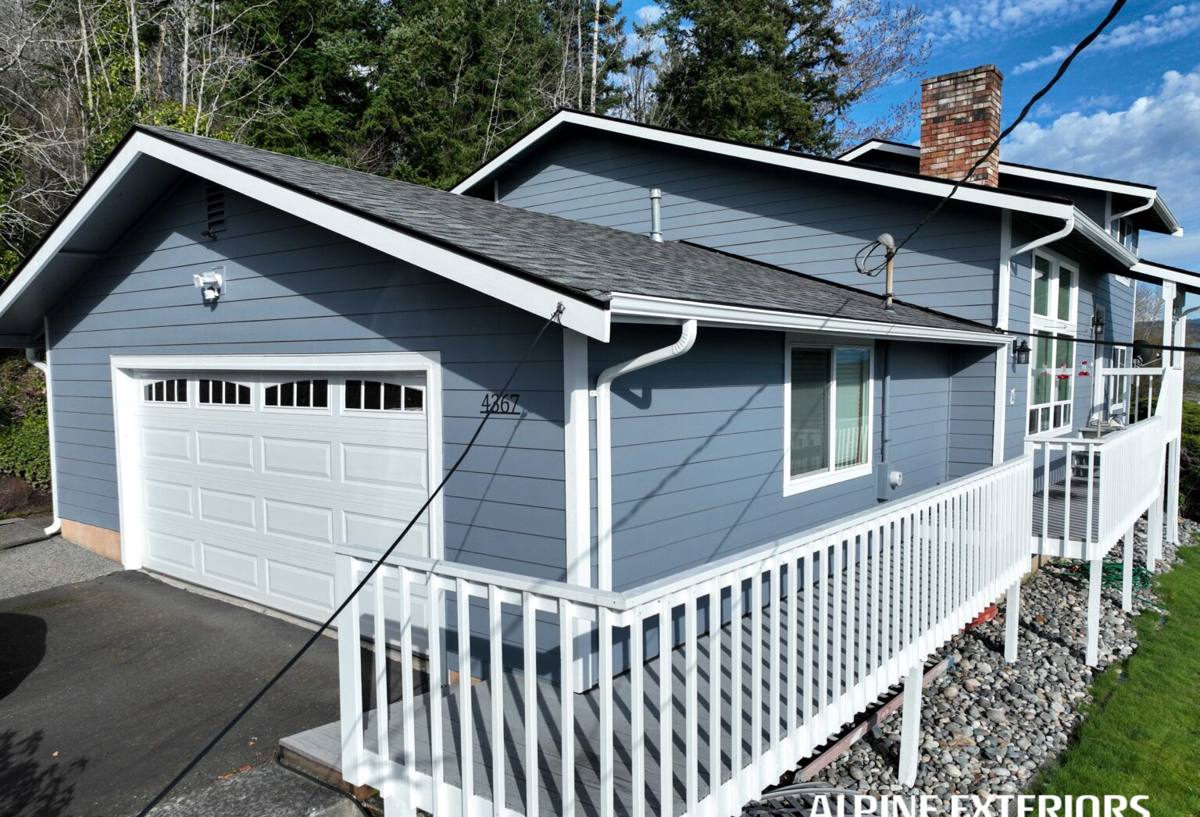
What a York Roof Actually Needs From Its Shingles
Moisture Control, Not Just Water Shedding
Asphalt shingles are designed to shed bulk water downhill, but in a climate like ours the bigger threat is often moisture that sneaks in sideways — wind-driven rain forced up under shingle tabs, or water that backs up behind ice and debris at eaves and valleys. A shingle roof built for this area needs a real underlayment system underneath it, not just the shingles themselves doing all the work.
Standing Up to Sustained Wind and Rain Events
Whatcom County gets its share of fall and winter windstorms off the Strait of Georgia. Shingles rated for higher wind speeds and installed with the correct nailing pattern hold up far better through these events than a roof that was nailed fast and loose to save labor time.
Resisting Moss and Algae Growth
Moss doesn't just sit on top of a roof looking bad — its root structure works into the shingle mat, lifts tabs, and holds moisture against the surface long after the rest of the roof has dried out. Over a few seasons that shortens the life of the shingle significantly. Algae-resistant shingle products and a roof that's designed to dry out between rain events both matter more here than in a drier part of the state.
Signs a York Roof Needs Attention
Most asphalt shingle roofs don't fail all at once — they show warning signs for a season or two first. Homeowners in this area should watch for:
- Dark streaking or green-black patches, especially on north-facing slopes that stay shaded and damp
- Granules collecting in gutters or at downspout outlets
- Shingle tabs that look curled, cupped, or lifted at the edges
- Soft spots or sagging when walked on, which usually points to deck moisture underneath
- Daylight visible through the attic roof deck, or damp insulation near the eaves
- Moss visibly growing between shingle courses, not just on ridge caps
- Rust staining running down from metal flashing or vent boots
Any one of these on its own isn't necessarily an emergency. Several of them together, especially moss combined with granule loss, usually means the roof is past the point where cleaning and minor repair will buy much more time.
What a Correct Installation Actually Involves
A shingle roof is only as good as what's underneath it and how it's fastened down. For this climate, a correct job includes:
- Full tear-off to the deck on most replacements, so we can inspect the sheathing for rot or soft spots before anything new goes down — covering over a compromised deck just hides the problem.
- Ice and water shield at eaves, valleys, and around penetrations, since these are the spots where wind-driven rain and ponding water cause the most damage over time.
- Synthetic underlayment across the full field, which handles incidental moisture far better over the life of the roof than older felt products.
- Correct nailing — six nails per shingle in higher-exposure areas, placed in the manufacturer's nailing zone, not just stapled or gunned in fast.
- New flashing at chimneys, walls, and roof-to-wall transitions rather than reusing old flashing that's already corroding from salt exposure.
- Balanced attic ventilation, intake at the eaves and exhaust at the ridge, so moisture from inside the house doesn't condense against the underside of the new deck.
Skipping any one of these doesn't always show up right away — sometimes it takes a few wet seasons before the shortcut becomes obvious as a leak, a soft spot, or premature moss and shingle failure.
Shingle Options and What Drives Cost
Most York homeowners are choosing between a few tiers of asphalt shingle, and the right choice usually comes down to how long you want the roof to last, your budget, and how exposed the roof is to shade, wind, and moisture.
| Shingle Type | Typical Lifespan | Best Fit For |
|---|---|---|
| 3-Tab / Standard | 15–20 years | Budget-focused projects, secondary structures, less exposed roofs |
| Architectural / Dimensional | 25–30 years | Most primary homes; better wind rating and appearance |
| Algae-Resistant Architectural | 25–30 years, with better long-term appearance | Shaded, damp roof sections prone to moss and algae staining |
| Impact-Rated / Premium | 30+ years | Homeowners prioritizing durability and longer warranty coverage |
Beyond the shingle itself, the biggest cost factors on a real job are roof complexity (number of valleys, penetrations, and roof planes), the condition of the existing deck once we open it up, and how much of the flashing and ventilation system needs to be replaced rather than reused. We'll walk through actual pricing for your roof on-site rather than quoting a number that doesn't reflect your specific home.
How We Handle a Roofing Project in York
1. On-Site Assessment
We walk the roof and the attic, not just look at it from the ground. That's the only way to catch deck issues, ventilation problems, and flashing wear that a drive-by estimate misses.
2. Straightforward Written Proposal
You get a clear scope of work and pricing — what's being torn off, what underlayment and flashing package is included, and what shingle options fit your budget and the roof's exposure.
3. Tear-Off and Deck Inspection
Old roofing comes off down to the deck. Any soft or damaged sheathing gets flagged and replaced before anything else goes down.
4. Underlayment, Flashing, and Ventilation First
All the parts you won't see again once the shingles are on get installed correctly the first time, since these are what actually keep water out long-term.
5. Shingle Installation
Shingles go down with correct nailing patterns and exposure, following manufacturer specifications so the warranty stays valid.
6. Final Walkthrough and Cleanup
We check the finished roof, clean up the job site including a magnetic sweep for stray nails, and go over care going forward.
Why a Crew That Already Works This Area Matters
Roofing crews that mostly work drier, inland regions sometimes underbuild for what Bellingham and the surrounding Whatcom County coastline actually throw at a roof year-round. A crew that's used to working in and around neighborhoods like York already knows which slopes tend to hold moss, which flashing details fail first under sustained coastal rain, and how much ventilation a typical local attic actually needs versus what's written in a generic spec sheet. That familiarity shows up in fewer callbacks and a roof that's built for the conditions it will actually face, not just the conditions on a manufacturer's data sheet written for a national market.
Keeping a New Roof Performing After Installation
A correctly installed shingle roof in this climate still benefits from some basic upkeep:
- Keep gutters and downspouts clear so water isn't backing up under the eaves during heavy rain
- Trim back overhanging branches where practical to reduce shade and debris buildup that feeds moss
- Have the roof looked at after major windstorms, especially if you notice granules in the gutters
- Address small leaks or lifted shingles quickly rather than waiting for a full season to pass
- Avoid pressure washing shingles directly — it strips granules and shortens the roof's life
None of this requires a maintenance contract or constant attention. It's the difference between a roof that quietly does its job for its full rated life and one that needs early repairs because small issues went unaddressed through a couple of wet winters.
Ready to Talk About Your Roof?
If your roof is showing moss, granule loss, or you just want an honest read on how much life it has left, we're happy to take a look and walk you through your options — no pressure, no hard sell. Fill out the form below and we'll get you a straightforward estimate for your York-area home.