 Bellingham
 Roofing Built for Barkley's Weather, Not Just the National Average
Barkley homes sit close enough to the water and the foothills that they take on a mix of weather most manufacturers' installation guides never fully account for: salt-laden air drifting in off Bellingham Bay, long stretches of driving rain, and a moss season that can run nine months out of the year in a shaded yard. An asphalt shingle roof that would hold up fine in a drier inland climate can start showing problems here years ahead of schedule if it wasn't installed with this specific combination of conditions in mind.
This page covers what an asphalt shingle roof actually needs to perform well on a Barkley home — the materials, the installation details that matter most, and the maintenance habits that keep a roof looking and working the way it should for its full service life.
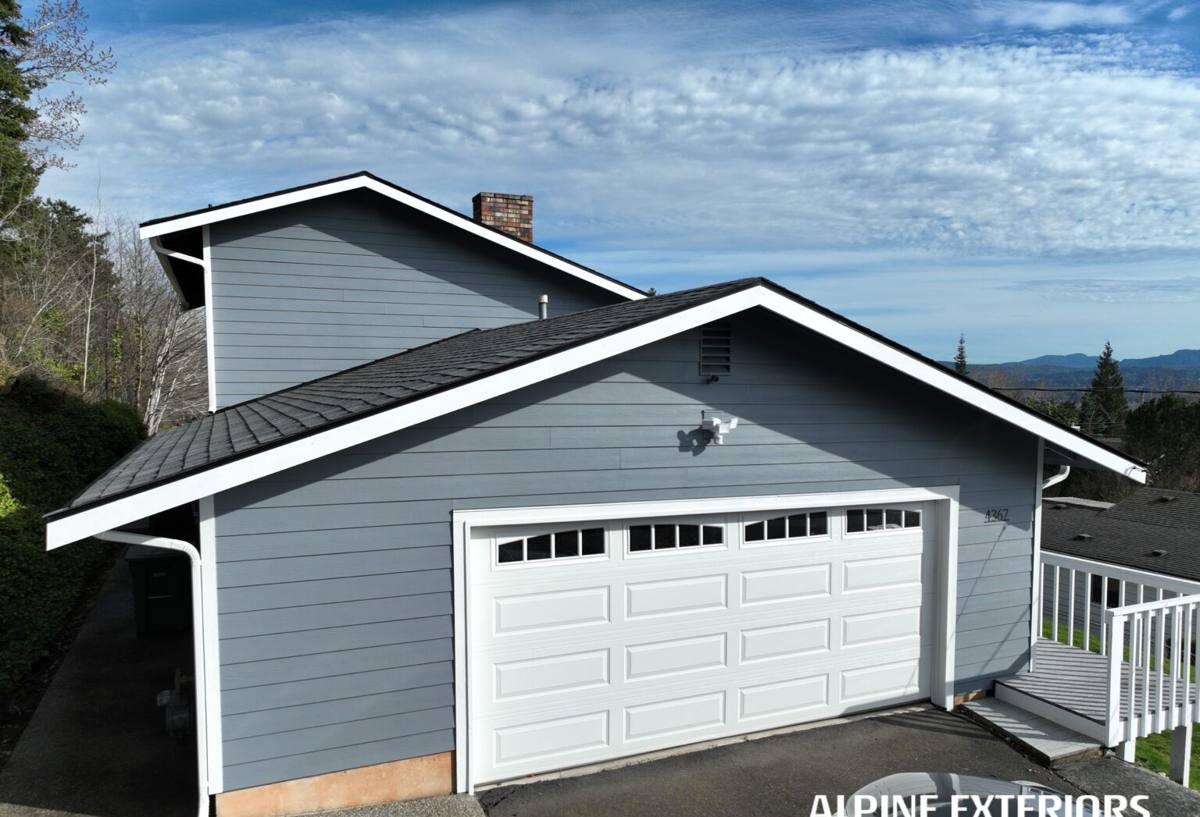
What Whatcom County Weather Does to a Shingle Roof
Salt Air and Metal Fasteners
Homes within a few miles of the water deal with airborne salt that accelerates corrosion on exposed metal — nail heads, flashing, vent stacks, and gutter hardware. On a roof, that corrosion usually shows up first at flashing seams and fastener heads, well before the shingles themselves show their age. Using corrosion-resistant fasteners and properly sealed flashing isn't optional here; it's the difference between a roof that ages evenly and one that develops leaks around the metal long before the shingles wear out.
Driving Rain and Wind-Driven Water
Storms off the Salish Sea don't just drop rain straight down — wind pushes it sideways, under shingle tabs and into any gap in the flashing or underlayment. A roof detailed for a calmer climate, with minimal underlayment coverage or loose flashing laps, will eventually let water find its way in during a sideways rain event, even if it sheds a normal vertical downpour just fine.
Moss and Sustained Moisture
Barkley's mature tree cover and the region's damp, mild winters are close to ideal conditions for moss growth on north-facing and shaded roof slopes. Moss isn't just a cosmetic problem — as it grows, it lifts shingle edges, holds moisture against the roof deck, and creates channels for water to work its way underneath the shingle mat. A roof surface with poor drainage, or shingles installed without adequate spacing and ventilation underneath, will moss up faster and hold that moss longer than one that was detailed correctly.
What a Correct Asphalt Shingle Installation Actually Involves
An asphalt shingle roof is a system, not just a layer of shingles nailed to plywood. Every layer underneath the visible shingles is doing work, and skipping or shortcutting any one of them is where most premature roof failures start.
- Deck inspection and repair — replacing any soft, delaminated, or water-damaged sheathing before anything new goes down
- Ice and water shield at eaves, valleys, and around penetrations, where wind-driven rain and ice damming are most likely to force water backward under the shingles
- Synthetic underlayment across the full deck as a secondary water barrier beneath the shingles
- Drip edge at eaves and rakes to direct water off the roof edge and away from the fascia
- Properly lapped step and counter-flashing at walls, chimneys, and skylights — one of the most common sources of leaks on any re-roof
- Correct nailing pattern and nail placement per the shingle manufacturer's specification, not just "close enough"
- Balanced intake and exhaust ventilation so the attic and roof deck can dry out between wet spells instead of staying damp
Any one of these done wrong will eventually show up as a leak, premature granule loss, or accelerated moss and algae growth — usually years after the crew that cut the corner is gone.
Choosing an Asphalt Shingle for a Barkley Home
Not every asphalt shingle product is built the same way, and the right choice depends on how much of your roof is shaded, how exposed it is to wind, and what you're trying to balance between upfront cost and long-term maintenance.
| Shingle Type | Typical Lifespan | Best Fit | Trade-Offs |
|---|---|---|---|
| 3-tab shingles | 15–20 years | Budget-focused re-roofs, simple rooflines | Lower wind rating, less resistant to moss and algae staining over time |
| Architectural (laminate) shingles | 25–30 years | Most Barkley homes — better wind resistance and a dimensional look | Higher upfront cost than 3-tab |
| Algae-resistant (AR) architectural shingles | 25–30 years | Shaded lots, north-facing slopes, homes with heavy tree cover | Slight cost premium; resistance fades gradually over the shingle's life |
| Impact-resistant (Class 4) shingles | 30+ years | Homeowners prioritizing long-term durability and possible insurance credit | Highest material cost of the four |
For most Barkley properties — especially anything with mature trees nearby or a north-facing slope — an algae-resistant architectural shingle is the practical middle ground: meaningfully better moss and algae resistance than a standard shingle, without stepping all the way up to impact-resistant pricing. We'll walk you through what's actually reasonable for your roof's exposure and slope rather than defaulting to whatever's easiest to sell.
Ventilation: The Part Homeowners Never See
A shingle roof's biggest enemy in this climate often isn't the rain hitting it from outside — it's trapped moisture underneath. An attic that can't breathe properly holds humidity, which condenses on the underside of the roof deck, feeds rot, and encourages moss and algae growth on the shingles above it from the inside out.
Correct ventilation balances intake (usually soffit vents) with exhaust (ridge vents or similar), so air moves continuously through the attic space. On a re-roof, this is the point to fix ventilation that was never adequate in the first place — a problem we see often on older Barkley homes that were built or re-roofed before current ventilation standards were common practice.
Our Process, Start to Finish
- On-site inspection — we look at the existing roof, the attic, and any trouble spots before quoting anything
- Written estimate — a clear scope of work and materials, no vague allowances
- Deck and structure check once tear-off begins, with any needed sheathing repair discussed before we cover it up
- Full underlayment and flashing system installed to spec, not just the shingles
- Shingle installation following manufacturer nailing and exposure requirements
- Ventilation check and correction where the existing setup falls short
- Site cleanup including a magnetic sweep for stray nails
- Final walkthrough so you know exactly what was done and what to watch for going forward
Signs a Barkley Roof Needs Attention
Because moss and moisture damage build slowly, a lot of homeowners don't notice a problem until it's already inside the attic. Worth checking for, or having us check for you:
- Moss or dark streaking concentrated on north-facing or shaded slopes
- Granules collecting in gutters or at downspout outlets
- Shingle edges that look curled, lifted, or cupped
- Soft spots or sagging when walking the roof (best left to a professional)
- Water stains or musty smell in the attic, especially after a windy rainstorm
- Daylight visible through the roof deck from inside the attic
- Rusting or lifted flashing around chimneys, vents, or skylights
Keeping a Shingle Roof Ahead of the Moss Season
Even a well-installed roof benefits from basic upkeep in this climate. Keeping gutters clear so water doesn't back up under the shingle edge, trimming back overhanging branches to let a shaded slope dry out faster, and having moss physically removed (rather than pressure-washed, which can strip granules) before it gets established all extend the life of the roof between installations. We're glad to point out what your specific roof needs during an inspection, even if it's not immediately a repair job.
Why Local Experience on This Roof Type Matters
An asphalt shingle roof installed to a generic national spec will hold up fine in a lot of places. Barkley isn't always one of them. A crew that regularly works roofs in this part of Whatcom County has already seen where the shortcuts show up — the flashing detail that looks fine on day one but rusts within a few winters, the ridge vent that was never enough exhaust for the attic below it, the shaded slope that needed algae-resistant shingles and didn't get them. That experience is what keeps a roof from turning into a repeat service call.
If you'd like a straightforward look at what your roof actually needs — no pressure, no upsell — we're happy to come out, walk the roof, and give you an honest estimate based on what we find.