 Bellingham
 Why Barkley Roofs Age the Way They Do
Barkley sits close enough to Bellingham Bay that salt-laden air is a constant, low-grade stress on every exposed surface of a home, including the roof. Add in the driving, wind-pushed rain that comes off the Salish Sea for months at a stretch, and a moss season that can run from early fall through late spring, and you have a climate that is genuinely harder on roofing than most of the country deals with. None of this means a roof fails fast — it means it fails in specific, predictable ways, and a replacement done without that in mind will underperform no matter how good the shingles look on day one.
As a newer, master-planned neighborhood, Barkley has a lot of homes built within a fairly similar age window, which means a lot of roofs are approaching or past their practical service life around the same time. If your neighbors are starting to talk about re-roofing, it's worth having your own roof looked at rather than waiting for a leak to force the issue.
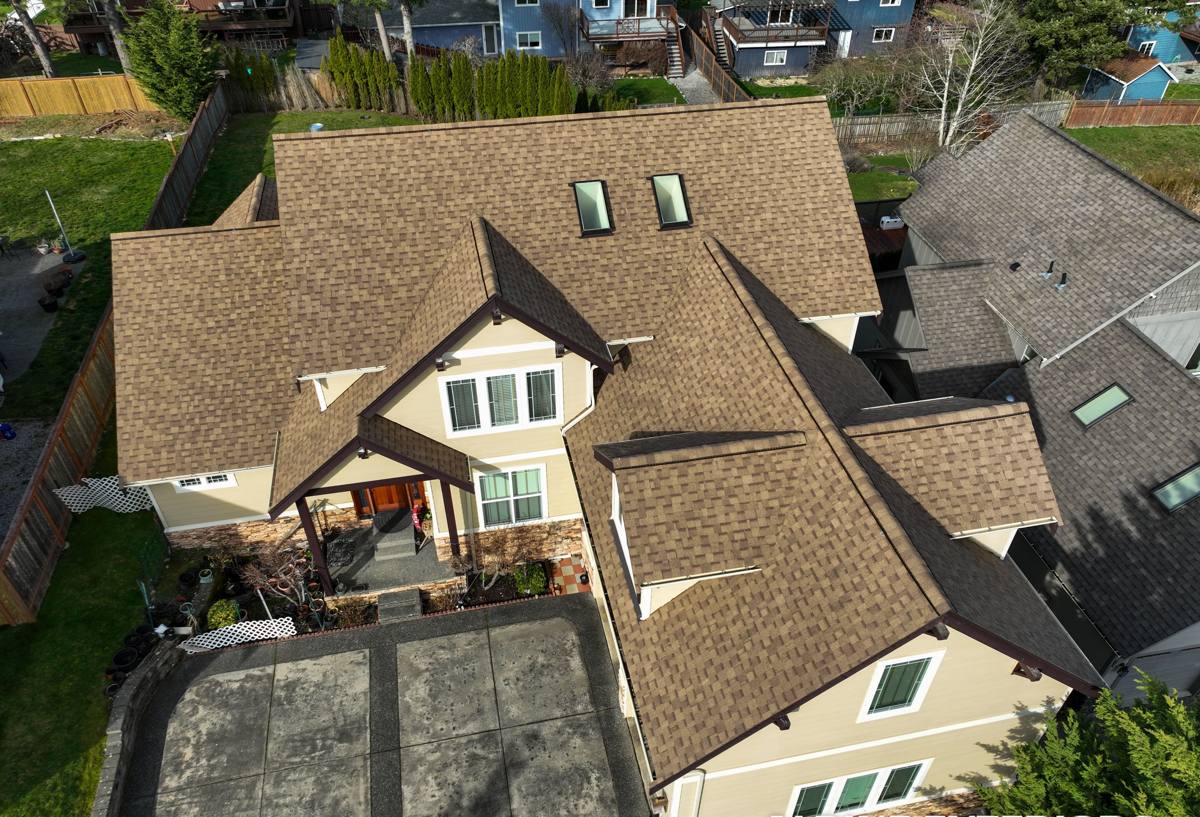
Signs a Barkley Home Needs a Roof Replacement, Not Just a Repair
Repairs make sense when a roof has isolated damage on an otherwise sound system. Replacement makes sense once the underlying material has aged out or the damage is spread across multiple areas. In our experience working Bellingham roofs, these are the signs that tip a home from "repair" to "replace":
- Granule loss heavy enough that you're finding shingle grit in the gutters every time it rains
- Shingles that are cupping, curling at the edges, or cracking when you look closely from the ground
- Dark streaking or thick moss growth returning within a season or two of cleaning
- Soft spots in the decking you can feel when walking the roof, or sagging visible from the street
- Daylight visible through the attic roof boards, or damp insulation and musty smell in the attic
- A roof that's already had two or more patch repairs in the last five years
- Interior ceiling stains that reappear after "fixing" the same spot more than once
One or two of these can often still be addressed with targeted repair. Several at once, especially on a roof already in its second or third decade, usually means repair costs start approaching replacement costs without buying you much extra life.
What a Correct Roof Replacement Actually Involves
A roof replacement is more than swapping old shingles for new ones. In a climate like Bellingham's, the parts you don't see matter as much as the parts you do. A properly done job includes:
Full Tear-Off and Deck Inspection
We remove the old roofing down to the deck rather than layering over it. This lets us actually see the plywood or OSB underneath, which is where moisture damage from years of driving rain tends to show up first — especially around valleys, chimneys, and old flashing points. Any soft or delaminated decking gets replaced before anything new goes down; roofing over a compromised deck just hides the problem.
Underlayment Built for Wet, Wind-Driven Weather
Standard felt underlayment is a minimum, not a standard, for this region. We use synthetic underlayment for its tear resistance and water shedding, and we install ice-and-water shield membrane at eaves, valleys, and roof penetrations — the exact spots where wind-driven rain gets pushed backward under shingles instead of running straight off.
Flashing Done Right
Flashing around chimneys, skylights, vent pipes, and roof-to-wall transitions is where most leaks actually originate, not the field of the roof itself. We replace flashing during a full re-roof rather than reusing old pieces, since bent or corroded flashing is a common source of slow leaks that go unnoticed for years.
Attic Ventilation
Proper intake and exhaust ventilation keeps moisture from building up under the roof deck, which matters enormously in a humid coastal climate. Poor ventilation shortens shingle life from underneath, even when the shingles themselves are rated for 25 or 30 years.
Roofing Material Options for the Barkley Climate
There's no single "best" roofing material — the right choice depends on your budget, your home's style, and how much long-term maintenance you're willing to take on. Here's how the common options stack up for Whatcom County conditions:
| Material | Typical Lifespan | How It Handles Salt Air & Rain | Moss Resistance |
|---|---|---|---|
| Architectural asphalt shingle | 25–30 years | Good with proper underlayment and flashing; most common choice locally | Moderate — benefits from zinc/copper strips and periodic cleaning |
| Standing seam metal | 40–50+ years | Excellent water shedding on steep pitches; needs a coastal-rated coating | Very good — moss struggles to hold on smooth metal |
| Cedar shake | 20–30 years with upkeep | Attractive but absorbs moisture; needs regular maintenance in a wet climate | Low — retains moisture that feeds moss and rot without diligent upkeep |
| Synthetic/composite shingle | 30–50 years | Doesn't absorb water like wood; consistent performance | Good — non-organic surface gives moss less to grip |
We install architectural asphalt and standing seam metal most often in this neighborhood because they offer the best balance of upfront cost and long-term performance against this region's rain and moss pressure. Cedar shake can still be the right call for homes where the look matters most, but we're upfront that it asks more of the homeowner in ongoing maintenance — that's a trade-off, not a defect, and it's one you should walk into with clear eyes.
Our Roof Replacement Process
- On-site inspection and estimate. We walk the roof (weather permitting) and inspect the attic, documenting deck condition, flashing points, and ventilation before quoting anything.
- Written scope and material selection. You get a clear breakdown of materials, labor, and any deck repair contingencies, so there are no surprise line items mid-project.
- Permitting. Roof replacements in Bellingham typically require a permit; we handle that paperwork as part of the job.
- Tear-off and disposal. Old roofing comes off, the deck is inspected and repaired as needed, and debris is hauled off site.
- Underlayment, flashing, and ventilation install. This is the stage that determines how the roof performs in year ten, not just year one.
- New roofing installation. Installed to manufacturer specification, which is also what keeps the material warranty valid.
- Final walkthrough. We review the finished roof with you, including gutters and any related flashing, before calling the job done.
What Affects Roof Replacement Cost in Barkley
Every roof is different, and we don't publish blanket pricing because roof size, pitch, and condition change the numbers too much to make a flat rate honest. That said, these are the factors that most commonly move the price up or down:
| Factor | Why It Matters |
|---|---|
| Roof size and number of stories | More square footage and harder access both add labor time |
| Roof pitch and complexity | Steep roofs and roofs with multiple valleys, dormers, or hips take longer to flash correctly |
| Deck condition | Rotted or soft decking found during tear-off adds material and labor not visible in an initial estimate |
| Material choice | Asphalt, metal, cedar, and synthetic products vary significantly in material cost per square |
| Layers of existing roofing | Removing multiple old layers takes more time and disposal cost than a single-layer tear-off |
| Ventilation and flashing upgrades | Bringing older ventilation up to current standards is worth the added cost for long-term performance |
We'll never quote a full roof replacement over the phone without seeing the roof and attic — anyone who does is guessing, and guesses on a job this size tend to turn into change orders later.
Why Ventilation and Moisture Control Get Missed
It's common for older roofs in this region to have been installed with minimal attic ventilation, because it wasn't always prioritized the way it is now. The problem doesn't show up as a leak — it shows up as premature shingle failure from underneath, mildew smell in the attic, or ice damming in cold snaps. When we replace a roof, checking and correcting intake and exhaust balance is a standard part of the scope, not an upsell. It's one of the cheapest things to fix during a re-roof and one of the most expensive things to fix after the fact.
Why a Crew That Works Barkley Regularly Makes a Difference
Roofing crews that work Whatcom County day in and day out develop a feel for how local conditions actually behave — which roof orientations collect the most moss, which flashing details tend to fail first in a marine climate, and how much ice-and-water shield is genuinely worth installing versus overkill. That local pattern recognition is hard to get from a crew that mostly works drier, inland climates and treats every job the same way. It shows up in small decisions — how valleys are detailed, how much overlap goes into underlayment at the eaves — that you won't notice until years later, when the roof either handles a heavy winter storm off the Sound or doesn't.
Keeping a New Roof Performing Long-Term
A correctly installed roof still benefits from basic upkeep, especially in a climate that grows moss year-round. A simple annual routine goes a long way:
- Clear gutters and downspouts at least twice a year, more often under overhanging trees
- Have moss and debris removed before it builds up thick enough to hold moisture against the shingles
- Check attic ventilation isn't blocked by insulation or storage after any attic work
- Look at flashing around chimneys and vents after major windstorms
- Trim back branches that overhang the roofline to reduce shade, debris, and moss growth
If you're weighing a roof replacement for a home in Barkley, we're happy to take a look and give you a straight, no-pressure estimate — no obligation, and no scare tactics about a roof that still has good years left in it. Use the form below to get started.