 Bellingham
 Why Birch Bay Roofs Wear Differently Than Roofs Inland
Birch Bay sits right on the water, and that changes what a roof has to deal with day to day. Homes a few miles inland in Bellingham or east toward the county line don't get the same steady exposure to salt-laden air coming off the bay, and they don't sit under the same shade-and-moisture pattern that keeps north-facing slopes damp for days after a storm. If you own a home in Birch Bay, your roof is working harder than a roof in a drier, more sheltered part of Whatcom County, even if both roofs are the same age and the same material.
Three things drive most of the roof problems we see out here: salt air corroding metal components faster than manufacturers plan for, wind-driven rain that gets pushed sideways under poorly sealed edges and flashings, and a moss season that runs longer than most homeowners expect. None of these are dramatic on their own. Together, over ten or fifteen years, they're why so many roofs in this area fail early at the details rather than in the field of the roof itself.
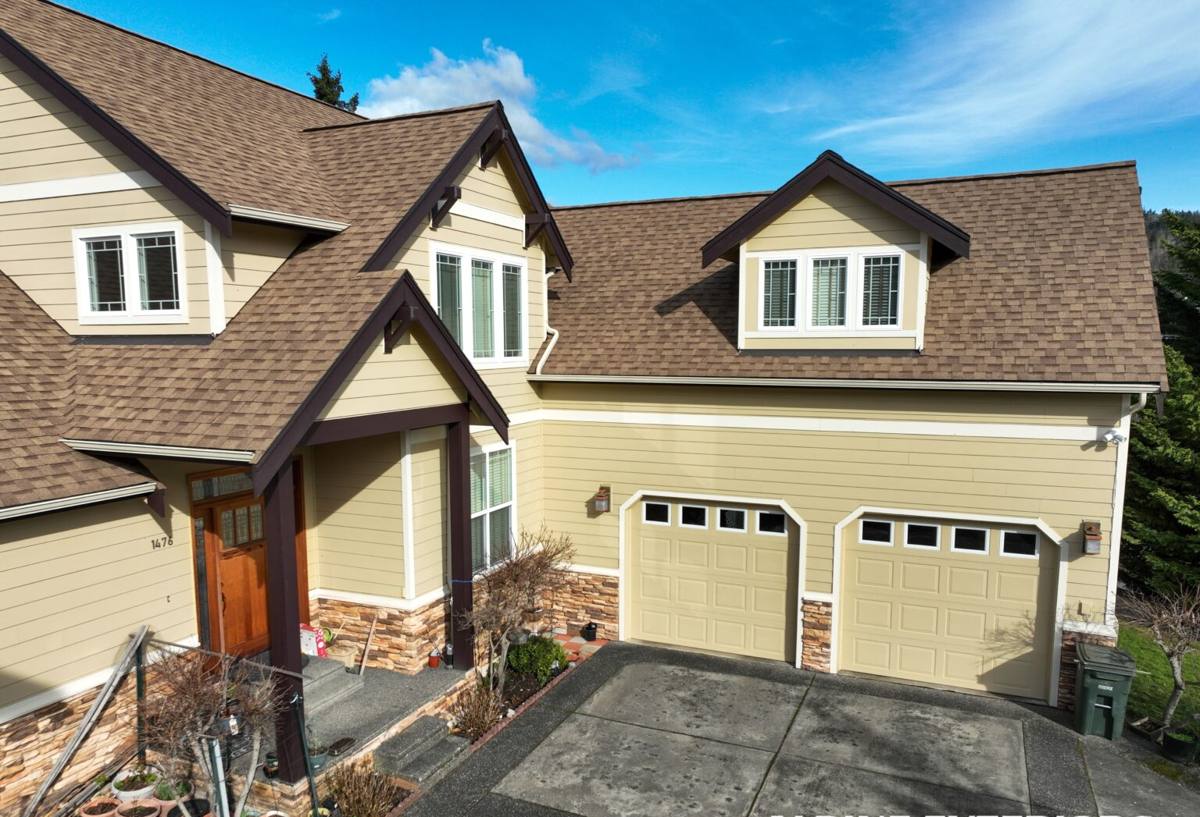
What "Correct" Looks Like for a New Roof Here
A new roof installation in Birch Bay isn't just about laying shingles or panels in straight rows. The parts of the job that actually determine how long the roof lasts are the parts you can't see once it's finished: the underlayment, the flashing, the fastener choice, and the ventilation. Get those wrong and it doesn't matter how good the shingles look from the street — you'll be dealing with leaks, rot, or premature corrosion well before the material's rated lifespan is up.
Underlayment and Water Management
Given how much wind-driven rain this area sees, we treat underlayment as a real second line of defense, not a formality. That means synthetic underlayment rated for high wind exposure, and self-adhered ice-and-water membrane at the eaves, valleys, and any low-slope transitions where water tends to back up or sit. On a roof that's going to take rain from multiple directions over its life, this layer matters as much as the visible roofing material.
Flashing and Fasteners
Salt air is hard on unprotected or lower-grade metal. We spec flashing, fasteners, and any exposed metal components for corrosion resistance rather than defaulting to whatever's cheapest, because a roof near the water will expose weak metal choices in a fraction of the time an inland roof would. Every penetration — vent pipes, chimneys, skylights — gets flashed and sealed as its own small project, not an afterthought at the end of the day.
Ventilation and Moss Resistance
A long moss season means more sustained moisture sitting on the roof surface, especially on shaded or north-facing slopes. Proper attic ventilation keeps the underside of the deck drier and reduces the temperature swings that accelerate material breakdown, while algae- and moss-resistant shingle or panel options (where the homeowner wants that upgrade) cut down on how often the roof needs cleaning or treatment to stay ahead of growth.
Our Installation Process
We run the same disciplined process on every roof, adjusted for the specifics of the home and the site conditions in Birch Bay.
- On-site inspection and measurement. We walk the existing roof, check the attic for ventilation and moisture issues, and measure for an accurate material order — no guessing, no relying on satellite measurements alone.
- Written estimate with real options. You get a clear breakdown of material choices, what each one costs, and the honest trade-offs between them — not a single take-it-or-leave-it number.
- Tear-off and deck inspection. Once the old roofing is off, we inspect the deck for soft spots, rot, or damage before anything new goes down. Any deck repairs are flagged and priced before we cover them up, not discovered later as a surprise.
- Underlayment and flashing installation. This is where the roof's real durability gets built, as covered above — ice-and-water membrane at vulnerable points, corrosion-resistant flashing at every penetration and transition.
- Roofing material installation. Installed to manufacturer specification, with attention to nailing patterns and exposure that matter more in high-wind coastal conditions than they do further inland.
- Ventilation check and final walkthrough. We confirm intake and exhaust ventilation is balanced, clean the site, and walk the finished roof with you before calling the job done.
Roofing Material Options for a Coastal Bellingham Home
There's no single "best" roofing material for Birch Bay — the right choice depends on your budget, how long you plan to stay in the home, and how much maintenance you want to take on. Here's how the common options stack up against the salt air, wind, and moss conditions specific to this area.
| Material | How It Handles Salt Air & Rain | Moss Resistance | Maintenance Level |
|---|---|---|---|
| Architectural asphalt shingles | Good, with corrosion-resistant flashing and fasteners | Better with algae-resistant granules | Low to moderate |
| Standing seam metal | Excellent when finish and fasteners are marine-rated | Very good — sheds moisture quickly | Low |
| Composite/synthetic shingles | Good — resists moisture absorption well | Good | Low |
| Cedar shake | Requires diligent maintenance in this climate | Poor without regular treatment | High |
We don't install cedar shake as part of our standard offering. In a climate with this much sustained moisture and moss pressure, shake requires a maintenance commitment — regular treatment, cleaning, and eventual replacement of individual shakes — that most homeowners underestimate when they're comparing upfront costs. We'd rather steer you toward a material that holds up with less upkeep than sell you something that looks good on day one and becomes a recurring project.
What Drives the Cost of a New Roof in Birch Bay
Every roof is priced from an actual on-site measurement and inspection, but a few factors consistently move the number up or down:
| Factor | Why It Matters Here |
|---|---|
| Roof size and pitch | More surface area and steeper pitches mean more material and labor time |
| Number of penetrations | Each vent, chimney, and skylight needs individual flashing — more penetrations means more detail work |
| Deck condition | Rot or soft spots found during tear-off require repair before new roofing goes down |
| Material choice | Asphalt, composite, and metal have different material and installation costs |
| Ventilation upgrades | Adding or correcting ventilation adds labor but reduces long-term moisture problems |
| Site access | Difficult access, steep lots, or limited staging space can add time |
As a rough range, most full roof replacements on a typical Birch Bay home run into the five figures, with the final number shaped heavily by size, material, and what we find once tear-off starts. We'd rather give you an honest estimate from an actual inspection than a number that doesn't hold up once we're on the roof.
Signs Your Roof May Need Replacing, Not Repairing
- Shingles that are cupping, curling, or missing granules across large sections of the roof
- Persistent moss growth that returns quickly after cleaning
- Soft or spongy spots on the roof deck, felt when walking it
- Daylight visible through the attic roof boards
- Water stains on ceilings or in the attic that reappear after rain
- Flashing that's rusted, lifted, or separating from the roof surface
- A roof that's approaching or past the manufacturer's expected service life for its material
- Rising energy bills tied to poor attic ventilation or insulation gaps at the roofline
If you're only seeing one or two of these and the roof is otherwise in reasonable shape, a repair may be the more sensible move. We'll tell you that plainly if that's what an inspection shows — we don't push a full replacement on a roof that doesn't need one.
Why It Matters to Hire a Crew That Already Works Birch Bay
Roofing crews that mostly work drier, more sheltered parts of Whatcom County don't always spec materials or flashing details for what a Birch Bay roof actually faces. A crew that already works this stretch of coastline knows to upgrade fastener and flashing corrosion resistance as standard practice, not as an optional add-on, and knows which slopes on a typical local roof design tend to hold moss longest and need extra ventilation attention. That local pattern recognition is the difference between a roof that's built for its actual environment and one that's built to a generic spec and happens to be located near the water.
We also know the practical side of working in this area — permitting through Whatcom County, typical weather windows for tear-off and installation, and how to sequence a job so the roof deck isn't left exposed longer than necessary during an unpredictable stretch of Pacific Northwest weather.
Warranty and What It Actually Covers
A new roof typically comes with two separate types of coverage, and it's worth understanding the difference before you sign anything:
- Manufacturer's material warranty — covers defects in the roofing material itself, terms vary by product and manufacturer
- Workmanship warranty — covers the quality of the installation, which is where most real-world leaks and failures actually originate
We'll walk you through exactly what's covered, for how long, and what would void either warranty (like skipping recommended ventilation or maintenance), so there are no surprises later.
Get a Straight Answer on Your Roof
If you're weighing a repair against a full replacement, or you just want an honest read on how much life your current roof has left, we're happy to take a look. Reach out for a free, no-pressure estimate — we'll walk the roof, tell you what we actually see, and give you clear options with real numbers, no pressure either way.