 Bellingham
 Why Birchwood Decks Wear Out Faster Than the Brochure Says
Birchwood sits close enough to Bellingham Bay and the Puget Sound marine layer that decks here deal with a combination most inland homes never see: salt-laden air, long stretches of driving rain off the water, and a moss season that can run from October well into May. None of that is unusual for Whatcom County, but it adds up on a structure that's bolted to your house and exposed to the weather every day of the year.
Salt air accelerates corrosion on fasteners, flashing, and any exposed metal hardware. Driving rain doesn't just fall straight down — wind pushes it sideways under railings, into ledger board connections, and along the underside of decking, which is exactly where builders don't always expect water to go. And moss doesn't just look bad; it holds moisture against wood and composite surfaces for weeks at a time, which is a big part of why we see rot and soft spots show up years before they should.
None of this means a deck in Birchwood is doomed. It means the repair work has to account for how water actually moves through the structure in this climate, not just patch what's visible on top.
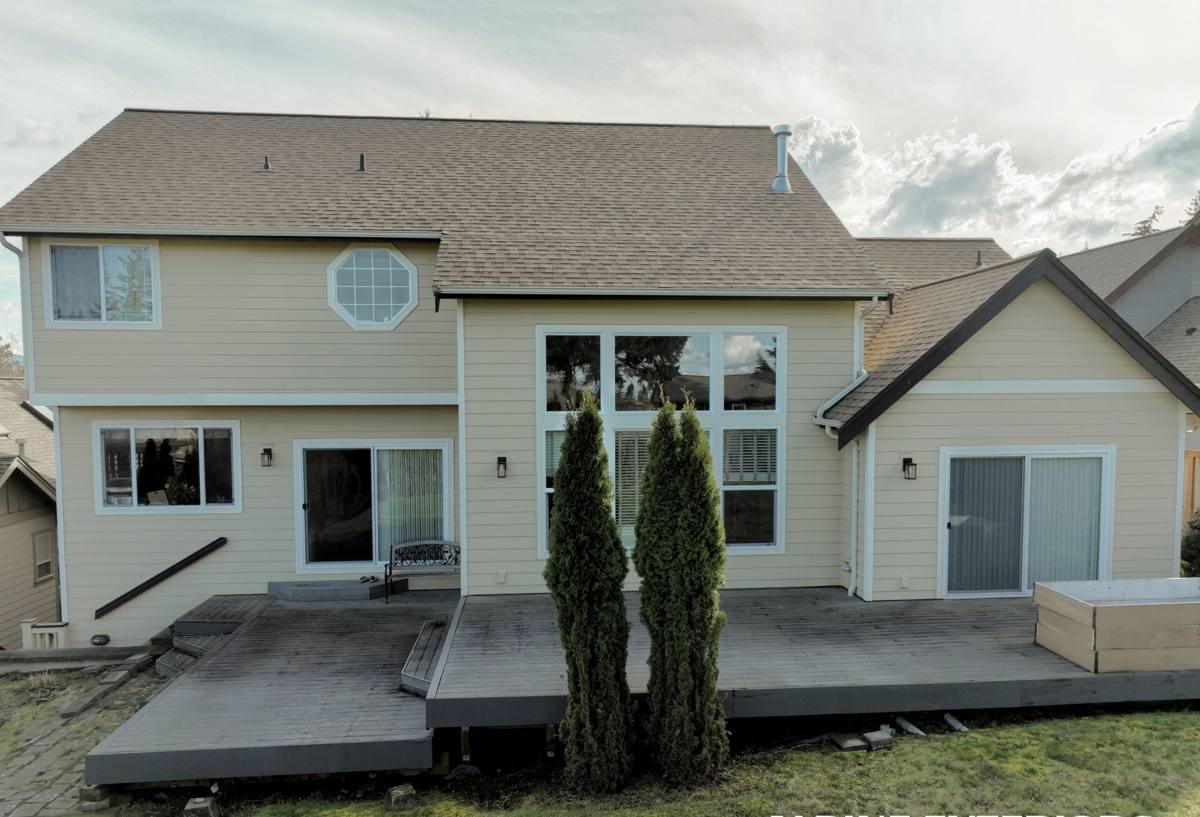
Signs Your Deck Needs Repair — Not Replacement
Most decks don't fail all at once. They fail in specific spots while the rest of the structure is still sound. Knowing the difference between a targeted repair and a full rebuild can save a homeowner a lot of money.
Repair Territory
- A few boards that are cupping, splintering, or soft to the touch, while the framing underneath is solid
- Rusted or popped fasteners causing squeaks, movement, or slightly raised board edges
- A wobbly railing or post that's loose at its connection point, not rotted through
- Stairs that have started to sag or flex but haven't pulled away from their stringers
- Isolated moss and algae staining on the deck surface with no soft or spongy wood underneath
Signs You're Looking at More Than a Patch Job
- Soft, spongy, or crumbling wood at the ledger board — the beam that attaches the deck to your house
- Visible gaps or separation between the deck and the house wall
- Multiple joists that flex noticeably when you walk across the deck
- Posts that have rotted at the base, near ground contact
- Rot that's spread across more than a small, contained area
A big part of a fair estimate is telling you honestly which category your deck falls into, rather than defaulting to the more expensive answer.
The Problems We See Most Often on Birchwood Decks
Ledger Board Flashing Failures
The ledger board is the single most important connection on a deck, and it's also the point most vulnerable to the kind of wind-driven rain common around Bellingham. When flashing is missing, undersized, or improperly lapped, water works its way behind the ledger and into the house rim joist over time. This is slow, hidden damage — by the time it's visible, it's often been happening for a couple of seasons.
Fastener and Hardware Corrosion
Salt air off the bay speeds up corrosion on anything that isn't rated for coastal exposure. Standard galvanized screws and joist hangers can start rusting and losing holding strength well before a wood deck's structural boards actually wear out. This shows up as squeaking, slight movement, or rust streaking down the face of the deck.
Moss and Algae Buildup
With a moss season that can stretch nearly seven months in this part of Whatcom County, shaded and north-facing decks accumulate a layer of organic growth that traps moisture against the surface. On wood, that means accelerated rot in the boards themselves. On composite decking, it usually means staining and a slippery surface rather than structural damage, but it still needs to be addressed correctly so it doesn't get worse.
Stair and Railing Movement
Stairs and railings take repeated stress and are often the first thing to loosen. Combined with moisture cycling — wet, dry, wet again — the connection points where stringers meet the deck frame or posts meet the rim joist are common failure spots.
Board Cupping and Splintering
Wood decking that sees repeated wetting and drying cycles without adequate sealing will cup, crack, or splinter over a handful of seasons. This is largely a maintenance issue rather than a design flaw, but once it starts, replacing the affected boards is usually more cost-effective than trying to sand and reseal them.
Repair vs. Rebuild: How We Help You Decide
| Factor | Points Toward Repair | Points Toward Rebuild |
|---|---|---|
| Ledger board condition | Solid, flashing intact or easily correctable | Soft wood, visible separation from house |
| Framing (joists, beams, posts) | Firm, minimal flex when walked on | Multiple soft or flexing members |
| Decking surface | Isolated bad boards, rest is sound | Widespread cupping, splintering, or rot |
| Age of structure | Under 15 years, built to a reasonable standard | Older structure, undersized or outdated framing |
| Code compliance | Railings, stair rise/run, and fastening meet current standards | Structure predates current guardrail or attachment requirements |
In a lot of cases the honest answer is somewhere in between — a deck with a sound frame but decking that's past its useful life, for example. We'll walk the whole structure with you and explain what we're seeing at each point, not just hand you a single number.
Our Deck Repair Process
- On-site assessment. We check the ledger connection, probe framing and posts for soft wood, test railings and stairs for movement, and look at how water and moss are actually behaving on your specific deck.
- Written scope and estimate. You get a clear breakdown of what needs to be fixed, what's optional, and what it costs — no vague allowances.
- Correcting the water path first. If flashing, drainage, or grading around posts is contributing to the damage, we address that before replacing any boards, otherwise the same problem comes back.
- Structural repairs. Sistering or replacing damaged joists, resetting or replacing rotted posts, and re-securing the ledger with proper flashing and fasteners rated for our climate.
- Surface repairs. Replacing individual boards, resecuring loose decking, and rebuilding or tightening railings and stairs as needed.
- Final walkthrough. We check the deck for level, movement, and secure railings before calling the job done.
Choosing Materials for a Repair
When we're replacing individual boards or sections, matching materials matters more than people expect. Mixing a different wood species or a different composite line into an existing deck can lead to uneven weathering, color mismatch, or, worse, moisture behaving differently between old and new material at the seams.
| Material | What It Handles Well Here | What to Watch |
|---|---|---|
| Pressure-treated lumber | Cost-effective, easy to source matching stock for spot repairs | Needs periodic sealing to hold up against our rain and moss cycle |
| Cedar | Naturally rot-resistant, common on older Bellingham-area decks | Softer wood, more prone to splintering without regular maintenance |
| Composite decking | Low maintenance, resists rot and splintering | Surface staining from moss/algae needs regular cleaning; not all composite lines age the same |
We'll tell you plainly if a section is a good match for patch repair or if it's better to replace a full run of boards so the finished deck looks and performs consistently.
Maintenance That Actually Extends the Life of a Repair
A repair is only as good as what happens after we leave. In a climate like ours, a little seasonal attention goes a long way toward not needing another repair call in two years.
- Sweep leaves and debris off the deck regularly, especially in fall — trapped organic matter feeds moss and holds moisture
- Clean visible moss and algae buildup before it stains or softens the surface underneath
- Check that gaps between deck boards stay clear so water can drain through rather than pool
- Inspect railings and stair connections once a year for looseness
- Reseal or re-stain wood decking on the schedule appropriate for the product — don't wait until it's visibly gray and dry
- Keep an eye on the ledger board area after heavy wind-driven rain events for any new staining or separation
Why It Matters to Hire a Crew That Already Works in Birchwood
Deck problems in this part of Whatcom County follow patterns — where moss accumulates fastest, which orientations catch the worst wind-driven rain, how salt air affects hardware near the water. A crew that repairs decks across Bellingham neighborhoods regularly sees those patterns repeat, which means less time spent guessing and more time spent fixing the actual cause.
It also means we're familiar with the permitting expectations that apply to structural deck work in the City of Bellingham and unincorporated Whatcom County, so repairs involving framing, footings, or guardrails are handled correctly from the start — not something that turns into a problem when you go to sell the house.
If you're not sure whether your deck needs a repair, a rebuild, or just a good cleaning and a season of maintenance, we're happy to take a look and give you a straight answer. Reach out for a free, no-pressure estimate using the form below.