 Bellingham
 Why Birchwood Homes Wear Differently Than You'd Expect
Birchwood sits close enough to Bellingham Bay and the Nooksack lowlands that homes here take a combination of punishment most siding was never designed to handle at once: salt-laden air drifting in off the water, long stretches of driving horizontal rain, and a moss season that can run eight months or more in shaded, north-facing yards. None of these threats is dramatic on its own. Together, over ten or fifteen years, they quietly break down siding from the outside in — and by the time a homeowner notices a problem, it's often already past the point of a simple patch.
We work on siding repair calls in Birchwood regularly enough to know the pattern: it's rarely one catastrophic failure. It's a slow accumulation of small moisture events — a cracked caulk joint here, a moss mat holding water against a butt seam there — that eventually add up to soft trim, bubbled paint, or a rotted panel edge. Repairing it right means understanding that pattern, not just patching the symptom.
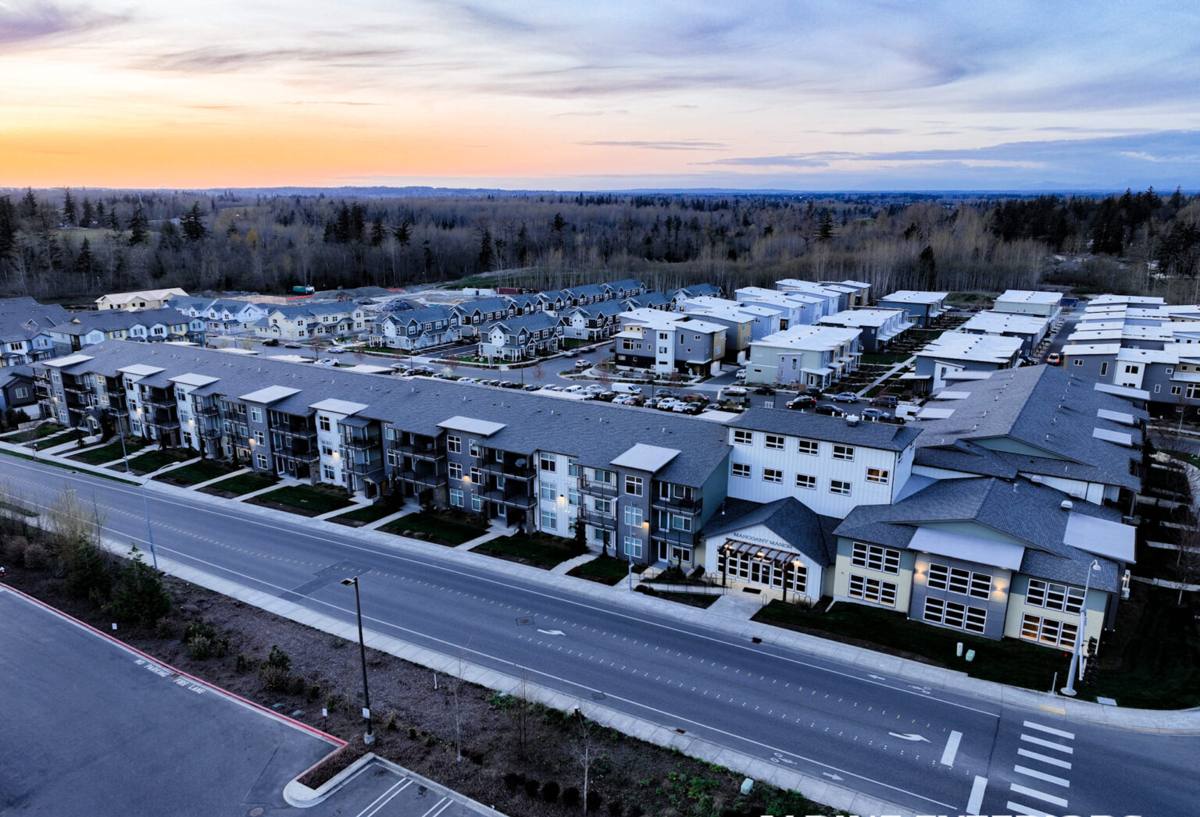
What Whatcom County's Climate Actually Does to Siding
Salt Air
Proximity to salt water accelerates corrosion on any exposed metal fasteners, flashing, and trim hardware. Once a fastener starts to rust, it can weep stains down the face of the siding and eventually lose its grip, letting a panel work loose. Salt air also holds moisture longer than dry inland air, which means siding surfaces near the bay stay damp longer after a storm — extending every other problem on this list.
Driving Rain
Bellingham's rain doesn't just fall — a good portion of it comes in sideways, driven by wind off the Strait. That matters because siding systems are engineered to shed water moving downward, not water being pushed sideways and upward under laps and around trim. Wind-driven rain finds the smallest gap — a nail hole with failed caulk, a mitered corner that's opened up a sixteenth of an inch — and pushes water behind the cladding instead of over it.
Moss and Sustained Damp
North- and east-facing walls, areas under tree cover, and anywhere airflow is limited stay damp far longer than sun-exposed walls. Moss and algae take hold in those conditions and act like a sponge, holding water against the siding surface and any trim or caulk joints underneath it. Left alone, that sustained dampness is one of the most common causes of the rot and paint failure we get called out for.
Signs a Birchwood Home Needs Siding Repair, Not Just Cleaning
- Soft or spongy spots when you press on a panel or trim board, especially near the bottom courses or around windows
- Paint that's bubbling, peeling, or flaking in localized patches rather than evenly across a wall
- Visible cracks in caulk joints at corners, window and door trim, or panel seams
- Dark staining running down from fasteners or seams — usually a sign of trapped moisture or corroding hardware
- Persistent moss or algae growth that keeps coming back even after cleaning
- Panels that have visibly cupped, warped, or pulled away slightly from the wall
- A musty smell or visible staining on interior walls that back up to exterior siding
Any one of these on its own might be a minor fix. Several together, especially on the same wall, usually means moisture has been getting behind the siding for a while and the repair needs to address what's happening underneath, not just what's visible on the surface.
What a Correct Repair Actually Involves
A repair that only replaces the damaged piece of siding and skips everything underneath tends to fail again within a few years — sometimes faster in a climate like this one. A repair done to spec involves a few steps that are easy to skip if a crew is trying to move fast:
- Diagnose the moisture path, not just the damage. Before anything gets pulled off, we look at where water is actually getting in — a failed flashing detail, a gap at a penetration, a grade issue pushing splashback onto the wall — so the same failure doesn't repeat.
- Remove damaged material back to sound substrate. Rot and water damage almost always extend further than what's visible from the outside. Cutting back to solid material, even if it means a slightly bigger repair than expected, is what makes the fix last.
- Inspect and repair the water-resistive barrier. The house wrap or building paper behind the siding is the actual moisture defense layer. If it's torn, improperly lapped, or missing at the repair area, replacing siding over it without fixing it defeats the purpose.
- Correct flashing and trim details. Window heads, butt joints, and any horizontal trim need proper flashing and drainage gaps — details that matter more here than in drier climates because of how much wind-driven rain the wall sees.
- Match and install new material correctly. Proper fastener placement, caulking only where the manufacturer specifies it (not everywhere, which can trap moisture), and correct clearances at the bottom of the wall.
- Prime and finish cut edges. Any field-cut edge on fiber cement siding needs to be sealed per manufacturer spec before installation — an easy step to skip that causes edge-swelling and paint failure down the road if missed.
Our Process for a Birchwood Repair Call
| Step | What Happens |
|---|---|
| Initial visit | We walk the affected areas, check moisture readings where relevant, and identify the likely water path — not just the visible damage. |
| Written scope | You get a clear explanation of what's damaged, what's causing it, and what the repair will involve, before any work starts. |
| Material match | We source matching or closely compatible siding material and trim so the repair blends with the existing wall. |
| Repair work | Removal, substrate and barrier inspection, flashing correction, and reinstallation to manufacturer spec. |
| Finish and cleanup | Paint or factory-finish touch-up, site cleanup, and a final walkthrough with you. |
Why Local Experience in This Specific Neighborhood Matters
Siding repair isn't generic work. A crew that mostly repairs siding in dry inland climates will default to habits that don't hold up here — under-flashing a window head, over-caulking a joint that needs to breathe, or not accounting for how far wind-driven rain can travel up a wall before it finds a gap. A crew that's worked repeatedly in Birchwood and the surrounding Bellingham neighborhoods has already seen which details fail first in this specific mix of salt air, rain direction, and shade pattern, and builds the repair to account for it from the start.
There's also a practical side: knowing typical lot layouts, tree cover patterns, and how close a given block sits to the bay helps us anticipate problems before we even get on a ladder. That's the kind of context that only comes from doing repeat work in the same area, not from a one-off service call.
Repair vs. Replacement: How We Help You Decide
Not every damaged wall needs full replacement, and not every repair is worth doing if the underlying siding is near the end of its service life. A few honest factors we walk through with homeowners:
| Factor | Leans Toward Repair | Leans Toward Replacement |
|---|---|---|
| Extent of damage | Isolated to one wall or a few panels | Recurring problems across multiple walls |
| Age of existing siding | Still well within expected service life | Near or past typical lifespan, especially wood-based products |
| Underlying material | Fiber cement or another durable substrate in good shape | Original material already showing widespread rot, delamination, or repeated paint failure |
| Cause of damage | One-time or localized event (impact damage, a single flashing failure) | Systemic moisture intrusion from siding not suited to this climate |
We'll never push a full replacement when a proper repair will genuinely hold. But we'll also be straight with you if a repair is just going to buy a year or two before the same issue reappears somewhere else on the wall — that's not a good use of your money, and we'd rather tell you that upfront.
What We Install When Replacement Does Make Sense
When a wall's underlying siding is far enough gone that repair isn't the responsible answer, we install James Hardie fiber cement exclusively — we don't install vinyl, LP SmartSide, primed spruce, cedar, or other fiber cement brands. That's a deliberate standard, not a sales preference. Fiber cement doesn't feed moss the way untreated wood-based siding can, it's non-combustible, and Hardie's ColorPlus factory finish holds up to UV and salt air far longer than field-applied paint. For a climate that combines salt air, driving rain, and heavy moss pressure the way Whatcom County does, it's the product we're comfortable standing behind for the long term — and it's backed by a strong transferable warranty when installed to spec, which matters if you sell the home down the road.
Simple Maintenance That Extends the Life of a Repair
- Rinse moss and algae off shaded walls gently once or twice a year rather than letting it build up
- Keep gutters clear so overflow isn't running down the siding face
- Trim back vegetation and tree limbs that keep a wall in constant shade and dampness
- Walk the exterior after major windstorms and check for loose panels or trim
- Recaulk joints as soon as cracking appears rather than waiting for water to get behind them
- Address small stains or soft spots right away — they rarely stay small on their own
None of this requires a professional visit every time, but a quick annual walk-around catches most problems while they're still a small repair instead of a bigger one.
Get a Straight Answer on Your Siding
If you're seeing soft spots, cracked caulk, recurring moss, or paint that's failing in patches on a Birchwood home, it's worth having someone look at it before the damp season does more damage underneath the surface. We'll give you a clear, no-pressure read on whether it's a repair or something bigger — reach out for a free estimate and we'll walk the property with you.