 Bellingham
 Board & Batten in Sunnyland: A Classic Look That Has to Earn Its Keep
Board and batten shows up all over Sunnyland — on older bungalows, on additions, on garages and accent gables of newer builds. It's a look that fits the neighborhood's mix of craftsman-era homes and infill construction: clean vertical lines, strong shadow, a little more texture than flat lap siding. But board and batten is also one of the least forgiving siding styles when the wrong material or the wrong installer is behind it. The battens create seams, the vertical boards shed water differently than horizontal lap siding, and in a neighborhood this close to Bellingham Bay, every one of those details matters more than it would somewhere drier.
This page is specifically about doing board and batten right on Sunnyland homes — what the local climate demands, what correct installation actually looks like, and why we install this style in one material only.
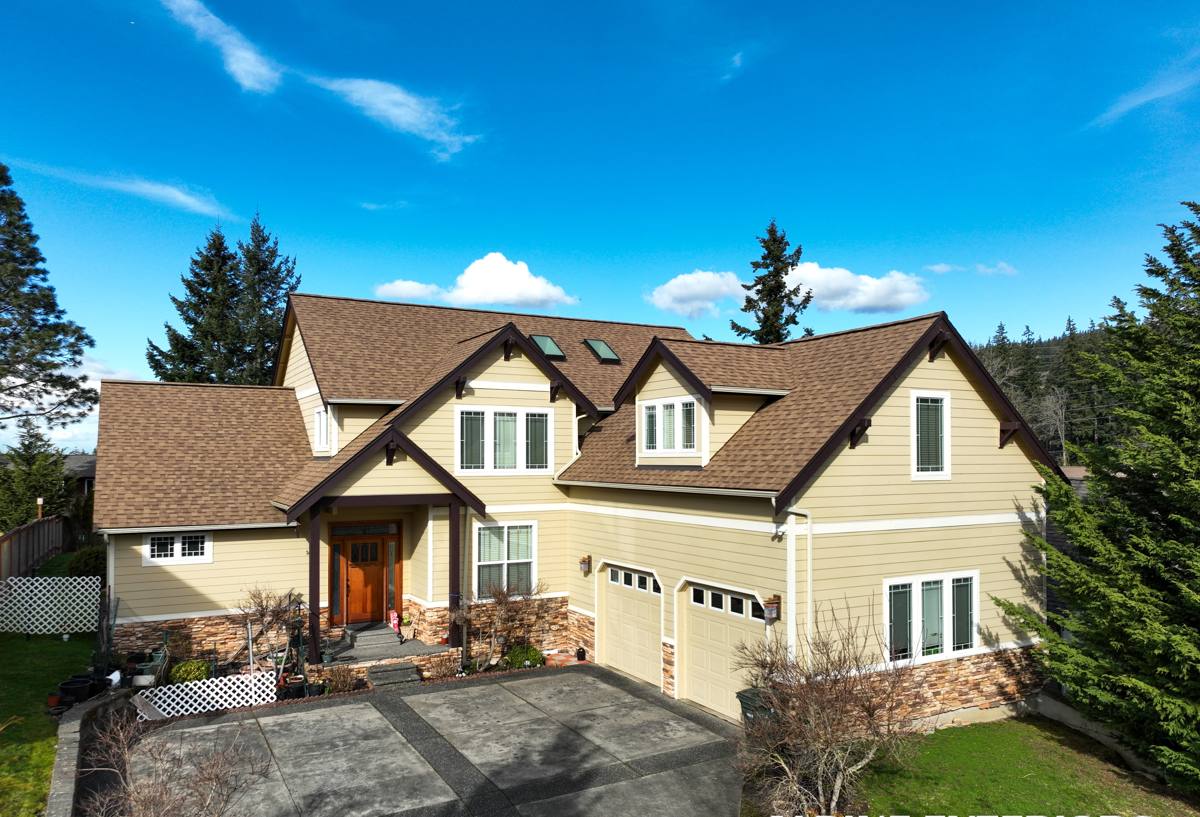
Why Sunnyland's Climate Is Hard on Board & Batten Siding
Sunnyland sits close enough to the water that salt-laden air is a real factor on siding, trim, and fasteners — not just on boats and railings. Add Whatcom County's long wet season, where driving rain off the Sound can hit walls at an angle for days at a time, and you've got two separate stresses working on the same wall assembly: corrosion and moisture intrusion.
Then there's moss. Bellingham's moss season isn't a few weeks — it's most of the year on north- and west-facing walls that don't get much sun or wind to dry out. Board and batten's vertical battens create dozens of narrow ledges and seams per wall, which is exactly the kind of surface moss, algae, and lichen like to colonize. On a painted wood board and batten job, that means recurring cleaning and repainting. On a poorly installed synthetic job, it can mean trapped moisture behind the battens that you don't see until the wall is already rotting from the inside.
None of this makes board and batten a bad choice for Sunnyland. It makes material selection and installation detail the whole ballgame.
Why We Only Install Board & Batten in James Hardie Fiber Cement
We get asked to bid board and batten jobs in cedar, in LP SmartSide, and occasionally in vinyl board-and-batten panels. We don't install any of those, and we think homeowners deserve the honest reasoning rather than a sales pitch.
Cedar and other wood board and batten
Real wood board and batten looks great on day one. The problem in this climate is long-term moisture cycling — wood swells and shrinks with Bellingham's wet-to-dry seasons, which opens hairline gaps at the battens and around fasteners. Combined with the moss and algae pressure described above, that means a maintenance schedule (cleaning, re-caulking, repainting, occasional board replacement) that most homeowners underestimate when they choose the look.
LP SmartSide board and batten
LP SmartSide is an engineered wood product, and wood-based products share a structural vulnerability: if water gets past the surface treatment at a cut edge, a fastener hole, or a seam that wasn't sealed correctly, the substrate can swell and deteriorate from the inside. In a driving-rain, high-moss climate like Sunnyland's, that puts a lot of weight on perfect installation and perfect long-term caulk maintenance — margins we're not willing to install on and then hand to a homeowner to maintain.
Vinyl board and batten
Vinyl doesn't rot, but it isn't rigid, and board and batten's vertical panels are more exposed to wind-driven rain than lap siding. Vinyl relies on gaps and weep points to release water that gets behind it, which works fine in mild conditions but performs worse under the sustained wet weather Whatcom County sees. It also fades and becomes brittle with UV and temperature swings over the years, and it can't be repainted to refresh it.
Why James Hardie
James Hardie fiber cement is non-combustible, dimensionally stable (it doesn't swell and shrink with moisture the way wood does), and comes factory-finished with ColorPlus technology — a baked-on finish that resists fading and holds up better against the algae and moss growth that's constant on shaded Sunnyland walls. Hardie's HZ5 product line is engineered for exactly this kind of wet, marine-influenced climate. It's the one material system where we're comfortable standing behind a board and batten installation for the long haul, backed by a strong transferable warranty.
What a Correct Board & Batten Job Actually Involves
Board and batten isn't just wide boards with strips nailed over the seams. Done correctly with Hardie products, it's a layered wall assembly:
- Weather-resistive barrier: A properly lapped and taped house wrap behind everything, with flashing at every window, door, and penetration.
- Vertical panel or plank layer: HardiePanel vertical siding (or Hardie Artisan Collection for a higher-end look) installed with correct fastener spacing and clearance off grade and roof lines.
- Battens: Installed over the panel seams with fasteners landing in solid framing or furring, not just into the panel face.
- Sealant details: Manufacturer-specified sealant at the panel-to-trim and top/bottom terminations — the places wood systems tend to fail first.
- Ventilation gap where called for: Furring strips behind the panel in some assemblies to let incidental moisture dry outward instead of sitting against the wrap.
Skip any one of these and you get the same complaint on every wrong-material or rushed board and batten job in this region: staining and soft spots at the bottom of battens, and streaking below panel seams where water concentrates and runs.
Material Comparison: Board & Batten Options in a Bellingham Climate
| Material | Moisture behavior in wet climate | Moss/algae resistance | Maintenance | Typical lifespan (installed to spec) |
|---|---|---|---|---|
| Cedar / wood | Swells and shrinks seasonally; vulnerable at seams and fasteners | Low — needs regular cleaning and repainting | High — recoat, re-caulk, replace boards periodically | 15-25 years with upkeep |
| LP SmartSide | Engineered wood substrate; sensitive to sustained moisture at cut edges/seams | Moderate — factory coating helps but needs care | Moderate — periodic caulk and coating checks | 20-30 years with maintenance |
| Vinyl | Doesn't rot, but relies on drainage gaps; less rigid under wind-driven rain | Moderate — can mildew in shaded, damp areas | Low — occasional cleaning, cannot repaint | 20-30 years, fades/becomes brittle |
| James Hardie fiber cement | Dimensionally stable; non-combustible; engineered HZ5 line for wet regions | High — ColorPlus finish resists fading/growth better | Low — occasional wash, no repainting needed for years | 30+ years, strong transferable warranty |
Our Process on Sunnyland Homes
1. On-site assessment
We look at existing wall condition, wall orientation (which sides take the worst of the driving rain and shade-driven moss), and where trim, windows, and rooflines will interact with a new board and batten pattern.
2. Tear-off and wall inspection
Removing old siding is when hidden problems — rot, missing flashing, compromised sheathing — actually surface. We address what we find before anything new goes on; covering over a problem wall is how expensive repairs happen five years down the road.
3. Weather barrier and flashing
New house wrap and flashing detail at every penetration, sized for this climate's rain load, not a minimum-code shortcut.
4. Hardie panel and batten installation
Installed to James Hardie's fastening and clearance specifications, which matters directly for warranty coverage — installation errors are the most common reason a manufacturer warranty gets denied.
5. Final inspection and walkthrough
We walk the finished job with the homeowner, checking sealant lines, panel alignment, and trim details before calling it done.
Living With Board & Batten in Sunnyland: A Maintenance Checklist
Even the right material benefits from basic upkeep in this climate. On a correctly installed James Hardie board and batten job, maintenance is light — but it's not zero:
- Rinse north- and west-facing walls once or twice a year to slow moss and algae buildup, especially under tree cover.
- Keep gutters clear so overflow doesn't run down wall sections and concentrate moisture at battens.
- Trim back vegetation and tree limbs that keep a wall section shaded and damp longer than the rest of the house.
- Check caulking at trim intersections every couple of years and have any gaps resealed.
- Have a professional inspect low areas near grade, decks, and porch roofs where splashback and shade combine.
Why Hiring a Crew That Already Works Sunnyland Matters
Board and batten detailing that works fine in a drier inland climate can fail here. A crew that's already worked walls in Sunnyland and the surrounding Bellingham neighborhoods knows which elevations take the worst weather off the bay, how much moss pressure to plan for on shaded sides, and how Whatcom County's building department wants flashing and clearance details handled. That local pattern recognition is the difference between a board and batten job that looks right for one season and one that still looks right in year fifteen.
If you're weighing board and batten for a Sunnyland home, we're happy to walk the property, talk through where the climate will stress the wall assembly most, and give you a straightforward, no-pressure estimate for doing it right in James Hardie fiber cement.