 Bellingham
 Siding Replacement Built for Birchwood's Climate
Birchwood homes sit close enough to the water and to Whatcom County's heavy tree cover that siding here works harder than siding almost anywhere else in the state. Salt-laden air off Bellingham Bay, driving wind-blown rain through the fall and winter, and a moss season that can run eight months or longer all chip away at exterior materials year after year. If your siding is original to the house, showing soft spots, peeling paint, or green streaking that comes back within weeks of cleaning, you're not imagining it — that's the local climate doing exactly what it does to under-built or aging siding.
This page covers what a proper siding replacement looks like for a Birchwood home specifically: what the climate demands, what a correct installation actually involves, how our process runs from first look to final walk-through, and why it matters to hire a crew that already knows this neighborhood's houses and conditions.
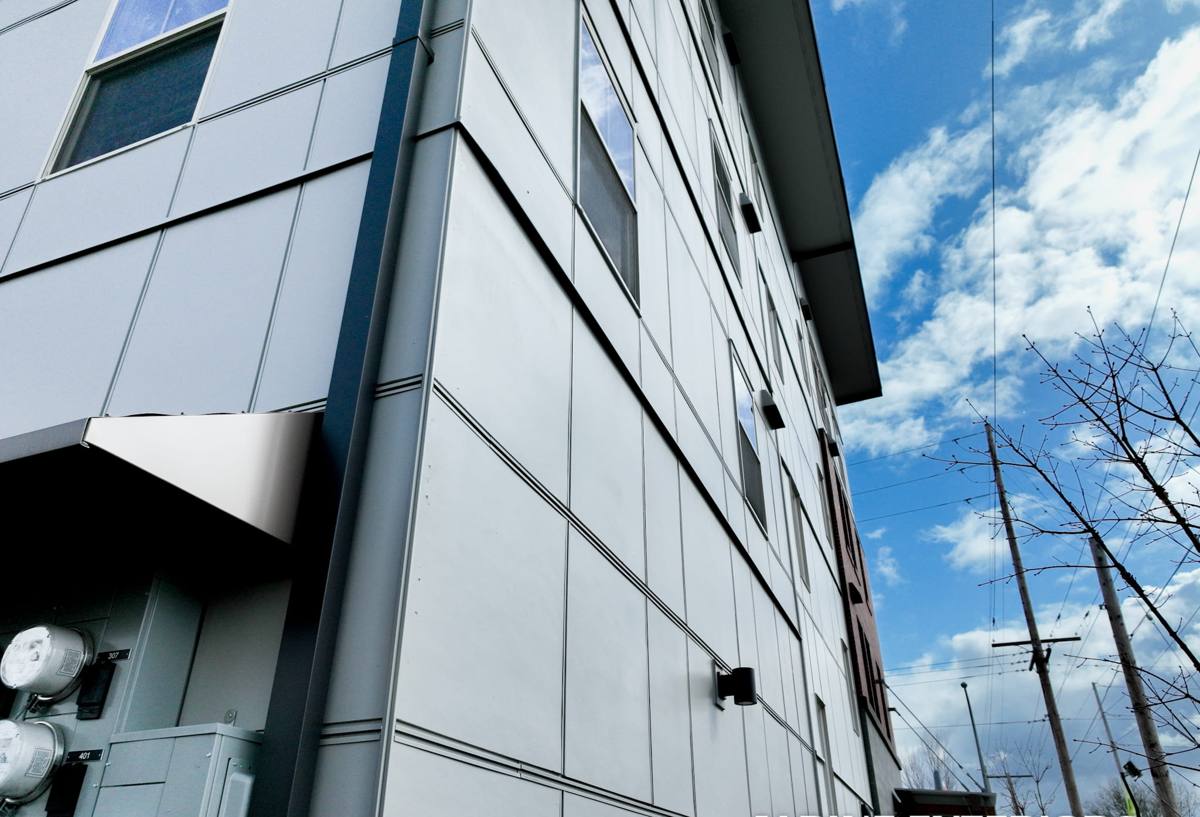
What Birchwood's Climate Does to Siding
Salt Air and Moisture
Proximity to the bay means airborne salt settles on exterior surfaces and accelerates corrosion of fasteners, trim, and any siding material that isn't engineered to handle it. Salt air also holds moisture longer against a wall surface, which is a problem for any product that relies on paint film or caulking alone to stay weather-tight.
Driving Rain
Bellingham doesn't just get a lot of rain — a good share of it comes in sideways during fall and winter storms. That means water isn't just falling on your roof and running off; it's being pushed horizontally into every seam, joint, and butt edge on your walls. Siding that isn't installed with the right laps, flashing, and gaps will eventually take on moisture at those points, even if the material itself is sound.
Moss and Organic Growth
Shade from mature trees, combined with near-constant damp conditions much of the year, gives moss and algae everything they need to establish on siding, trim, and fascia. Beyond the cosmetic streaking, sustained organic growth holds moisture against the surface, which is exactly the condition that causes rot in wood-based products and finish failure in lower-grade composites.
Signs Birchwood Homeowners Should Watch For
- Soft or spongy siding when pressed, especially near the bottom courses and around windows
- Paint that's peeling, bubbling, or chalking well before the manufacturer's repaint interval
- Persistent green or black staining that returns quickly after washing
- Visible gaps opening up at seams, corners, or where siding meets trim
- Warping, cupping, or buckling boards, particularly on north-facing or shaded walls
- Rising energy bills that point to a wall assembly no longer sealing properly
Why We Install James Hardie — and Nothing Else
We standardized on James Hardie fiber cement siding for every job we take on, including replacements in Birchwood, and we don't install vinyl, LP SmartSide, primed spruce, cedar, or other fiber cement brands like Cemplank or Allura. That's a deliberate professional standard, not a sales pitch, and it's worth explaining why in the context of this specific climate.
Fiber cement as a category holds up to sustained moisture exposure better than wood-based siding, because it isn't organic material that rot or insects can break down. Hardie's HZ5 product line in particular is engineered for wetter, harsher climates like ours — it's built to resist moisture intrusion and hold its factory finish through repeated wet-dry cycles, which is exactly the stress cycle Birchwood homes go through most of the year. Vinyl, by contrast, can warp and fade under UV and temperature swings and doesn't offer the same fire resistance or impact durability. Other fiber cement brands may look similar on a spec sheet, but we've standardized on Hardie because of its factory-applied ColorPlus finish, its track record in Pacific Northwest conditions, and the strength of its transferable warranty when the product is installed to manufacturer spec.
None of that means other products can't work on some homes in some climates. It means that for the salt air, driving rain, and moss exposure Birchwood deals with, we're not willing to put our name on an installation using a product we think is a compromise.
Hardie ColorPlus vs. Field-Painted Siding
| Factor | ColorPlus Factory Finish | Field-Painted Siding |
|---|---|---|
| Finish consistency | Baked-on in controlled conditions | Depends on weather during install |
| Repaint interval | Long, backed by finish warranty | Typically shorter, no factory backing |
| Moss/algae resistance | Finish formulated to resist staining | Standard exterior paint, no added resistance |
| Touch-up matching | Formulated touch-up product available | Color matching can drift over time |
What a Correct Installation Involves
The siding product is only part of the equation. In a climate like ours, the installation details are what actually determine whether a wall stays dry for the next 20-30 years.
- Weather-resistive barrier: A properly lapped and sealed barrier behind the siding, so any moisture that does get past the surface has a drainage path instead of a place to sit
- Rainscreen or proper gapping: Space behind the siding so air can circulate and dry out incidental moisture before it becomes a problem
- Flashing at every penetration: Windows, doors, hose bibs, vents, and any other wall penetration need flashing detailed to shed water outward, not trap it
- Correct fastening: Fastener type, spacing, and depth matter — over-driven or wrong-gauge fasteners are a common cause of premature siding failure
- Manufacturer-spec clearances: Proper gaps at grade, roof lines, and decks so siding isn't sitting in standing water or trapped moisture
- Caulking only where it belongs: Hardie's system is engineered to shed water mechanically; over-caulking joints that should breathe can trap moisture instead of keeping it out
A siding job that skips or rushes any of these steps can look fine for a year or two and still fail early — which is exactly the kind of failure that's hardest for a homeowner to catch until it's already expensive.
Our Replacement Process
1. On-Site Assessment
We walk the exterior with you, check for soft spots, moisture intrusion, and problem areas around windows, trim, and grade level, and give you a straight read on what's actually going on with your siding — not just what's visible from the street.
2. Scope and Product Selection
We talk through which Hardie product line and profile fits your home and your budget, and we explain the reasoning so you're not just picking a color off a chart.
3. Tear-Off and Sheathing Check
Old siding comes off and we inspect the sheathing underneath. This is often where hidden moisture damage from years of exposure to Bellingham's rain shows up, and it needs to be dealt with before new siding goes on, not covered up.
4. Weather Barrier and Flashing
We install the weather-resistive barrier and flash every window, door, and penetration before a single piece of siding goes up. This is the step that determines how your wall performs in a driving rainstorm five years from now.
5. Installation to Manufacturer Spec
Siding goes on following James Hardie's installation guidelines for our climate zone — correct fastening, gapping, and clearances throughout.
6. Final Walk-Through
We walk the finished job with you, point out what was done and why, and make sure you're clear on care and maintenance going forward.
What Siding Replacement Typically Costs
Every home is different, and we'll give you real numbers after a walk-through — but a few factors consistently drive cost on Birchwood jobs:
| Factor | How It Affects Cost |
|---|---|
| Amount of hidden sheathing damage | More repair needed under old siding raises cost |
| Home size and wall complexity | More corners, gables, and trim details add labor |
| Hardie product line chosen | Panel vs. lap siding and premium profiles vary in price |
| Trim and accessory scope | Full trim replacement vs. siding-only changes total cost |
| Access and site conditions | Multi-story walls, tight lots, or landscaping can affect labor |
We'd rather walk your home and give you an honest number than throw out a broad range that doesn't mean much until we've actually seen what's there.
Why Local Experience in Birchwood Matters
A crew that regularly works in Birchwood and the surrounding Bellingham neighborhoods already knows how the salt air, rain patterns, and moss exposure here behave against different wall orientations and home styles. That's not something you get from a general contractor passing through the area once. It shows up in small decisions — where extra flashing attention matters most, which walls tend to hold moisture longer, how aggressive moss growth gets on shaded elevations — that add up to a siding job that actually lasts through Whatcom County's wet seasons instead of just looking good on installation day.
Get a Free, No-Pressure Estimate
If your Birchwood home's siding is showing signs of wear, staining, or moisture damage, we're happy to take a look and give you a straightforward assessment — no pressure, no sales script. Fill out the form below to schedule your free estimate.