 Bellingham
 Building a Deck That Can Handle Blaine's Conditions
Blaine sits right on the water at the top of Whatcom County, which means homes here deal with a combination most inland Washington towns don't: salt-laden air off the Strait of Georgia, wind-driven rain that comes in sideways off the water, and a moss and algae season that can run eight months out of the year. A deck built with a generic, one-size-fits-all approach will show problems here faster than it would twenty miles inland — soft spots, corroded fasteners, slick surfaces, and finishes that fail early. Building decks correctly for Blaine means designing and specifying materials for those specific stresses from day one, not reacting to them after the fact.
We've worked on homes throughout Blaine and the surrounding waterfront and near-water lots long enough to know which details matter here and which corners get cut on decks that don't last. This page covers what a Blaine deck actually needs, what a correct build involves, and how we handle the job from first look to final walkthrough.
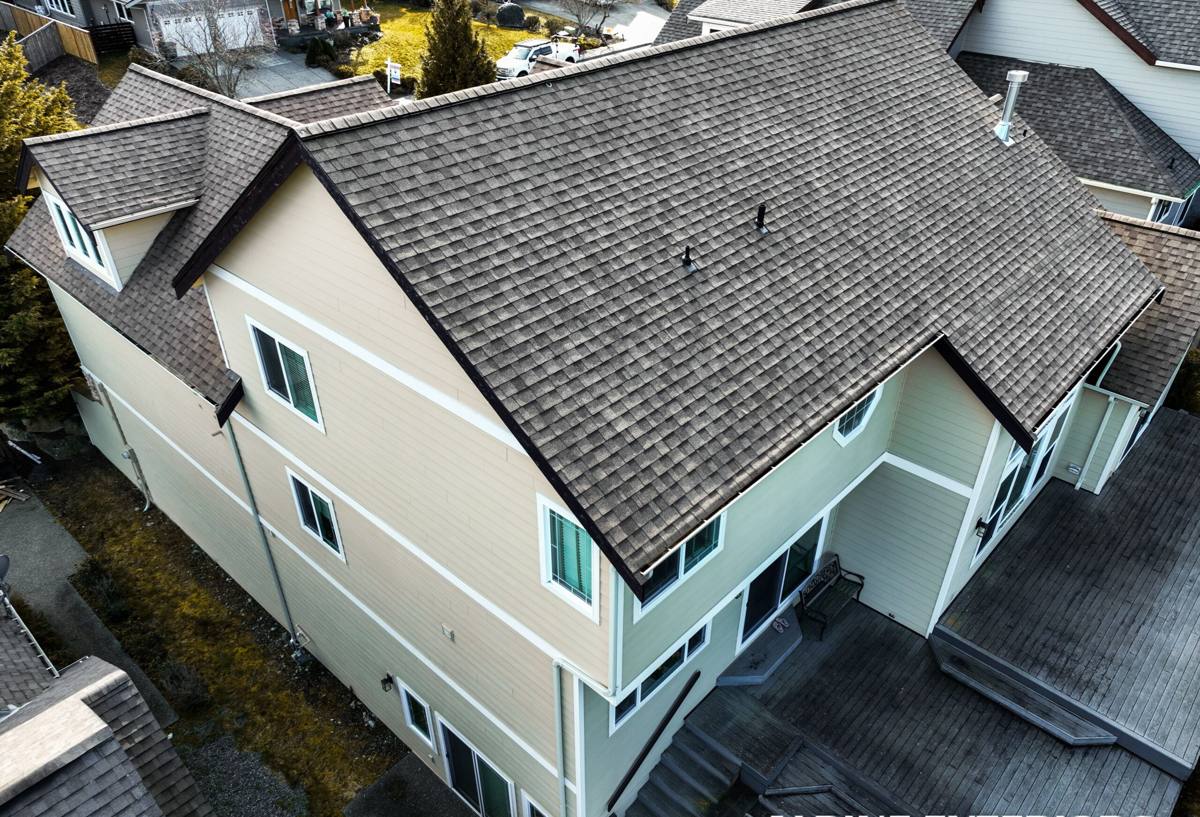
What Blaine's Climate Actually Does to a Deck
Salt Air and Metal Fasteners
Proximity to salt water accelerates corrosion on anything less than fully rated hardware. Standard galvanized fasteners and connectors that would be fine in a drier or more inland part of Whatcom County can start showing rust streaks and pitting within a few seasons in Blaine's marine air. Once fasteners corrode, they lose holding strength long before it's visible from the surface — which is exactly why ledger connections, joist hangers, and structural screws need to be rated for coastal exposure here, not just "exterior grade."
Wind-Driven Rain and Standing Water
Rain in Blaine rarely falls straight down. Wind off the water pushes it sideways and up under rail caps, into end grain, and into any gap where flashing or fastening was an afterthought. Combined with our long wet season, that means any weak point in the water management of a deck gets tested constantly, not occasionally. Framing that traps water — poor drainage gaps between boards, ledger boards without proper flashing, posts set without adequate standoff from grade — will rot or degrade years before a properly detailed deck.
Moss, Algae, and Surface Traction
Whatcom County's extended damp season grows moss and algae on almost any horizontal wood surface that doesn't get regular sun and airflow. On a deck, that's not just a cosmetic issue — it's a slip hazard, and it accelerates surface wear on softer decking materials. Board spacing, airflow underneath the deck, and surface texture all affect how fast moss takes hold and how easy it is to keep ahead of.
Framing and Structure: Getting the Foundation Right
Everything visible on a deck depends on what's underneath it. In Blaine's conditions, we pay particular attention to:
- Footings sized and set to local frost depth and soil conditions, not guessed at
- Ledger board attachment with proper flashing so water is directed away from the house rim joist, not into it
- Coastal-rated structural connectors and fasteners throughout — not just at points that are easy to inspect
- Joist spacing and blocking appropriate to the decking material chosen, since composite and wood have different span requirements
- Post bases that keep wood off grade and off standing water
- Adequate under-deck clearance and airflow to slow moss growth and let framing dry between rain events
None of this is visible once the decking goes down, which is exactly why it's worth getting right the first time. A deck that looks fine on the surface but was framed with shortcuts underneath is a much more expensive repair later than it would have been to build correctly up front.
Choosing Decking Material for Blaine Conditions
There's no single "best" decking material — the right choice depends on budget, how much upkeep you want to do, and how close the lot is to the water. Here's how the common options actually perform in this specific climate:
| Material | Moisture & Salt Air Behavior | Maintenance | Typical Lifespan Here |
|---|---|---|---|
| Pressure-treated lumber | Good if properly sealed and refinished regularly; end grain and fastener points are the weak spots near salt air | Annual cleaning, refinish every 2-3 years | 15-20 years with upkeep |
| Cedar | Naturally rot- and insect-resistant, but still needs sealing against wind-driven rain and UV; grays without finish | Refinish every 2-3 years to hold color and protection | 15-20 years with upkeep |
| Composite decking | Doesn't rot or absorb water like wood; some early-generation composites held moisture at the core, current capped composites handle our wet season well | Periodic cleaning to stay ahead of moss/algae film; no refinishing | 25-30+ years |
| PVC decking | Fully moisture-resistant, unaffected by salt air corrosion since it's not metal-dependent at the surface | Occasional cleaning | 25-30+ years |
For homes closer to the water in Blaine, we generally steer clients toward capped composite or PVC decking specifically because they remove the moisture-absorption variable that wood-based products depend on maintenance to manage. That's a matter of honest trade-offs, not a knock on wood decking — a well-maintained cedar or treated-lumber deck can absolutely last, but it requires a homeowner who'll keep up with sealing on schedule. If that's not realistic for your situation, composite or PVC is the lower-maintenance path.
Fasteners and Hardware
Whatever decking material you choose, we use hidden fastener systems and structural hardware rated for coastal/marine exposure. This is a small percentage of the total project cost and one of the most important decisions for long-term durability in Blaine specifically — it's not worth saving a few dollars on hardware that will corrode faster than the decking itself.
Railings, Stairs, and Surface Details
Railings and stair components see more direct weather exposure than deck surfaces in some layouts, especially on elevated or water-facing decks. We match railing material to the same durability standards as the decking — aluminum or composite rail systems generally outperform painted wood in salt air, since they don't rely on an intact paint film to resist corrosion and moisture. Board spacing and gap width on both decking and stairs also affects drainage and moss buildup, so we set spacing with drainage in mind rather than purely for appearance.
Our Process for a Blaine Deck Project
- On-site assessment: We look at the lot's exposure — how close to the water, prevailing wind and rain direction, existing drainage, and any structural issues if this is a rebuild or replacement.
- Design and material selection: We walk through decking, railing, and hardware options with honest pros, cons, and cost trade-offs for your specific site and budget, not a one-size pitch.
- Permitting: Deck projects in Blaine typically require a permit depending on height and size; we handle that process as part of the job.
- Framing and structural work: Footings, ledger flashing, joists, and coastal-rated hardware installed to hold up under this specific climate.
- Decking, railing, and finish work: Surface materials installed with proper spacing, fastening, and drainage detailing.
- Final walkthrough: We go over the finished deck with you, including any maintenance schedule the material calls for.
Why a Crew That Already Works Blaine Matters
A contractor who mostly works inland or in drier parts of Whatcom County may not default to coastal-rated hardware, proper drainage detailing, or moisture-resistant decking unless specifically asked — because those aren't the failure points they see most often. A crew that regularly works Blaine and the surrounding waterfront areas builds those decisions into the process automatically, because we've seen what happens to decks that skip them. That local pattern recognition is worth more than it sounds like on paper — it's the difference between a deck that needs real repair work in year six and one that's still solid at year twenty.
Maintenance Checklist for a Blaine Deck
Whatever material you choose, a few habits go a long way toward getting the full lifespan out of your deck in this climate:
- Sweep debris and standing leaves off the surface regularly, especially in fall and winter
- Clean moss and algae film off the surface at least once or twice a year, more often on shaded sections
- Check and clear drainage gaps between boards so water isn't pooling
- Inspect fasteners and railing hardware annually for early rust or looseness
- Reseal wood decking on the schedule the product calls for — don't let it lapse a season
- Confirm under-deck airflow isn't blocked by stored items or overgrown landscaping
Cost Factors to Expect
Deck project costs vary widely based on size, height, material, and site access, so we don't quote broad numbers without seeing the site. In general, the biggest cost drivers are decking material choice (composite and PVC cost more upfront than wood but less over time), structural complexity (multi-level decks, stairs, elevated framing), and railing type. We'll walk through where your budget is best spent for Blaine's conditions specifically during the estimate.
If you're planning a new deck or replacing one that's showing its age, we're happy to come take a look and give you a straightforward, no-pressure estimate — just fill out the form below.