 Bellingham
 Metal Roofing Built for Columbia's Climate
Columbia sits close enough to the water that its homes take on a specific mix of weather stress most inland neighborhoods never deal with. Salt-tinged air works on unprotected metal and fasteners year-round. Rain doesn't just fall here, it gets driven sideways by wind off the bay and forced into seams and laps that a fair-weather roof was never built to handle. And a long, damp moss season settles into shaded roof planes and stays for months. Metal roofing, done correctly, handles all three of those stresses better than almost any other roofing material available — but "metal roofing" covers a wide range of products, coatings, and installation quality, and the difference between a system built for this climate and one that just happens to be made of metal shows up within the first few wet seasons.
This page covers what a correct metal roofing install looks like for a home in Columbia specifically — the material and coating choices that actually matter here, the installation details that separate a roof that lasts decades from one that fails early at the fasteners or flashing, and how our process works from first inspection to final walkthrough.
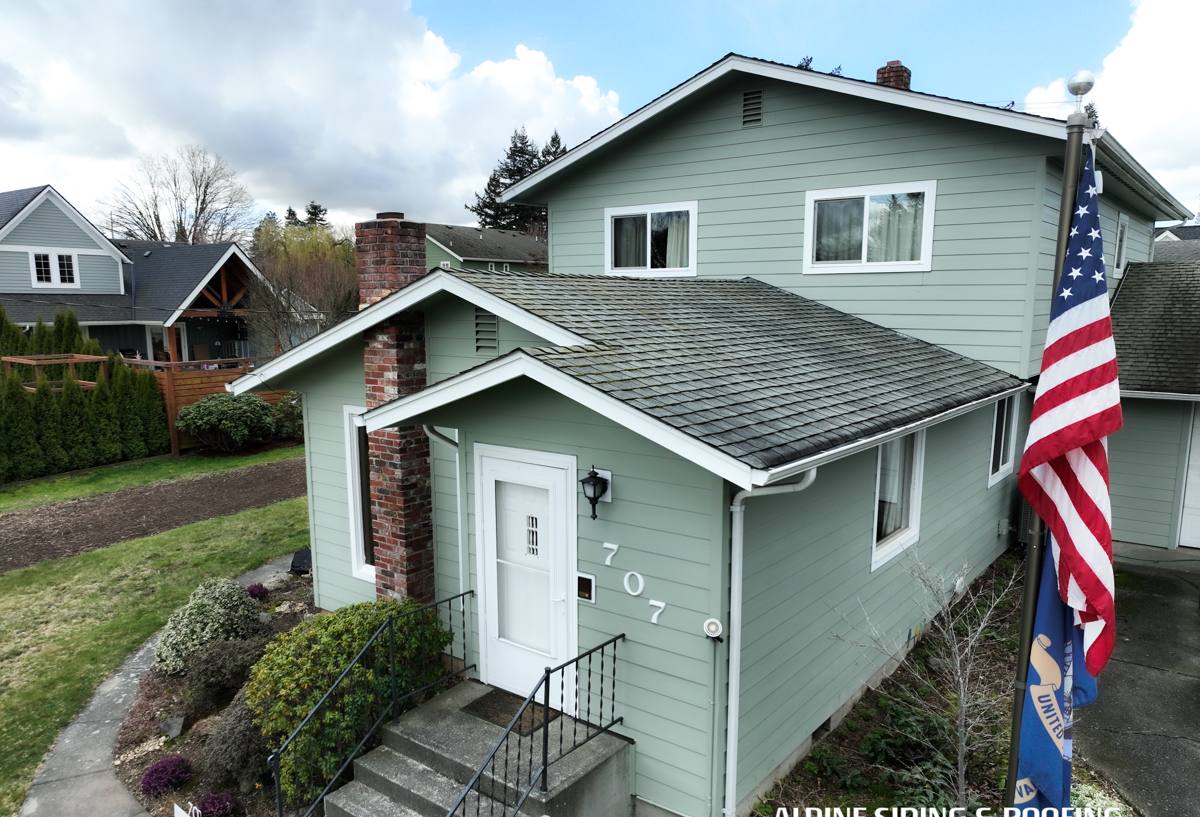
Why Columbia Homeowners Look at Metal Roofing
Metal roofing has become a common upgrade choice in Bellingham and across Whatcom County for reasons that go beyond appearance. A properly installed metal roof sheds wind-driven rain more effectively than a shingle roof because it has far fewer seams and no overlapping tabs for water to work under. Its slick, hard surface also resists moss and algae growth far better than asphalt, which matters directly in a neighborhood like Columbia where shaded, north-facing slopes stay damp for a large part of the year. Add in a lifespan that can run two to three times longer than a standard shingle roof, and it's easy to see why the upfront cost pencils out for homeowners planning to stay put.
None of that is automatic, though. A metal roof is only as good as its coating system, its fastening method, and the flashing detail around every valley, chimney, and wall transition. Salt air and driving rain are unforgiving of shortcuts in exactly those spots, which is why the installation choices below matter more here than they would on a drier, more sheltered lot.
What Local Weather Actually Demands
- Corrosion-resistant coatings and fasteners: Salt-tinged marine air accelerates corrosion on unprotected steel and undersized fasteners, which is where a metal roof's weak points usually show up first.
- Concealed or well-sealed fastening: Wind-driven rain gets pushed into any exposed penetration point, so how a panel is fastened matters as much as the panel material itself.
- Panels engineered for thermal movement: Temperature swings between a cold, wet night and a sunny afternoon cause metal panels to expand and contract, and a system that doesn't account for that will eventually work its fasteners loose.
- Moss and debris management at low-slope transitions: Metal resists moss on open panel runs, but valleys, crickets, and low-slope sections can still trap needles and debris that hold moisture against the surface.
What a Correct Metal Roof Install Involves
A metal roof isn't just panels screwed to a deck. Done right, it's a layered system where the underlayment, fastening method, and flashing work together to keep water moving off the roof rather than into it.
Panel Profile and Seam Type
The biggest decision on any metal roof is whether to use a standing-seam system, where panels interlock and fasteners are hidden underneath, or an exposed-fastener panel, where screws pass directly through the panel face. Standing seam costs more upfront but keeps every fastener out of direct weather exposure, which matters a great deal in a salt-air environment where exposed screw heads and washers are usually the first component to fail.
Underlayment and Moisture Barrier
A synthetic, high-temperature underlayment beneath the metal panels provides a genuine secondary water barrier if wind-driven rain ever works past a seam or fastener. Self-adhered ice-and-water membrane at eaves, valleys, and penetrations adds another layer of protection at the spots most likely to see water intrusion during a hard storm.
Fasteners and Fastener Corrosion in Salt Air
Fastener quality is one of the most overlooked details in a metal roof bid. Standard zinc-coated screws corrode faster near the water, and on exposed-fastener panels a corroded screw and its rubber washer are exactly where leaks start years down the road. Correctly specified fasteners use coatings and materials matched to the panel metal to resist that corrosion for the life of the roof.
Flashing at Valleys, Chimneys, and Wall Transitions
Just like any other roofing material, most metal roof leaks start at flashing details rather than in the open field of a panel run. Valleys, chimney and skylight penetrations, and wall-to-roof transitions all need flashing that's properly formed, lapped, and integrated with the underlayment beneath it — not caulked over as a substitute for correct metalwork.
Thermal Movement and Clip Systems
Metal expands and contracts more than shingles or fiber cement as temperatures shift. Standing-seam systems use floating clips that let panels move slightly without stressing the fasteners, which is what keeps long panel runs from buckling, oil-canning excessively, or working screws loose over repeated seasonal cycles.
Preventing Galvanic Corrosion
Different metals in direct contact with each other, or with wet debris from a dissimilar metal like copper gutters and flashing, can set off galvanic corrosion that eats away at the less noble metal over time. A correct install accounts for this with compatible fastener and flashing materials, or isolation where two different metals have to meet.
Comparing Metal Roofing Panel Types for a Columbia Home
| Panel Type | Typical Lifespan | Fit for Columbia Conditions |
|---|---|---|
| Standing Seam (Concealed Fastener) | 40-70 years | Best overall fit — hidden fasteners avoid the salt-air corrosion that damages exposed screws, and the fewer seams shed wind-driven rain more reliably |
| Exposed-Fastener Panel (Corrugated/Ribbed) | 20-40 years | Lower upfront cost, but exposed screws and washers are the first thing to fail near the water and typically need re-torquing or replacement over the roof's life |
| Stone-Coated Steel | 30-50 years | Mimics a shingle or tile profile with strong wind resistance, though trim and accessory fastening still needs the same corrosion-resistant detailing |
For most Columbia homes, standing-seam steel or aluminum is the panel type worth the extra investment given the combination of salt air, sustained wind-driven rain, and a wet season that runs long. Whether aluminum or steel makes more sense for a given home depends on how close the property sits to the water and how much the budget allows.
Steel vs. Aluminum: An Honest Comparison
Steel panels with a quality Galvalume or zinc-aluminum coating are the standard choice for most metal roofs and hold up well across Whatcom County when the coating is intact and properly maintained. Aluminum costs more but never rusts, since it doesn't contain iron, which makes it worth considering on properties sitting closest to the shoreline where salt exposure is heaviest. Neither is a wrong choice on its own — the coating system and installation quality behind either metal matter more to long-term performance than the base metal alone.
Cost Factors Worth Understanding
Metal roofing bids can vary widely for the same square footage, and the gap is almost always real scope difference rather than one contractor padding the price.
| Factor | What It Affects |
|---|---|
| Panel type: standing seam vs. exposed fastener | Upfront cost, long-term fastener durability, and appearance |
| Base metal: steel vs. aluminum vs. copper | Corrosion resistance, weight, and lifespan near the water |
| Coating system (Kynar/PVDF vs. standard paint) | Color retention, chalking resistance, and how long the finish holds up to UV and salt air |
| Underlayment grade | Backup protection against wind-driven rain reaching the deck |
| Flashing and trim scope | How thoroughly valleys, penetrations, and wall transitions are addressed |
| Roof complexity and access | Number of valleys, dormers, and pitch, which drives labor time and staging |
A written estimate that itemizes these components — rather than a single lump-sum figure — is the clearest way to compare bids honestly. It's worth asking any contractor to walk through exactly which coating tier, fastener spec, and flashing scope is included before making a decision on price alone.
Kynar/PVDF Coatings vs. Standard Paint Finishes
The coating on a metal panel does most of the work of keeping it looking good and performing well over decades. A Kynar 500 or PVDF-based finish resists chalking, fading, and coating breakdown from UV and salt exposure far longer than a standard polyester paint system, which is a meaningful upgrade to consider for a Columbia home rather than a cosmetic upsell.
How Our Process Works
A metal roof is a significant investment, and we keep the process transparent so a homeowner knows exactly what's happening at each stage.
- In-person inspection: We walk the existing roof and attic in person to assess deck condition, ventilation, and any existing moisture damage before recommending a system.
- Written, itemized estimate: You get a clear bid covering panel type, base metal, coating tier, underlayment, flashing scope, and fastener specification — not a vague single-line number.
- Scheduling around weather: We build reasonable flexibility into the timeline, since wet-season delays are a normal part of working in this region rather than an excuse after the fact.
- Deck prep and underlayment: Any deck repair needed is addressed first, then a synthetic underlayment and ice-and-water membrane go down at vulnerable areas before any metal is installed.
- Panel installation and flashing: Panels go on to manufacturer specification with correct clip spacing for thermal movement, and flashing is formed and integrated at every valley, penetration, and wall transition.
- Final walkthrough and cleanup: We review the finished roof with you, check fastener torque and seam closure, and do a full site sweep before calling the job complete.
Why Hiring a Crew That Already Works in Columbia Matters
A crew that regularly installs metal roofing in and around Columbia has already seen how salt air corrodes underspecified fasteners, how driving rain finds its way through poorly lapped flashing, and which roof orientations hold moss and debris longest through the wet season. That experience shows up in the small decisions made throughout a job — decisions a crew unfamiliar with this specific stretch of Whatcom County coastline might not think to make at all.
It also matters after the job is finished. A workmanship warranty is only worth as much as the company behind it, and a contractor with an established, ongoing presence in Bellingham is the one you can actually reach years later if a question comes up about the roof.
A Practical Checklist Before You Choose a Metal Roofing Contractor
- Do they specify panel profile, base metal, and coating system in writing, not just "metal roof"?
- Is the fastening method — standing seam versus exposed fastener — clearly explained along with its trade-offs?
- Does the estimate call out flashing scope at valleys, chimneys, and wall transitions specifically?
- Do they carry current WA contractor licensing, liability insurance, and workers' compensation?
- Can they point to recent, real metal roofing work in or near Columbia or greater Bellingham?
- Does the bid separate manufacturer coating warranty from their own workmanship warranty?
Signs Your Current Roof May Be Ready for a Metal Upgrade
Homeowners often start looking into metal roofing after noticing recurring problems with their existing roof rather than out of the blue. Catching these signs early makes the decision easier and less rushed.
- Repeated moss or algae regrowth on shaded roof planes shortly after cleaning
- Granule loss, curling, or lifted shingle edges on a wind-exposed slope
- Recurring leaks at the same valley or flashing point despite past repairs
- A roof nearing or past its expected service life with another wet season ahead
- Interest in reducing long-term maintenance and re-roofing frequency for a home you plan to keep
If any of that sounds familiar, it's worth having the roof looked at and getting real numbers on a metal upgrade before committing to another round of shingle repairs.
If you'd like an honest, no-pressure look at your Columbia home's roof and a written estimate to compare against anything else you've received, we're glad to come take a look. Use the form below to request a free estimate.