 Bellingham
 Window Replacement Built for Columbia's Coastal Conditions
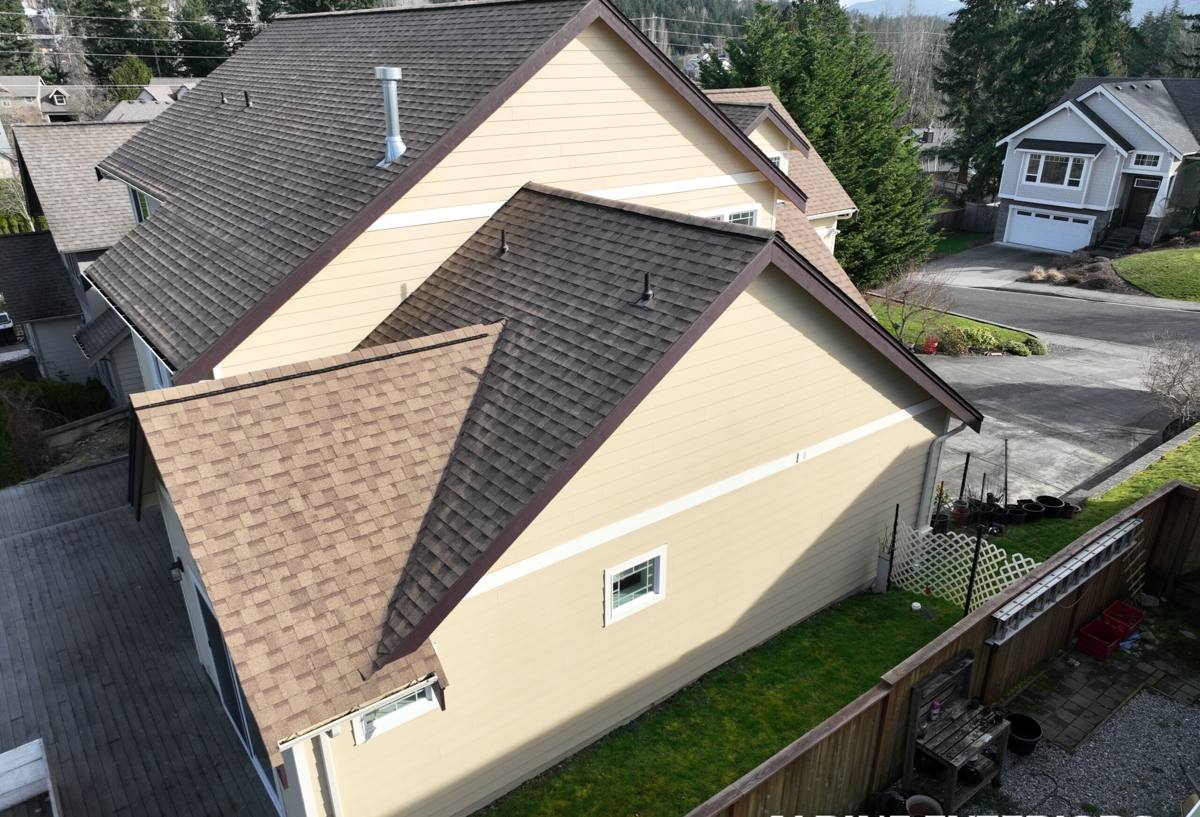
Columbia sits close enough to Bellingham Bay that its homes take on a different kind of weather load than houses further inland in Whatcom County. Salt-tinged air off the water, wind-driven rain that comes in sideways more often than straight down, and a moss season that can stretch from October well into spring all put steady pressure on window frames, sills, and the seals around them. Windows that were fine ten or fifteen years ago start showing it here first — sticking sashes, fogged glass, drafts you can feel standing three feet away. Replacing them correctly in this neighborhood means accounting for that exposure, not just swapping in a newer version of what's already failing.
What Bellingham's Climate Actually Does to Windows
Salt Air and Marine Exposure
Homes closer to the water deal with airborne salt that settles on exterior surfaces and accelerates corrosion on metal hardware — hinges, locks, balance mechanisms, and screen frames. Over years this shows up as pitted or seized hardware and, on older aluminum-frame windows, visible oxidation and pitting on the frame itself. It's a slow process, which is exactly why it's easy to miss until a window won't latch or lock properly anymore.
Driving Rain and Wind-Driven Water
Storms coming off the Sound don't just drop rain straight down — they push it sideways into the building envelope. A window that's watertight in a light, vertical rain can still leak under wind-driven conditions if the flashing and sill pan weren't detailed for it. This is one of the most common causes of hidden rot we find behind old window trim in this area: not a bad window, but water getting in around a window that was never flashed correctly in the first place.
The Long Moss Season
Whatcom County's damp stretch means moss and algae get a long runway to establish themselves in any spot that stays wet — window sills, the bottom rail of wood-frame windows, and gaps where caulking has failed. Once organic growth takes hold on a sill, it holds moisture against the wood or frame material and speeds up decay. It's cosmetic at first, then structural.
Signs a Columbia Home's Windows Are Due for Replacement
- Visible fog or moisture trapped between panes of double-glazed glass — a sign the seal has failed
- Sashes that stick, drop, or won't stay open without a prop
- Soft or spongy wood at the sill or bottom corners of the frame
- Persistent drafts even with the window fully closed and locked
- Paint that bubbles or peels repeatedly at the same spot despite repainting
- Visible corrosion or pitting on metal hardware and frames
- Rising heating bills without a clear cause elsewhere in the house
- Moss or dark staining building up on the exterior sill year after year
Estimating Correctly for This Neighborhood
Not every window on a Columbia home needs replacing at the same time. A south- or west-facing window that takes direct wind-driven rain will usually fail before a sheltered one on the north side of the same house. Part of doing a correct assessment is looking at exposure window by window, not just assuming uniform wear across the whole house.
What a Correct Window Replacement Job Actually Involves
Flashing and Water Management First
The window unit itself is only part of the job. Correct installation means integrating new flashing with the existing water-resistive barrier so water is directed out and down, not trapped behind the trim. This step is invisible once the job is done, which is exactly why it's the step that gets skipped by installers focused only on the visible parts of the work.
Sill Pans and Sloped Sills
A sill pan under the window rough opening gives any water that does get past the primary seal a way out instead of a place to pool. Given how much wind-driven rain this area sees, we treat this as standard practice, not an upgrade.
Air Sealing and Insulation
Gaps around the frame get sealed with appropriate low-expansion foam or backer rod and sealant — enough to stop air movement without bowing the frame out of square. Poorly insulated gaps are a common source of both drafts and condensation on the interior frame during Bellingham's cold, damp winters.
Proper Fastening and Squaring
A window that isn't shimmed and fastened level and square will operate poorly and stress its own seals over time, shortening its life regardless of how good the unit itself is.
Choosing a Window for Coastal Whatcom County Conditions
Frame material matters more here than in drier, inland climates because of the combination of salt air and sustained moisture exposure. Here's how the common options generally compare for a Bellingham coastal-adjacent home:
| Frame Material | Moisture Resistance | Salt Air Durability | Maintenance | Typical Cost Position |
|---|---|---|---|---|
| Vinyl | Good — won't rot | Good, hardware is the weak point | Low | Lower |
| Fiberglass | Excellent — dimensionally stable | Excellent | Low | Higher |
| Wood (unclad) | Poor without diligent upkeep | Fair, hardware corrodes faster | High — regular repainting/sealing | Mid to higher |
| Wood-clad (vinyl or aluminum exterior) | Good on exterior, wood core still vulnerable if seal fails | Good | Moderate | Higher |
| Aluminum | Fair — prone to condensation without thermal break | Poor to fair — corrodes without proper coating | Low | Lower to mid |
For most Columbia homes we lean toward vinyl or fiberglass for the combination of moisture tolerance and low upkeep, but the right call also depends on your home's architectural style — a historic or wood-sided home may call for a wood-clad unit to keep the sightlines and trim detail consistent, and that's a legitimate trade-off worth discussing rather than a rule to force on every house.
Glass Packages Worth Considering
Double-pane, low-E glass is the reasonable baseline for this climate. Argon-filled units add a modest efficiency bump for a modest cost increase. Triple-pane is worth pricing out on north-facing rooms or homes right along the water where wind load and cold snaps are more pronounced, but it's not a requirement for every window in the house.
Our Process for a Columbia Window Replacement
- On-site assessment — we look at each window's exposure, condition, and any signs of hidden water damage around the frame, not just the glass.
- Honest scope and estimate — a clear breakdown of which windows genuinely need replacement now versus which can wait, with straightforward pricing.
- Product selection — matched to your home's exposure, style, and budget, not a one-size push toward whatever's easiest to install.
- Removal and inspection of the opening — checking framing and sheathing behind the old window for rot before anything new goes in.
- Correct flashing and sill pan installation — the water management work described above, done before the new unit is set.
- Installation, sealing, and finish work — window set level and square, insulated, sealed, and trimmed to match.
- Walkthrough — operation checked on every window before we consider the job done.
What Drives the Cost of Window Replacement Here
| Factor | Why It Matters Locally |
|---|---|
| Number of windows | Per-unit cost typically drops with larger jobs, but each still needs individual flashing attention |
| Frame material | Vinyl and fiberglass carry different price points and different long-term maintenance costs |
| Extent of hidden water damage | Rot found behind old frames during removal adds repair scope before the new window goes in |
| Window size and style | Larger openings, bay windows, or custom shapes cost more than standard double-hung units |
| Access and home height | Second-story and hard-to-reach windows take more time and equipment |
| Glass package | Low-E, argon fill, and triple-pane options each step up the price |
We'd rather walk your specific windows and give you real numbers than quote a range that doesn't mean much for your house.
Why Hiring a Crew That Already Works in Columbia Matters
A crew that regularly works this part of Bellingham already knows which orientations take the worst weather, what kind of hidden rot to expect behind older frames near the water, and how to detail flashing for wind-driven rain rather than just following a generic installation manual. That local familiarity shows up in fewer surprises during the job and windows that actually hold up through a Whatcom County winter. It also means we're not learning the area's quirks on your project — we've already seen how salt air, driving rain, and moss season play out on homes like yours.
Get a Straightforward Estimate
If you're noticing drafts, fogged glass, or sticky sashes on your Columbia home, it's worth having someone take a real look before those small issues turn into a rot repair. We offer free, no-pressure estimates — use the form below to get started.