 Bellingham
 Building Decks for Edgemoor's Specific Conditions
Edgemoor sits close enough to Bellingham Bay that salt-laden air is a constant factor in how outdoor structures age here. Add in the long, wet stretch of fall through spring that Whatcom County sees every year, plus the moss growth that comes with shaded, tree-covered lots, and you've got a set of conditions that a generic deck build simply isn't designed to handle. A deck that would hold up fine in a dry inland climate can start showing fastener corrosion, soft framing, or slick moss coverage within a few seasons out here if it wasn't built with this environment in mind.
We're not talking about exotic engineering. It's about material choices, fastener grades, and drainage details that account for what this specific neighborhood puts a structure through year after year. This page walks through what that actually looks like for a custom deck project in Edgemoor.
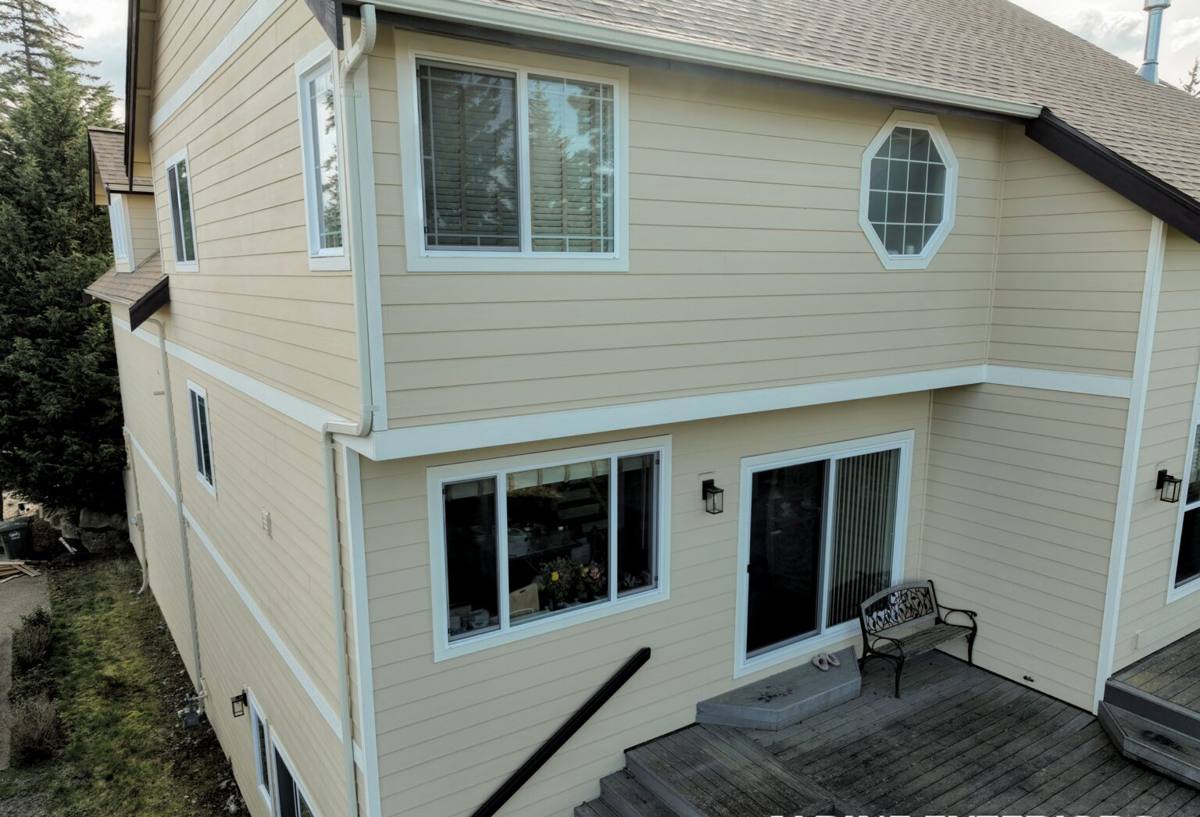
What Salt Air, Rain, and Moss Actually Do to a Deck
Salt Air and Corrosion
Proximity to Bellingham Bay means airborne salt reaches structures even without direct ocean spray. Over time it accelerates corrosion on standard fasteners, joist hangers, and connector hardware — especially in tucked-away spots that don't dry out quickly, like under ledger boards or between decking boards. Corroded fasteners aren't just cosmetic; they lose holding strength, which is a structural issue, not just an appearance one.
Driving Rain
Whatcom County doesn't usually get short, hard downpours — it gets long stretches of steady, wind-driven rain. That kind of weather finds every gap in flashing, every poorly sealed ledger connection, and every spot where water can pool instead of shed. A deck that isn't detailed for sustained wet weather will eventually let moisture into places it shouldn't be, particularly where the deck meets the house.
Moss and Shade
Many Edgemoor lots have mature tree cover, which is part of the neighborhood's character but also means decks get less direct sun and more standing moisture than an open, exposed site would. Moss and algae take hold fastest on horizontal wood surfaces that stay damp, and once established they hold moisture against the wood and make the surface genuinely slippery — a real safety issue on stairs and landings.
Decking Material Comparison for This Climate
There's no single "correct" material for every project — it depends on budget, maintenance appetite, and how much sun or shade the deck gets. Here's how the common options actually perform under Edgemoor's conditions:
| Material | Moisture & Moss Behavior | Maintenance | Typical Lifespan Here |
|---|---|---|---|
| Pressure-treated fir/hem-fir | Absorbs moisture readily; needs sealing to resist moss and rot | Annual cleaning, re-sealing every 1-2 years | 10-15 years with upkeep |
| Cedar | Naturally moisture- and insect-resistant, but still needs care in shaded spots | Periodic cleaning and oil/stain | 15-20 years with upkeep |
| Composite decking | Doesn't rot, but moss and algae can still grow on the surface in shade | Occasional washing, no sealing/staining | 25+ years (check manufacturer warranty) |
| PVC/capped polymer | Fully moisture-resistant surface; least hospitable to moss buildup | Lowest — occasional washing only | 25+ years (check manufacturer warranty) |
For heavily shaded Edgemoor lots, we generally steer homeowners toward composite or capped polymer decking over the walking surface, specifically because it removes the wood-moss cycle that's hardest to keep up with under tree canopy. That's a maintenance-and-moisture call, not a knock on wood — a well-maintained cedar deck in a sunnier spot on the same street can perform beautifully for decades.
The Substructure: Where the Real Work Happens
The decking boards are what you see, but the framing underneath is what determines whether the deck is still solid in ten or fifteen years. In a salt-air, high-rainfall environment, we treat the substructure as the priority, not an afterthought:
- Footings sized and set below frost depth, with drainage considered so water doesn't sit against concrete or posts
- Framing lumber rated for ground contact where it's near grade, even if the finished deck sits above it
- Stainless steel or heavy hot-dip galvanized fasteners and structural connectors — standard electro-galvanized hardware corrodes faster near the bay and is not what we use for structural connections here
- Joist tape or a moisture barrier on top of joists so water doesn't wick into the end grain through fastener penetrations
- Proper spacing between boards for airflow and drainage, adjusted slightly tighter or wider depending on the material
None of this is visible once the deck is finished, which is exactly why it matters to hire a crew that won't cut corners on it just because it's hidden.
Ledger Attachment and Drainage: The Most Common Failure Point
If a deck in this region is going to develop a moisture problem, it's most often at the ledger board — the piece that attaches the deck to the house. Driving rain pushed by wind can work its way behind an improperly flashed ledger over time, leading to rot in the rim joist or sheathing behind it. This is a slow, hidden failure that often isn't obvious until siding or interior damage shows up.
We flash every ledger connection properly, with a waterproof membrane and metal flashing that sheds water away from the house rather than trapping it against the wall. Combined with correct fastener spacing and, where the site calls for it, structural standoffs that hold the deck slightly away from the house, this is the single biggest thing separating a deck that lasts from one that quietly rots from the inside.
Overall drainage matters too. Decks built low to the ground or over patios need a plan for where rainwater goes — sloped decking, gaps between boards, and sometimes an under-deck drainage system if the space below is meant to stay usable and dry.
Living With Moss Season: Realistic Maintenance
No deck material is entirely maintenance-free once you're under trees near the bay, but the maintenance burden varies a lot by material and design choice. A few things that make ongoing upkeep genuinely manageable rather than a constant chore:
- Choosing decking with a textured or grooved surface designed to resist visible algae staining
- Keeping board gaps clear of debris that traps moisture — a quick sweep or blow-out before the wet season starts
- An annual wash with a deck-safe cleaner rather than aggressive power-washing, which can damage both wood and composite surfaces
- Trimming back overhanging branches where practical to get a bit more sun and airflow onto the deck surface
- Re-sealing or re-staining wood decking on schedule rather than waiting until it's visibly weathered
We talk through this realistically during the design phase — what a homeowner is actually willing to keep up with should shape the material decision, not just the upfront cost.
Our Process for an Edgemoor Deck Project
The process is straightforward and the same honesty applies at every step:
- On-site assessment. We look at sun exposure, tree cover, drainage patterns, and how the deck will attach to the house before recommending materials.
- Design and material selection. We walk through the trade-offs above in plain terms — no pushing a product because it's what we have on hand.
- Permitting. Most attached decks in Bellingham require a building permit; we handle the application and inspections as part of the job so you're not chasing paperwork.
- Construction. Footings, framing, flashing, and decking installed in that order of priority — the parts you won't see get the same attention as the parts you will.
- Final walkthrough. We go over the finished deck together, including basic care guidance specific to the material you chose.
Why a Crew That Already Works in Edgemoor Matters
A lot of what makes a deck last in this specific spot isn't in a manufacturer's install guide — it's knowing how Whatcom County's weather actually behaves on the ground, how the City of Bellingham's permitting process works, and what site conditions come up repeatedly on lots in this part of town, from sloped or elevated yards to mature root systems that affect footing placement. A crew that already works locally isn't guessing at fastener grades or flashing details — it's applying what's already been proven to hold up on decks just like yours, in the same climate, for years.
That local familiarity also means fewer surprises during the build: knowing which inspectors to expect, how weather windows typically run through the build season, and what site access looks like on the kind of wooded, sloped lots common in Edgemoor.
Signs of a Well-Built Deck: A Homeowner's Checklist
Whether you're evaluating a new build or assessing an older deck, these are the things worth checking:
- No visible rust streaks around fasteners or hardware
- Ledger board flashing is visible and intact where it meets the house
- Deck boards are evenly spaced with no soft or spongy spots underfoot
- Railings and stair connections feel solid with no flex
- Water drains off the surface rather than pooling after rain
- Minimal moss buildup even in shaded corners, or a clear plan for managing it
If you're planning a new deck or replacing one that's showing its age, we're happy to take a look and give you a straightforward, no-pressure estimate — just fill out the form below.