 Bellingham
 Deck Building in Ferndale: Built for What This Climate Actually Does
Ferndale sits close enough to the water that salt air is a real factor in how a deck ages, not just a talking point. Add Whatcom County's long wet season and the moss that comes with it, and you've got a climate that's genuinely tougher on outdoor structures than most of the country. A deck built here needs to be built for here — not for a catalog photo taken somewhere dry and sunny.
We build and repair decks throughout the Ferndale area, and the failures we get called out for are almost always the same handful of things: fasteners that corroded faster than the wood around them, ledger boards that trapped water against the house, joists that never got proper flashing, and surfaces that turned into moss farms because nobody planned for drainage or airflow underneath. None of that is exotic. It's just what happens when a deck gets built to a generic spec instead of a Whatcom County one.
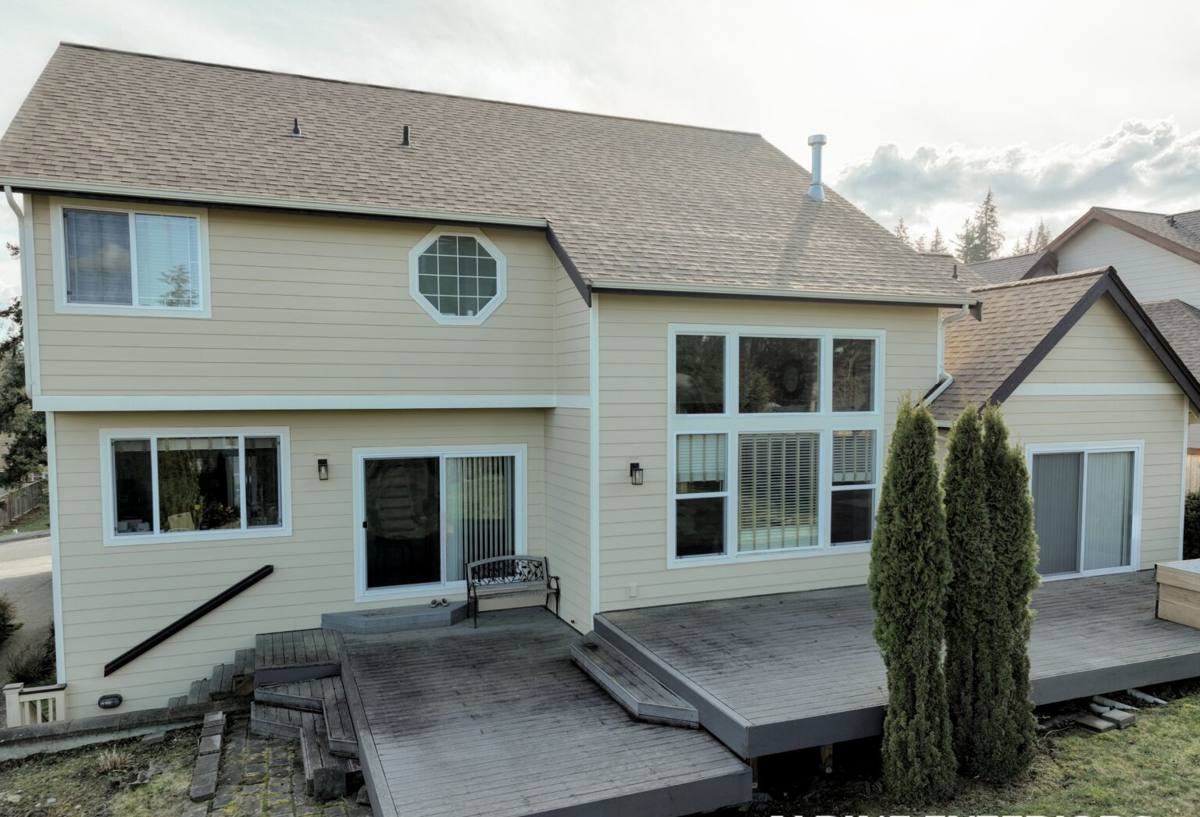
What Salt Air, Rain, and Moss Actually Do to a Deck
Salt Air and Metal Hardware
Salt-laden air accelerates corrosion on anything metal — fasteners, joist hangers, structural screws, even some flashing. A deck built with standard-grade hardware in a coastal-influenced area can start showing rust streaks and weakening connections years before an identical deck further inland would. Since most of a deck's structural integrity lives in its fasteners and connectors, this is one of the most important — and most commonly cut — corners.
Driving Rain and Water Intrusion
Rain here doesn't just fall straight down; wind-driven rain gets pushed sideways into ledger boards, under railings, and into any gap that isn't properly flashed or sealed. Over a full wet season, that adds up to real moisture load. The ledger board — where the deck attaches to the house — is the single most common source of rot and hidden water damage on decks in this region, and it's almost always because flashing was skipped or done wrong.
Moss, Algae, and Slick Surfaces
Whatcom County's extended damp season gives moss and algae months to establish themselves on any deck surface that doesn't drain and dry well. Beyond looking bad, a mossy deck surface is a slip hazard, and moss holding moisture against wood or composite decking accelerates wear underneath it. Decks with poor airflow, tight board spacing, or shaded, low-sun exposure are the worst affected.
Decking Material Options for a Ferndale Climate
There's no single "right" material for every deck — it depends on budget, how much upkeep you want to do, and how exposed the deck is to weather. Here's how the common options actually perform in this climate.
| Material | Moisture Performance | Maintenance | Notes for This Climate |
|---|---|---|---|
| Pressure-treated wood | Good if properly sealed and maintained | Annual cleaning and re-sealing recommended | Lowest upfront cost; needs consistent upkeep to resist moss and rot in wet seasons |
| Cedar | Naturally rot- and insect-resistant | Periodic oiling/sealing to hold color and resist moisture | Popular regionally; still needs sealing here despite natural resistance |
| Composite decking | Very good — resists rot and swelling | Low; periodic cleaning to prevent surface moss/algae buildup | Good long-term choice for wet, shaded yards; quality varies by brand and product line |
| PVC/capped decking | Excellent — essentially non-absorbent | Lowest; occasional washing | Best resistance to moisture and salt exposure; higher upfront cost |
Composite and PVC decking have gotten a lot of attention here because they don't absorb water the way wood does, which matters when a deck is under trees or gets shaded for long stretches during Whatcom County's rainy months. That said, a well-built and well-maintained wood deck can absolutely hold up here too — the difference usually comes down to how the substructure was built and how consistently the surface gets maintained, not the decking material alone.
Where Decks Actually Fail: The Substructure and Fasteners
The decking boards are what you see, but the framing underneath is what determines whether a deck lasts 10 years or 30. This is where corners get cut most often, because it's invisible once the deck is finished.
- Ledger flashing: The ledger board needs proper flashing to keep water from getting behind it and into the house rim joist — this is the single most important detail on an attached deck.
- Joist protection: Joist tops should have a moisture barrier or tape to keep water from soaking into end grain and fastener holes.
- Corrosion-appropriate hardware: Fasteners, joist hangers, and structural screws should be rated for the moisture and, where relevant, the salt exposure the deck will see — not just the minimum grade allowed by code.
- Post bases: Posts should sit on bases that keep the wood end grain off standing water, not buried in or resting directly on soil or concrete.
- Airflow underneath: Adequate clearance and drainage under the deck reduces the trapped moisture that feeds rot and moss.
A deck can look great for the first couple of years even with shortcuts in all of these areas. The problems show up later, which is exactly why so many "deck repairs" we see are really full rebuilds — the visible boards were fine, but the frame underneath had been failing quietly the whole time.
Our Deck Building Process
We approach every deck project the same methodical way, adjusted for the specific site:
- On-site assessment: We look at sun exposure, drainage, tree cover, and how exposed the site is to wind-driven rain, since these all affect material and design choices.
- Design and material selection: We walk through decking, framing, and hardware options honestly — including trade-offs in cost, maintenance, and lifespan — so you're picking based on real information, not a sales pitch.
- Permitting: Deck projects above certain sizes or heights typically require a permit through the local building department. We handle this as part of the project scope.
- Structural build: Proper footings, ledger flashing, corrosion-appropriate fasteners, and correctly sized framing — the parts that determine how long the deck actually lasts.
- Decking and finish work: Board installation, railing, stairs, and any finishing or sealing the material requires.
- Walkthrough: We go over maintenance expectations for your specific material so you know what upkeep actually looks like going forward.
Permits and Code Considerations
Most new decks and many significant deck rebuilds require a building permit, with requirements tied to deck height, size, and attachment to the house. Requirements can differ depending on whether a property falls under Whatcom County or City of Ferndale jurisdiction, so we confirm the correct process for your specific address before work starts rather than assuming. Skipping permits on a deck that requires one can create real problems later — at resale, with insurance, or if the structure is ever inspected.
Maintenance That Actually Matters Here
The maintenance a deck needs in Ferndale isn't the same as what a generic homeowner guide will tell you, because most of those guides aren't written for a climate with this much rain and moss pressure. A realistic maintenance routine:
- Sweep debris and standing leaves off the surface regularly, especially in fall and winter, so moisture doesn't sit and feed moss growth.
- Clean the deck surface at least once a year to remove moss, algae, and grime before it embeds into the material.
- Check railings, stairs, and connection points annually for movement, corrosion streaks, or soft wood.
- For wood decking, plan on re-sealing or re-staining on a schedule appropriate to the product — sun and rain exposure both accelerate the need.
- Keep gutters and downspouts near the deck clear so runoff isn't dumping extra water onto or under the structure.
- Trim back vegetation that's shading the deck and keeping it damp longer than it should be.
Why Hire a Crew That Already Works in Ferndale
A deck builder who mostly works in drier climates will make different assumptions than one who works this coastline regularly — about fastener grade, flashing detail, board spacing for drainage, and how much maintenance to actually recommend. None of that is guesswork for us; it's what we deal with on every deck we build or repair in this area. That local experience is the difference between a deck that looks good in photos and one that's still structurally sound after a decade of Whatcom County winters.
If you're planning a new deck or dealing with an aging one that's showing signs of moss, soft spots, or rusted hardware, we're happy to take a look and give you a straight assessment. Reach out for a free, no-pressure estimate using the form below.