 Bellingham
 Building Decks for Sudden Valley's Particular Conditions
Sudden Valley sits along Lake Whatcom's southeast shore, wrapped in second-growth forest and built across a lot of sloped, terraced ground. That combination — tree canopy, lake-adjacent humidity, and hillside lots — makes deck building here a different job than a flat, open lot closer to town. A deck that would hold up fine in a sunny, exposed yard can struggle in a shaded Sudden Valley backyard where it stays damp for days after a storm and never gets a real chance to dry out.
Whatcom County's marine climate already means a long wet season and a real moss problem on any horizontal wood surface. In Sudden Valley specifically, heavy tree cover adds shade that slows drying even further, and many homes are built on slopes that call for taller, more heavily engineered deck structures than you'd see on a level lot. We build decks around those realities rather than treating every job like it's the same generic build.
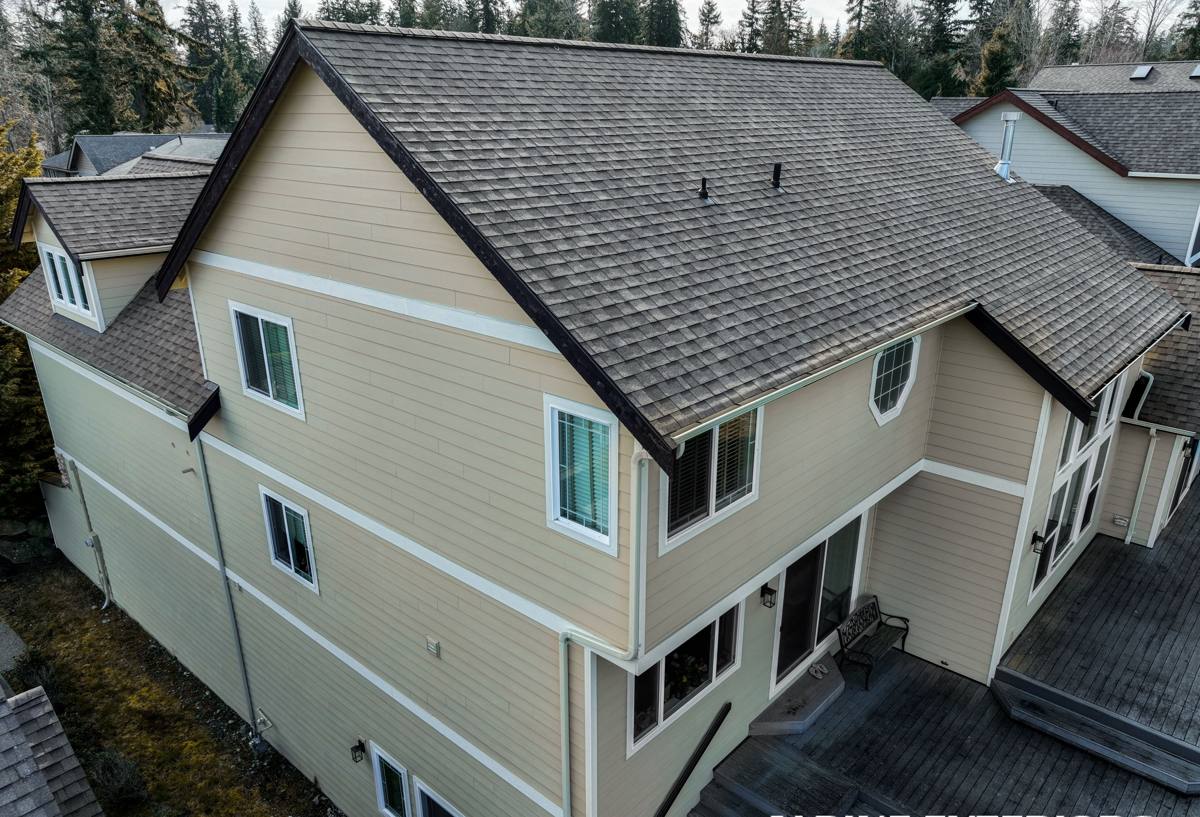
What the Local Conditions Actually Do to a Deck
Shade and Moisture
Tree-shaded decking stays wet longer after rain, which is exactly what moss, algae, and early wood decay need to get established. Decking that never sees direct sun for most of the day will grow moss faster than decking with more sun exposure, regardless of the material, if the boards aren't spaced and installed to let air and water move through.
Slope Lots and Structure
Many Sudden Valley homes are built into a hillside, with decks that step down the grade or cantilever out over a slope to catch a lake or forest view. That means deeper or more numerous footings, taller posts with proper bracing, and engineering that accounts for the slope — not just a standard deck plan scaled up.
Regional Climate, Broadly
Whatcom County sits in a marine, moisture-heavy climate zone — the same driving rain and long moss season that affects siding and roofing across the region also works on decks. Fasteners corrode faster, untreated end grain soaks up water, and any spot where two pieces of wood meet without a gap becomes a place for rot to start.
What a Correctly Built Deck Involves
A deck that's going to hold up in this climate isn't just "lumber, screwed together." The details that matter most are usually the ones you can't see once the deck is finished:
- Ledger board properly flashed and through-bolted to the house framing — not just nailed or lag-screwed, and never left unflashed where it meets the siding
- Footings sized and set to local frost depth and soil conditions, and engineered for slope where the lot requires it
- Joist hangers and structural fasteners matched to the treated lumber species so they don't corrode from contact with the chemical treatment
- Deck board spacing that allows for drainage and airflow underneath, not tight-butted boards that trap moisture
- Self-adhering flashing tape over joist tops to keep water out of the end grain, which is where rot usually starts first
- Guardrails, baluster spacing, and stair geometry built to current code — not just "close enough"
- Proper grading or drainage under the deck so water doesn't pool against posts and footings
Skip any one of these and the deck can still look fine for a season or two. The problems that come from cutting corners on a deck build usually show up as rot, not as something obvious the day it's finished — which is part of why deck failures tend to surprise homeowners.
Choosing Decking Material for a Shaded, Damp Lot
There's no single "best" decking material for every yard — it depends on how much sun the deck gets, how much upkeep you're willing to do, and your budget. For a shaded Sudden Valley lot, moisture and moss resistance matter more than they would on an open, sunny site.
| Material | Moisture/Moss Behavior | Maintenance | Typical Lifespan | Relative Cost |
|---|---|---|---|---|
| Pressure-treated lumber | Resists rot with proper drainage; still needs to dry out between rains | Regular cleaning and periodic sealing/staining | 15–25 years with upkeep | $ |
| Cedar | Naturally decay-resistant, but softer surface; moss can still take hold in constant shade | Cleaning plus sealing every few years to hold its color and resist moisture | 15–20 years with upkeep | $$ |
| Composite / capped composite | Doesn't absorb water or rot, though moss and algae can still grow on the surface film in deep shade | Periodic washing; no staining or sealing | 25–30+ years | $$$ |
In heavily shaded yards, we lean toward materials and details that shed water fast and don't hold surface moisture, since that's the real driver of moss and slip risk here — more than which specific brand of board is used. Whatever material a homeowner chooses, we treat the framing, flashing, and fastener choices the same way, because that's what actually determines how long the deck lasts.
Guardrails, Stairs, and Code on a Sloped Lot
Elevated decks on hillside lots need guardrails at the correct height, baluster spacing that meets code, and stairs with consistent rise and run — inspectors check all of this, and it's also just basic safety on a deck that might sit several feet above grade on the downhill side. On a sloped Sudden Valley lot, stair layout often has to work around the grade itself, which is one more reason a generic, off-the-shelf deck plan doesn't always fit the site. We design the structure to the actual slope rather than forcing a flat-lot plan onto a hillside.
Permits and Sudden Valley's Own Rules
Sudden Valley is unincorporated, so deck permits go through Whatcom County rather than the City of Bellingham. On top of the county permit, Sudden Valley is a private, covenant-governed community with its own design review process for exterior projects — so a deck project here typically needs sign-off from both the county and the community's own review process before work starts. Missing either step can mean delays or, worse, having to modify a finished deck. Knowing both processes ahead of time keeps the schedule realistic instead of guessing at it.
How We Approach a Sudden Valley Deck Build
- Site visit. We look at the slope, existing structure (if any), sun exposure, tree cover, and how water moves across the yard before we design anything.
- Design and engineering. For sloped or elevated decks, we work out footing placement, post height, and bracing to fit the actual grade — not a generic layout.
- Permitting. We handle the county permit application and, where needed, the paperwork for the community's design review, so the homeowner isn't chasing two separate approvals on their own.
- Build. Footings, framing, flashing, decking, and railings — built in that order, with the parts nobody sees getting the same attention as the parts that do.
- Walkthrough. We go over the finished deck with the homeowner, including what basic upkeep looks like given the shade and moisture on that specific lot.
Living With a Deck Through Bellingham's Moss Season
No deck in this climate is maintenance-free, but a well-built one needs a lot less attention than a poorly built one. A few habits go a long way in a shaded, damp yard:
- Sweep leaves and needles off the deck regularly — trapped organic debris holds moisture and feeds moss
- Keep gutters and downspouts near the deck clear so runoff isn't dumping extra water onto it
- Clean visible moss and algae off the surface before it builds up a slick layer, especially on stairs
- Check the ledger board area and any spots where the deck meets the house siding once a year for soft or discolored wood
- Re-seal or re-stain wood decking on the manufacturer's recommended schedule, not just when it starts looking gray
- Trim back overhanging branches where practical to let more light and air reach the deck surface
Why a Crew That Already Works Sudden Valley Matters
A deck contractor who hasn't worked in Sudden Valley before is learning the gate access, the community's design review requirements, and the realities of building on these slopes on your project's timeline. A crew that already works here knows what the county permit process looks like, what the community's review process expects, and how to plan footings and framing for the kind of hillside lots that are common throughout the neighborhood. That familiarity generally means fewer surprises mid-project and a build that's designed for the lot it's actually going on, not adapted from a flat-lot plan after the fact.
If you're planning a new deck or replacing one that's showing its age, we're happy to come take a look and walk the site with you. Fill out the form below for a free, no-pressure estimate — we'll give you a straight read on what your lot and your budget can actually support.