 Bellingham
 Why Ferndale Decks Wear Differently
Ferndale sits close enough to Bellingham Bay and the Strait that salt-laden air reaches yards even a few miles inland, and that air does something specific to a deck that homes further from the water don't have to deal with. Salt residue holds moisture against fasteners and hardware longer than plain rain would, which speeds up corrosion on anything less than a fully rated exterior fastener. Combine that with Whatcom County's long wet season — often October through May with only short breaks — and you get decks that spend more months of the year damp than dry. Add the moss and algae that thrive in that same shade-and-moisture combination, and you have three separate stresses working on the same structure at once: corrosion, wood moisture cycling, and biological growth that traps even more water against the surface.
None of that means a deck in Ferndale is doomed. It means the repair has to account for all three, not just patch the board that's obviously rotten. A repair that ignores the fastener corrosion or the moss underneath the failing boards is a repair that fails again in two or three winters.
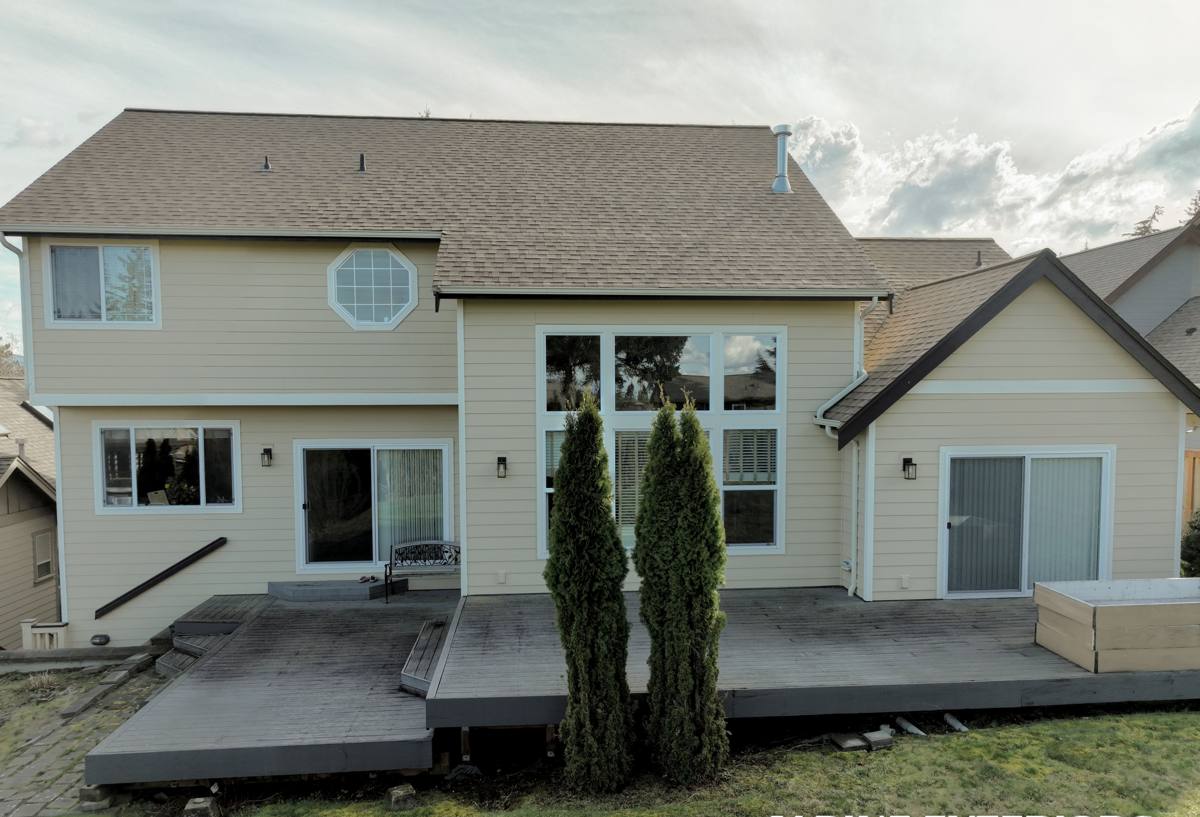
What We're Usually Called Out For
Soft or Spongy Decking Boards
This is the most common call. Water sits on horizontal surfaces, especially where boards butt against the house or where debris collects in gaps, and wood starts to break down from the inside before it looks bad from the top. By the time a board flexes underfoot, the damage usually goes deeper than that one board.
Rusted or Failing Fasteners
Nails and screws that weren't rated for coastal exposure streak the decking with rust stains and lose their grip over time. Once a fastener starts to corrode, the hole around it enlarges and takes on water faster, which accelerates rot in the wood right around it.
Moss and Algae Buildup
Green or black film on decking isn't just cosmetic. Moss holds a layer of moisture against the wood or composite surface around the clock, even during the drier summer stretch, and it makes the deck slick and genuinely dangerous underfoot in wet weather.
Ledger Board and Attachment Issues
The ledger board — where the deck attaches to the house — is the single most important structural connection on most decks, and it's also one of the hardest to inspect without pulling material back. Water intrusion behind the ledger, often from a missing or failed flashing detail, can rot both the ledger and the rim joist behind it without much visible warning.
Railing and Post Movement
Loose railings and posts that wiggle at the base are usually a sign that the fasteners or the wood around them have weakened, not just that a bolt needs a quarter-turn. This is a safety item we take seriously on every inspection.
What a Correct Repair Actually Involves
A repair that holds up in this climate starts with finding out how far the damage actually extends, not just fixing the board someone can see. Our process on a typical Ferndale deck repair looks like this:
- Full structural check — we probe suspect boards, joists, and the ledger connection with a moisture meter and a screwdriver test, not just a visual look, since rot often runs past what's visible from the surface.
- Identify the moisture source — a repair without finding why that section got wet in the first place (poor drainage, missing flashing, debris trapped in a gap, a failed board seal) is a repair that fails again.
- Remove and replace damaged material — we cut back to solid, dry wood rather than stopping at the edge of visible rot, because wood fibers can be compromised further than they look.
- Correct the fastener spec — any fastener going back in gets matched to coastal-rated hardware, typically stainless or heavy hot-dip galvanized, so we're not setting up the next round of rust staining and hole enlargement.
- Address drainage and airflow — gapping, flashing, and ledger details get corrected where that's the root cause, not just patched over.
- Treat and seal exposed wood — cut ends and replaced sections get properly sealed before they're closed back up, since a fresh cut is the most vulnerable point on any board.
- Clean and treat for moss — where growth has been established, we clean the surface and talk through realistic upkeep so it doesn't come straight back with the next wet stretch.
Repair vs. Replacement: How We Make That Call
Homeowners often assume a deck with visible problems needs to come out entirely. Sometimes that's true — but plenty of decks with real structural bones just need targeted work. We look at the ratio of sound material to compromised material, the age and condition of the framing versus the decking, and whether the underlying structure was built correctly in the first place. A deck with solid joists and a rotted section of decking is a repair. A deck with a compromised ledger connection, undersized or rotted framing, and decking failing in multiple unrelated spots is usually a rebuild conversation, and we'll tell you that plainly rather than stack patches on a structure that's past its useful life.
| Factor | Points Toward Repair | Points Toward Replacement |
|---|---|---|
| Framing/joists | Solid, dry, no rot found | Soft or rotted in multiple spots |
| Ledger connection | Sound, properly flashed | Water damage behind ledger or rim joist |
| Decking condition | Isolated soft boards | Widespread softness or splitting across the deck |
| Fasteners | Localized rust, easy to swap | Corrosion throughout, holes enlarged |
| Deck age | Under 15-20 years, built to code | Older, undersized framing, or unknown build history |
Materials That Hold Up to Local Conditions
What a board is made of matters as much as how well it's installed, especially with the salt exposure and long wet season Whatcom County decks deal with. We'll walk through the honest trade-offs for your specific deck rather than push one product as a cure-all:
- Pressure-treated lumber — affordable and easy to source and match to an existing deck, but it needs consistent sealing and is the most sensitive to moisture cycling if that upkeep slips.
- Cedar — naturally resists some decay and looks the part in this region, but it's a softer wood that still needs regular finish maintenance to hold up against driving rain and moss.
- Composite decking — much lower maintenance and resists rot outright, but it comes at a higher upfront cost and still needs airflow underneath and clean gaps so moss and debris don't build up on the surface.
- Fasteners and hardware — regardless of decking material, we standardize on stainless or coastal-rated galvanized hardware on repairs in this area, since that's usually the actual point of failure we're called back for.
We don't push composite on every job — a well-maintained wood deck with correct hardware and drainage can last plenty of years here too. The right call depends on your budget, how much upkeep you want to do, and the condition of what's already there.
A Practical Off-Season Checklist
Between our visits, a few habits go a long way toward keeping a Ferndale deck out of trouble through the wet months:
- Sweep debris out of board gaps regularly — trapped leaves and needles hold moisture against the wood and feed moss growth.
- Check that furniture and planters aren't sitting directly on the decking for months at a time, which blocks airflow and traps moisture underneath.
- Look at fastener heads each fall for early rust staining — catching that early is a small fix, not a rebuild.
- Clear gutters and downspouts near the deck so runoff isn't draining straight onto or under it.
- Test railings and posts by hand periodically for looseness, especially before hosting guests.
- Address any soft spots as soon as you notice them rather than waiting for a full dry season, since damage progresses through the wet months, not the dry ones.
Our Process, Start to Finish
We keep the process straightforward because most homeowners just want an honest answer and a fix that lasts. A first visit is a hands-on inspection, not a sales pitch — we'll show you what we find, probe the areas that concern us, and explain what's driving the damage. From there we put together a written scope that separates must-fix structural items from optional cosmetic work, so you're deciding with full information rather than guessing at what's actually necessary. Repairs are scheduled around Whatcom County's weather windows where possible, since some work is easier and more durable when done during a drier stretch, though urgent structural or safety issues don't wait for good weather. When the work is done, we walk the deck with you and point out what maintenance will keep it in good shape going forward.
Why a Crew That Already Works Ferndale Makes a Difference
Deck repair isn't identical everywhere in the country, and it isn't even identical everywhere in Washington. A crew that regularly works Ferndale and the surrounding Whatcom County area already knows what salt exposure does to fastener choice, how aggressive moss growth gets in shaded yards near the water, and which construction details tend to fail first in decks built to older or less coastal-aware standards. That local pattern recognition means fewer surprises mid-project and a repair scope that's realistic from the first inspection, rather than one that grows once work is already underway. It also means we're not guessing at appropriate materials for the exposure your deck actually sees — we're specifying what we've seen hold up on decks like yours, in this weather, year after year.
If your Ferndale deck has soft spots, rust streaks, persistent moss, or just doesn't feel as solid as it used to, we're happy to take a look. Fill out the form below for a free, no-pressure estimate and a straight answer on what it actually needs.