 Bellingham
 Deck Replacement for Lynden Homes
Lynden sits inland from Bellingham Bay but still gets the full Whatcom County weather pattern: long stretches of steady rain from fall through spring, heavy dew and fog off the Nooksack valley, and short, intense summer sun that can bake a deck surface after months of saturation. A deck built or patched without that cycle in mind will fail years before it should — not dramatically, but in the slow, boring way that costs homeowners the most: soft joists, rusted-out fasteners, and boards that cup and split even though the deck "looked fine" the year before.
We work Lynden regularly alongside the rest of our Bellingham-area service area, and the deck failures we see out here follow a pattern. This page covers what that pattern looks like, what a proper replacement actually involves, and how to think about your options before you sign anything.
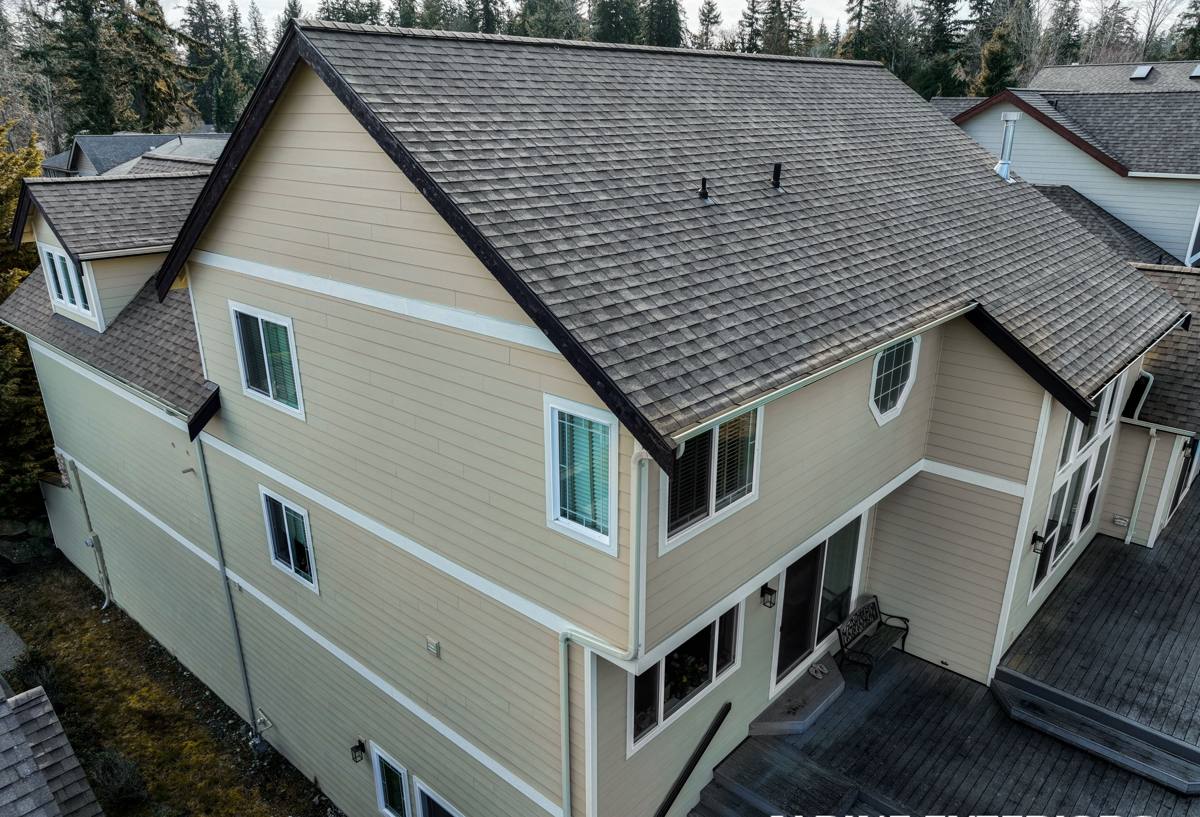
Why Decks Fail Faster Here Than People Expect
Wood and wood-composite decking don't fail because rain touches them — they fail because water gets trapped and can't leave. Whatcom County's climate is built to create exactly that condition.
The moss and moisture cycle
A deck that stays damp for months at a time grows moss and algae on any surface that doesn't get direct sun and airflow — under railings, in shaded corners, and especially on north-facing decks that barely dry out between October and April. Moss holds moisture against the wood fibers, and that constant dampness is what actually rots a board, not a single rainstorm.
Freeze-thaw stress on fasteners and framing
Lynden gets enough cold snaps each winter that any water sitting in a screw hole, a joist hanger, or a poorly sealed cut end will freeze, expand, and widen the crack it's sitting in. Repeat that cycle for a few winters and you get loose ledger boards, popped fasteners, and joists that have started to delaminate from the inside — often invisible until someone steps wrong and a board gives.
Salt-tinged air and metal hardware
Even inland from the water, Whatcom County's marine air carries enough salt and moisture to accelerate corrosion on any hardware that isn't rated for exterior, coastal-adjacent use. Cheap electro-galvanized screws and joist hangers are the single most common point of failure we find on decks we're asked to replace — the wood is often still structurally sound, but the fasteners holding it together are rusted through.
Signs Your Lynden Deck Needs Replacing, Not Just Repair
- Boards that feel spongy or flex noticeably underfoot, especially near the house or stair stringers
- Visible gaps opening between decking boards where they've shrunk and cupped from repeated wet-dry cycles
- Rust streaking down from screw heads or joist hangers
- A ledger board (where the deck attaches to the house) that shows staining, soft wood, or gaps from the siding
- Railings that wiggle at the base posts — often a sign the post anchoring has rotted, not just the railing hardware
- Persistent moss or black algae that comes back within weeks of cleaning, even in summer
- A structure more than 15-20 years old built with untreated fasteners or no flashing at the ledger
If you're only seeing one or two of these and the framing underneath is solid, a repair or resurface may be enough. Once you're seeing several at once — especially anything involving the ledger board or the main support posts — replacement is almost always the more honest answer, because patching around compromised framing just moves the failure point somewhere else.
What a Correct Deck Replacement Involves
A deck replacement isn't just pulling old boards and screwing down new ones. Done right for this climate, it's a sequence, and skipping steps is exactly how the next deck fails on the same schedule as the last one.
1. Full teardown and framing inspection
We remove decking and railings down to the frame and check every joist, beam, and post for rot, insect damage, and fastener corrosion. This is the step that gets skipped by crews trying to save time, and it's the step that determines whether the new deck lasts 10 years or 25.
2. Ledger board and flashing correction
The ledger — where the deck bolts to your house — is the single most important waterproofing detail on the whole structure. We install proper flashing that directs water away from the house band joist, not toward it. A missing or failed ledger flashing is behind a large share of the hidden water damage we find on older decks in this area.
3. Structural upgrades to code
Older Lynden decks were often built to standards that have since been tightened, particularly around post-to-beam connections, joist hangers, and guard rail spacing. Replacement is the point where we bring the structure up to current code, not just replace what was there.
4. Fastener and hardware selection
Everything below the decking — joist hangers, structural screws, post bases — gets stainless or heavy hot-dip galvanized hardware rated for ground contact and coastal-influenced air. This one decision has more to do with how long your deck lasts than the decking material itself.
5. Decking installation with drainage in mind
Board spacing, direction, and any under-deck drainage system are set up so water sheds fast instead of sitting. On shaded or north-facing decks — common in Lynden's tree-lined residential lots — this spacing matters more than it does on a deck that gets full sun most of the day.
6. Railings, stairs, and final grading
Railings go on last, set to current guard height and baluster spacing requirements, and we check that the ground or patio grade under the deck still drains away from the house.
Decking Material Options for This Climate
There's no single "best" decking material — there's a best material for how you use the deck and how much upkeep you're willing to do. Here's how the common options actually compare for a wet, moss-prone climate like ours.
| Material | Upfront Cost | Moisture Behavior | Maintenance | Typical Lifespan Here |
|---|---|---|---|---|
| Pressure-treated wood | Lowest | Absorbs and releases moisture; prone to cupping and splitting if not sealed regularly | Annual cleaning + reseal every 1-2 years | 10-15 years |
| Cedar | Moderate | Naturally moisture- and insect-resistant, but still needs sealing to hold color and resist moss | Cleaning + finish maintenance every 2-3 years | 15-20 years |
| Composite decking | Higher | Doesn't absorb water into the board itself, but can trap surface moisture and grow algae if not cleaned | Periodic washing, no sealing/staining | 25-30 years |
| PVC/capped polymer | Highest | Fully water-resistant surface; best resistance to moss staining | Occasional washing | 25-30+ years |
We don't push one product line over another as a rule — we walk through how much maintenance you actually want to do, how the deck will be used, and your budget, then recommend accordingly. What we will say plainly: whatever decking you choose, the framing and fastener quality underneath it matters more to longevity than the brand of board on top.
Framing Material: Wood vs. Steel
For the substructure itself, most Lynden homes still use pressure-treated lumber framing, and for most single-level decks that's a reasonable, cost-effective choice as long as the fasteners and flashing are done correctly. Steel framing is a step up in rot resistance and is worth discussing for taller decks, decks over living space, or situations where past wood framing failed prematurely — it costs more but removes wood rot from the framing equation entirely.
Our Process, Start to Finish
- On-site assessment — we inspect the existing deck, framing, and ledger connection in person before quoting anything
- Written estimate — a clear scope of work and cost breakdown, no vague allowances
- Permitting — we handle the permit process where required for the scope of work
- Teardown and disposal — old materials removed and hauled off, site protected
- Framing and flashing — the structural work that determines lifespan
- Decking, railings, and stairs — installed to spec and current code
- Final walkthrough — we go over the finished deck with you before calling the job done
Cost Factors Worth Understanding
We won't quote a number without seeing the deck, but the variables that move the price are consistent from job to job:
- Deck size and shape (multiple levels or angled cuts add labor)
- Framing condition — rot found during teardown adds material and labor
- Decking material chosen (see the comparison above)
- Railing style and stair complexity
- Permit requirements based on height and attachment to the house
- Site access — decks over slopes or tight side yards take longer to build
Be cautious of any quote for a full deck replacement that's dramatically below others in the area — it usually means cheaper fasteners, no flashing correction, or framing reuse without a real inspection, all of which show up as problems within a few years.
Why a Crew That Works Lynden Regularly Matters
Deck problems in this area follow patterns tied to the local climate — how shade and moisture sit on a lot, how ledger flashing tends to fail on this region's typical siding and framing setups, and which fastener grades actually hold up to Whatcom County's damp, salt-touched air over a decade of winters. A crew that works this area regularly has already seen how these decks age here, not just how a deck is built on paper. That's the difference between a replacement that's designed for our climate and one that's designed for a mild-climate spec sheet.
Get a Straight Answer on Your Deck
If your Lynden deck is showing soft spots, moss that won't quit, or hardware that's rusting through, we're happy to take a look and give you an honest read on whether it needs full replacement or just targeted repair. The estimate is free, there's no pressure attached to it, and you'll get a clear answer either way — just fill out the form below to get started.