 Bellingham
 Why Edgemoor Roofs Take More Punishment Than You'd Think
Edgemoor sits close enough to Bellingham Bay that salt-laden air is a constant, quiet factor in how every roof on the hill ages. Salt air accelerates corrosion on exposed metal fasteners, flashing, and vent components, and it works on granule-surfaced shingles a little faster than it would further inland. Add in the driving, wind-pushed rain that comes off the water during fall and winter storms, and you've got a roof that has to shed water sideways, not just downhill, at eaves, valleys, and anywhere two roof planes meet.
Then there's moss. Whatcom County's shade, humidity, and mild temperatures give moss and algae most of the year to establish themselves, especially on north-facing slopes and under tree canopy, which is common throughout Edgemoor's older, well-treed lots. A new roof installed without that in mind will look tired in half the time it should, regardless of how good the shingle itself is.
What a Correct New Roof Installation Actually Involves
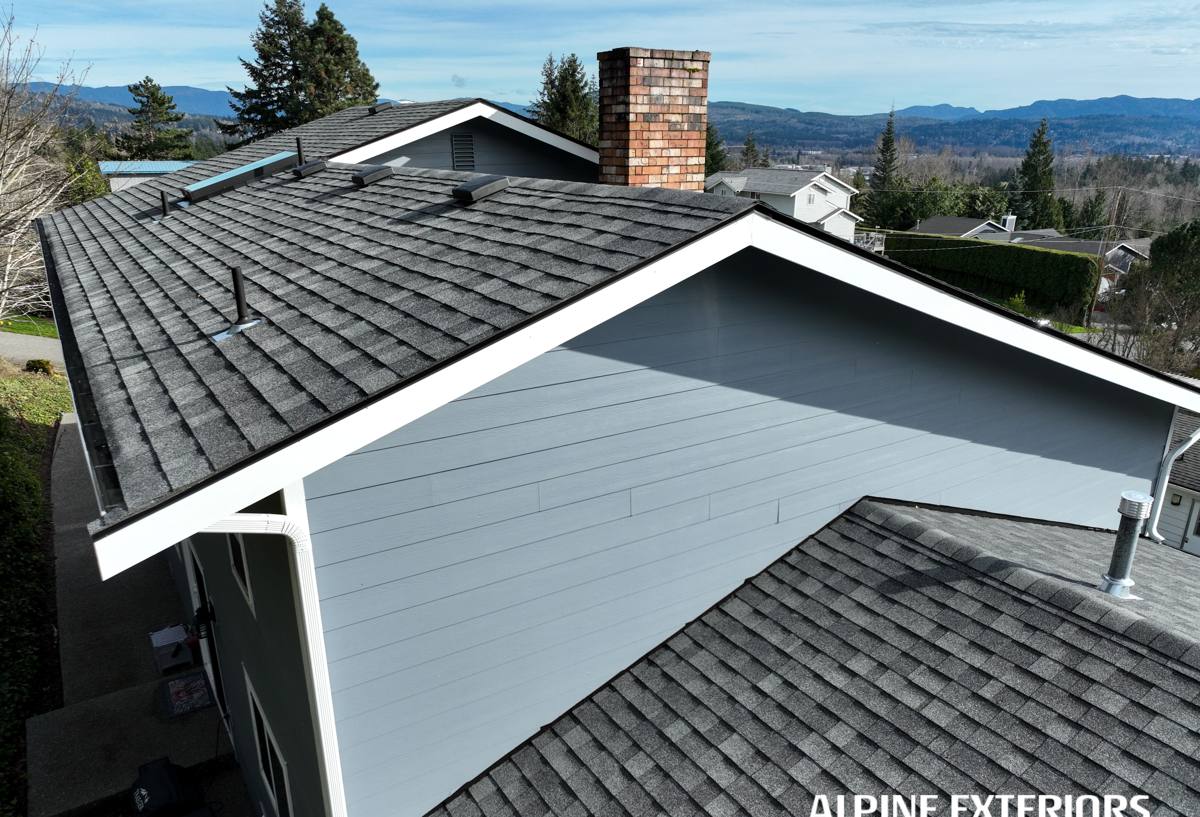
A new roof is more than laying down a new layer of material. The parts homeowners rarely see are usually what determines whether a roof lasts 15 years or 30.
Deck Inspection and Repair
Once the old roofing is off, we inspect the plywood or plank decking underneath for soft spots, delamination, and old water staining. In a climate this wet, decking that's been quietly absorbing moisture for years is common under old, failing roofs. Any compromised sheathing gets replaced before anything new goes down — installing new roofing over a weak deck just hides the problem for a future homeowner to find the hard way.
Underlayment and Ice/Water Protection
We use synthetic underlayment as the primary water-resistant barrier across the whole roof, with self-adhering ice-and-water shield membrane at the eaves, valleys, and any roof-to-wall transitions — the places wind-driven rain is most likely to force its way under the surface layer. This detail matters more here than in drier parts of the state, because Bellingham's rain doesn't just fall straight down, it gets pushed.
Flashing at Every Penetration
Chimneys, skylights, plumbing vents, and any wall-to-roof intersection are where the majority of leaks actually start, not in the open field of shingles. We use new step flashing, counter-flashing, and pipe boots at every penetration rather than reusing old flashing, and we seal transitions the way they're designed to be sealed, not just caulked over.
Ventilation Balance
A roof needs balanced intake (at the eaves or soffits) and exhaust (at or near the ridge) so moist air from inside the house can escape instead of condensing against the underside of the deck. In a marine climate with high ambient humidity, poor ventilation shows up as premature shingle aging from underneath, and sometimes mold or rot in the attic that has nothing to do with the roof surface itself.
Roofing Materials for Salt Air and a Long Moss Season
Every material has trade-offs. The table below reflects how common options actually perform under Edgemoor's specific mix of salt air, rain, and shade-driven moss growth.
| Material | Moss / Algae Resistance | Salt Air Durability | Typical Lifespan Locally |
|---|---|---|---|
| Algae-resistant asphalt composition shingle | Good, with copper or zinc strips at the ridge for added protection | Good with quality fasteners and flashing | 25-30 years |
| Standard asphalt composition shingle | Fair; more prone to staining and moss anchoring over time | Fair; galvanized fasteners can show wear sooner | 20-25 years |
| Metal (standing seam or panel) | Very good; smooth surface gives moss little to grip | Very good with a marine-grade or properly coated finish | 40-50+ years |
| Cedar shake | Poor without diligent, ongoing maintenance; holds moisture | Fair; salt air speeds natural weathering | 20-30 years with upkeep |
We steer most Edgemoor homeowners toward algae-resistant architectural shingles or metal roofing, not because other materials are bad products, but because they carry the lowest long-term maintenance burden for this specific climate. Cedar shake can look great, but it asks for a level of ongoing care — cleaning, treating, replacing individual shakes — that most homeowners underestimate when comparing it to other options up front. We'll walk through the honest trade-offs of whatever material you're considering rather than push one option.
Moss, Algae, and Debris: What Homeowners Should Watch For
A well-installed roof is only half the equation. Ongoing debris and moss management is what keeps that roof performing for its full lifespan. Here's what we recommend keeping an eye on, whether your roof is brand new or a few years in:
- Check north-facing and shaded slopes each fall for early moss growth, before it has a chance to lift shingle edges
- Keep gutters clear of needles and leaves, especially under overhanging trees, so water isn't backing up under the shingle line
- Trim back branches that keep a section of roof in near-constant shade or that drop debris directly onto the surface
- Avoid pressure washing the roof surface directly — it can strip granules and force water under shingles; a soft wash or gentle rinse is safer
- Have zinc or copper ridge strips inspected periodically, since they're doing ongoing work to slow moss regrowth
- Watch for granules collecting in gutters or downspouts, which can signal a shingle surface nearing the end of its service life
Our New Roof Installation Process
The process is the same whether your home is a smaller cottage-style property or a larger house on a wooded Edgemoor lot — what changes is the material choice, the roof's complexity, and access.
- On-site inspection and estimate. We look at the existing roof, decking condition where visible, ventilation setup, and any problem areas you've noticed, then walk you through material options and a written cost range.
- Material selection. We help weigh appearance, budget, and how each option holds up specifically to salt air and moss, rather than just showing samples and leaving the decision entirely to guesswork.
- Permitting. We handle the permit process with the City of Bellingham or Whatcom County, depending on your property's location, so it's not something you have to chase down yourself.
- Tear-off and deck prep. Old roofing comes off, decking is inspected and repaired as needed, and the site is protected — landscaping, siding, and gutters get covered or shielded during the work.
- Underlayment, flashing, and installation. Water protection goes down first, followed by flashing at every penetration and transition, then the new roofing material itself.
- Ventilation check. Intake and exhaust venting are verified or upgraded so the new roof isn't fighting trapped moisture from day one.
- Cleanup and magnetic sweep. The property is cleared of debris and swept for stray nails and fasteners before we call the job done.
- Final walkthrough and paperwork. We review the finished roof with you and provide warranty documentation for both materials and workmanship.
What Drives the Cost of a New Roof
Every roof is priced individually, but the factors below are what actually move the number up or down on most Edgemoor projects.
| Factor | Why It Matters |
|---|---|
| Roof size and number of planes | More square footage and more valleys/hips mean more material and labor time |
| Material choice | Standard asphalt shingle sits at the lower end; metal and premium shingle lines cost more upfront but often less over the roof's lifespan |
| Roof pitch and access | Steeper roofs and tree-crowded lots common in Edgemoor require more safety setup and time |
| Decking condition | Rot or soft sheathing found during tear-off adds repair cost, but skipping it isn't a real option |
| Ventilation and flashing upgrades | Bringing an older roof's ventilation and flashing up to current standards protects the new roofing investment |
| Layers of existing roofing | Multiple old layers to remove add disposal and labor time versus a single-layer tear-off |
We'd rather give you a real number based on your actual roof than a rough figure over the phone that changes once we're on the ladder. Every estimate is written and itemized so you know what you're paying for.
Why It Matters to Hire a Crew That Already Works in Edgemoor
A roof installed by a crew that only occasionally works this close to Bellingham Bay tends to get treated like any other roof in Whatcom County — same underlayment, same flashing approach, same material recommendations they'd give a customer twenty miles inland. That's not enough for a neighborhood dealing with this much salt air and this many months of moss pressure every year.
Working regularly in Edgemoor also means understanding the practical realities of the area: mature tree canopy that limits sun exposure on parts of many roofs, lots with limited equipment access, and, on some properties, neighborhood design or architectural guidelines that affect material and color choices. We factor all of that into the estimate and installation plan up front, rather than discovering it mid-project.
If you're comparing bids, ask any contractor directly how they handle ventilation balance, flashing at penetrations, and moss resistance for this specific location — the answers tell you a lot about whether they're treating your roof as a generic job or as a roof that has to hold up on Bellingham Bay.
Get a Free, No-Pressure Estimate
If your Edgemoor roof is aging, showing moss buildup, or you're planning ahead for a replacement, we're glad to take a look and give you a straight assessment — no pressure, no inflated scare tactics. Fill out the form below and we'll get in touch to schedule a time that works for you.