 Bellingham
 Siding Repair in Edgemoor: What This Neighborhood Actually Needs
Edgemoor sits along Bellingham Bay south of downtown, and it's one of the more distinct pockets of Whatcom County when it comes to siding wear. Many homes here sit on wooded, sloped lots under heavy tree canopy, with the bay just downhill bringing salt-laden air and wind-driven rain straight at the exterior walls. That combination — shade, moisture, and salt — ages siding differently than it does on an open lot a few miles inland, and it means a generic siding repair approach often misses the real problem.
This page covers what siding repair actually looks like for an Edgemoor home: what typically fails first, how we decide between a targeted repair and a larger fix, what correct repair work involves, and why local experience with this specific stretch of Bellingham's shoreline matters more than it might seem.
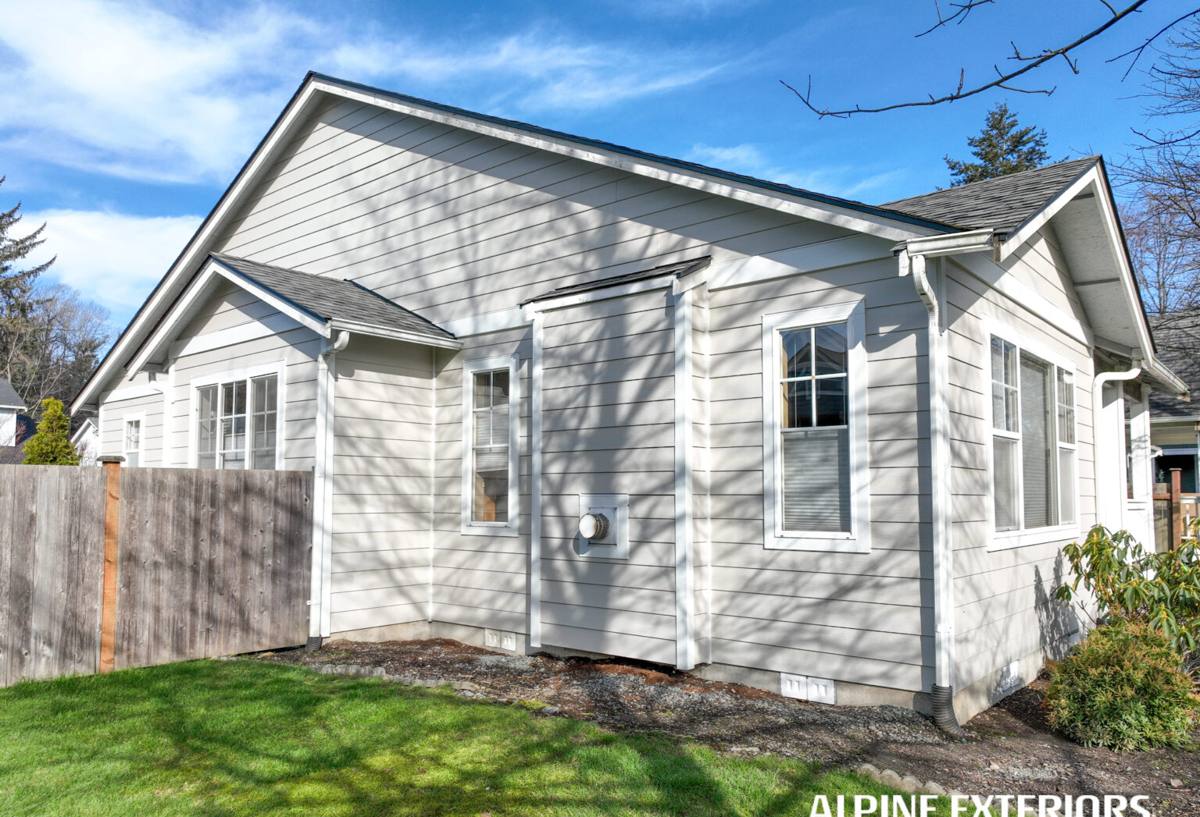
Why Edgemoor Homes Take a Different Kind of Beating
Three things converge in Edgemoor that don't always show up together elsewhere in Bellingham:
Salt Air Off the Bay
Homes closer to Bellingham Bay deal with a steady drift of salt-laden moisture in the air, especially during fall and winter storms. Salt air accelerates corrosion on fasteners, flashing, and trim hardware, and it can speed up finish breakdown on siding that isn't factory-sealed against it.
Driving Rain and Wind Exposure
Whatcom County's marine climate means long stretches of steady, wind-pushed rain rather than short downpours. On a shoreline-adjacent lot, that rain often hits siding at an angle, driving water into laps, seams, and trim joints that would stay dry in a calmer setting.
Tree Canopy and a Long Moss Season
Edgemoor's wooded character is part of its appeal, but mature tree cover keeps siding shaded and slow to dry after rain. That extended damp period is exactly what moss, algae, and mildew need to take hold, and in a marine climate like this one, the moss season can stretch across most of the year rather than a few weeks.
Common Siding Repair Issues We See in Edgemoor
Moisture Intrusion and Hidden Rot
The most serious repairs aren't the ones you can see — they're the ones hiding behind a section of siding that looks fine from the ground. Water that gets behind siding through a failed seam, missing flashing, or a gap at a trim joint can sit against the sheathing for months in a shaded, damp environment before it ever shows as a soft spot or discoloration on the surface.
Moss, Mildew, and Surface Staining
Green and black staining on north-facing or tree-shaded walls is common in Edgemoor, and it's not just cosmetic. Moss holds moisture directly against the siding surface, and on wood-based products it can accelerate softening and paint failure underneath the growth.
Fastener and Trim Corrosion
Nails, screws, and metal trim pieces that aren't rated for coastal exposure can rust and streak the siding around them. Corroded fasteners also lose their grip over time, which is how you end up with boards that work loose or pull away from the wall.
Cracked, Warped, or Delaminating Boards
Repeated wet-dry cycling is hard on siding materials that weren't engineered for it. Wood and wood-composite products in particular can crack, cup, or delaminate at the edges after a few seasons of this kind of exposure, especially on walls that get direct rain but limited sun to dry out.
Repair or Replace? How We Make the Call
Not every damaged section needs a full re-side, but not every problem is fixable with a patch either. We look at how much of the wall is affected, whether the damage is isolated or a sign of a systemic moisture issue, and how the existing material is holding up overall.
| Factor | Usually Points to Repair | Usually Points to Replacement |
|---|---|---|
| Extent of damage | Isolated to one or two sections | Spread across multiple walls or elevations |
| Cause | One identifiable failure point (flashing, caulk, impact damage) | Systemic moisture behind the siding, found in several spots |
| Material condition | Rest of the siding is sound and stable | Siding is aged, brittle, or already showing widespread wear |
| Sheathing/framing | No rot found once siding is opened up | Rot or soft sheathing found behind the damaged area |
| Match potential | Replacement boards can be color- and profile-matched | Product is discontinued or too faded to blend a patch |
When a repair is the right call, we do it properly — matched material, correct flashing, sealed and fastened to spec — not just a patch that hides the symptom for a season or two.
What a Correct Siding Repair Actually Involves
Inspection and Moisture Check
Before any board comes off, we look at the full wall, not just the visibly damaged spot. That includes checking nearby trim, flashing, and any penetrations — vents, light fixtures, hose bibs — that could be feeding water into the same area.
Opening Up the Area
Once siding is removed, we check the underlying weather-resistive barrier and sheathing. If there's soft or rotted sheathing behind the damage, that gets addressed before anything goes back on — reinstalling siding over compromised sheathing just resets the clock on the same failure.
Correcting the Root Cause
If the damage traces back to missing or undersized flashing, a bad caulk joint, or siding installed too close to grade, we fix that condition as part of the repair. Patching the siding without correcting what let water in means the repair fails again on roughly the same timeline.
Matching Material and Finish
Wherever possible, we match the replacement boards to the existing siding's profile and color. James Hardie's factory-applied ColorPlus finish holds its color well over time, which makes matching newer repair boards to older Hardie siding far more consistent than trying to color-match a field-painted product years after installation.
Signs an Edgemoor Home May Need Siding Repair
- Soft, spongy, or bubbling siding when pressed gently
- Persistent green or black staining that returns soon after cleaning
- Visible gaps, cracks, or separation at seams and corners
- Peeling or bubbling paint, especially on wood or composite siding
- Rust streaks running down from nail heads or trim pieces
- Musty odor or damp patches on interior walls that back onto exterior siding
- Boards that have visibly warped, cupped, or pulled away from the wall
Why We Only Work With James Hardie Fiber Cement
We install and repair James Hardie fiber cement siding exclusively — we don't install vinyl, LP SmartSide, primed wood, or cedar. That's a deliberate standard, not a limitation of what we're capable of. In a climate like Whatcom County's, with steady damp and a long moss season, the products that struggle most are the ones most sensitive to sustained moisture: wood-based products can swell, rot, or delaminate under prolonged exposure, and vinyl can warp or crack under real temperature swings and impact.
Hardie's fiber cement is non-combustible, engineered specifically for wet regional climates through its HZ5 product line, and finished with a factory-applied ColorPlus coating that resists fading and chipping far better than field-applied paint. It also carries a strong transferable warranty when installed to Hardie's specifications — which is exactly why correct installation, not just correct material, is the point of this whole page.
Why Hiring a Crew That Already Works Edgemoor Matters
Edgemoor's wooded, sloped lots aren't the easiest terrain to work on. Limited driveway access, mature landscaping close to the house, and tree cover that has to be worked around rather than removed all affect how a repair job gets staged and executed. A crew unfamiliar with the neighborhood may plan a job the way they would on a flat, open lot elsewhere in Bellingham, then run into access or clearance issues once they're on site.
There's also a permitting and jurisdiction side to it — work in the City of Bellingham follows the city's permitting process, and knowing what does and doesn't trigger a permit for repair-scale work saves time and avoids surprises. Familiarity with how salt air and shade affect siding in this specific pocket of the county also means we're not guessing at root causes — we've seen the same failure patterns on nearby homes before.
Our Repair Process, Start to Finish
We start with an on-site inspection to identify the full scope of the damage, not just the obvious spot. From there we explain, in plain terms, whether the situation calls for a targeted repair or something more extensive, and why. If it's a repair, we correct the underlying cause, match materials as closely as possible, and make sure flashing and sealing are done to spec so the same failure doesn't reappear next wet season.
If you're seeing staining, soft spots, or damage on your Edgemoor home's siding, we're happy to take a look and give you a straight answer about what it needs. Reach out for a free, no-pressure estimate using the form below.