 Bellingham
 Why Sudden Valley's Setting Changes the Window Equation
Sudden Valley sits back among the trees on the east side of Lake Whatcom, and that setting does a lot to a house that a subdivision on flat, open ground doesn't have to deal with. Heavy tree canopy means shade most of the day on a lot of lots, which sounds nice until you realize it also means windows and siding stay damp longer after every rain. Add the lake's humidity, the wooded lots, and the general marine climate that covers all of Whatcom County, and you get a set of conditions that ages windows faster than people expect — especially older aluminum-frame or single-pane windows that were never built for this kind of exposure in the first place.
We work on homes throughout Bellingham and Whatcom County, and Sudden Valley comes with its own pattern of problems: fogged double panes, soft or stained sills, frames that never quite seal tight anymore, and heating bills that creep up every winter because the glass and framing stopped doing their job years ago. None of that is unusual for a lake community with this much tree cover and this much rain — it's just what the climate does over time, and it's exactly what a correctly specified, correctly installed window is supposed to hold off.
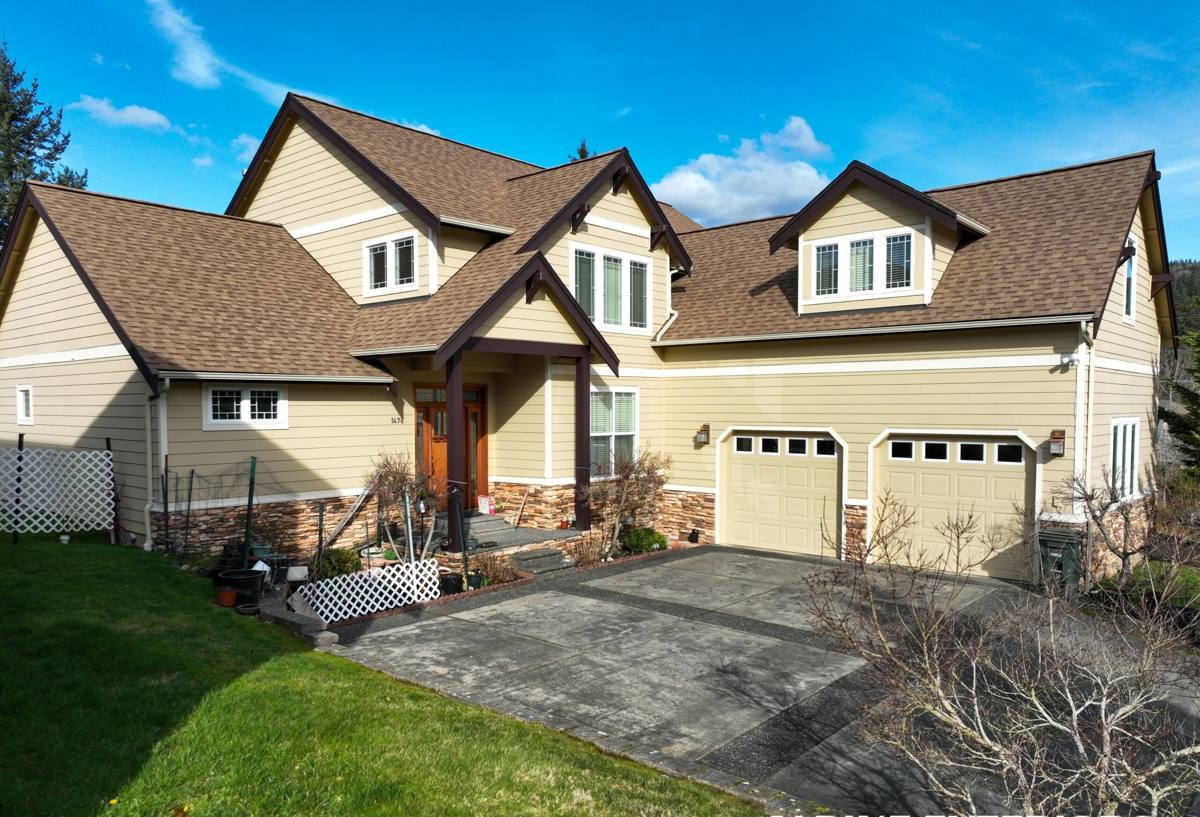
What the Regional Climate Does to Windows Over Time
Moss and Algae on Frames and Sills
Whatcom County has a long moss season, and Sudden Valley's shaded, tree-lined lots make it worse than most. Moss and algae don't just grow on roofs — they take hold in window sill corners, weep holes, and frame joints where moisture sits and light is scarce. Once organic growth gets established in those spots, it holds water against the frame and sealant year-round, which accelerates rot in wood components and breaks down sealants and gaskets faster than they were designed to last.
Driving Rain and Flashing
Wind-driven rain off the lake and through the trees doesn't fall straight down — it gets pushed sideways into window openings, which is where flashing detail matters more than the window itself. A quality window installed with poor flashing will still leak. A modest window installed with correct head flashing, sill pan, and weather-resistant barrier integration will outperform it every time. This is the piece of the job that's invisible once the trim goes back on, and it's the piece most likely to be rushed on a cheap installation.
Condensation and Indoor Humidity
Homes near the lake tend to run more humid indoors, especially in winter with wood stoves or baseboard heat and less mechanical ventilation. Old single-pane or failed double-pane windows show that humidity as condensation and eventually black mold at the sill. A properly sealed, properly rated modern window package doesn't eliminate humidity, but it raises the interior glass surface temperature enough that condensation stops forming under normal conditions — which is one of the most immediate differences homeowners notice after replacement.
What "Energy-Efficient" Actually Means for a Window
U-Factor and Solar Heat Gain Coefficient
Two numbers matter more than any marketing label: U-factor, which measures how much heat the window lets escape (lower is better in our climate), and Solar Heat Gain Coefficient (SHGC), which measures how much solar heat passes through the glass. In a shaded, tree-covered community like Sudden Valley, capturing solar heat gain is less of a priority than it would be on an open, south-facing lot — the trees are already doing some of that work by blocking direct sun. That shifts the priority toward a low U-factor and a tight, well-sealed frame over chasing maximum solar gain.
Glass Packages: Double vs Triple Pane
Double-pane, argon-filled glass with a low-E coating is the standard baseline for this region and performs well for most Sudden Valley homes. Triple-pane adds meaningful performance and sound dampening but costs more and adds weight, which matters on larger openings or older framing that wasn't built for it. We size the glass package to the specific wall, exposure, and budget rather than defaulting to the most expensive option on every opening.
Frame Material Trade-offs
Frame material affects both energy performance and how the window holds up to this specific climate — moisture, moss, and years of shade.
| Frame Material | Energy Performance | Climate Considerations Here |
|---|---|---|
| Vinyl | Good, budget-friendly | Handles moisture well, low maintenance, resists rot; can discolor in constant damp/shade over many years |
| Fiberglass | Very good, dimensionally stable | Excellent moisture and rot resistance, holds paint well, strong long-term choice for shaded, wet lots |
| Wood / Wood-clad | Good with proper maintenance | Classic look for cabin-style homes but needs regular upkeep — moss and shade accelerate wood decay if maintenance lapses |
| Aluminum (older stock) | Poor without thermal break | Conducts cold, common source of condensation and fogging in older Sudden Valley homes; usually the first thing we recommend replacing |
How We Approach a Window Job in Sudden Valley
Assessment and Measurement
We start by looking at each opening individually rather than treating the house as one uniform job. Sun exposure, tree cover, wall assembly, and existing flashing condition all vary window to window, even on the same wall. We measure for exact fit and check the surrounding wall for hidden rot or moisture damage before quoting the work — that inspection often turns up problems the homeowner didn't know were there.
Removal and Flashing Detail
Old windows come out carefully to protect the surrounding siding and trim. Once the opening is exposed, we address the weather-resistant barrier and flashing before the new unit ever goes in. This is the step that determines whether the window stays dry through years of driving rain, and it's not optional or skippable regardless of how good the window itself is.
Installation and Sealing
The new window is set plumb, level, and square, shimmed and fastened per manufacturer spec, then sealed with the right combination of flashing tape, sealant, and insulation at the gap — not just a bead of caulk around the trim. Interior and exterior sealing both matter for keeping moist lake air and driving rain out of the wall cavity.
Cleanup and Walkthrough
We finish with trim and touch-up work, clean the site, and walk the homeowner through operation, hardware, and any warranty paperwork before we consider the job done.
Signs Your Sudden Valley Home's Windows Need Attention
A lot of window problems build slowly enough that homeowners adjust to them without noticing. Worth checking for:
- Fogging or a hazy film between the panes — the seal has failed and the gas fill is gone
- Moss or algae visible in sill corners, tracks, or weep holes
- Soft, spongy, or stained wood at the sill or lower frame
- Drafts you can feel with a hand near the frame on a windy day
- Condensation or frost on the inside of the glass in cold weather
- Windows that are hard to open, close, or lock, or that no longer sit flush
- Visibly higher heating bills compared to similar homes nearby
Any one of these on its own might just need a repair. Several together, especially on an older aluminum or original single-pane window, usually means replacement is the more cost-effective path.
Cost Factors to Expect
We don't quote sight-unseen, but the main variables that move a Sudden Valley window job up or down are consistent enough to explain honestly up front.
| Factor | Effect on Cost |
|---|---|
| Frame material chosen | Vinyl is the most budget-friendly; fiberglass and wood-clad run higher |
| Glass package (double vs triple pane) | Triple pane adds cost per opening but improves comfort and sound control |
| Number and size of openings | Larger and more numerous windows increase material and labor |
| Condition of the existing opening | Hidden rot or old flashing failure adds repair work before the new window goes in |
| Access and site conditions | Wooded lots, slopes, or tight access around Sudden Valley can add setup time |
We'd rather walk a homeowner through these factors on their actual house than give a number that doesn't hold up once we're on site.
Why Local Experience with Sudden Valley Homes Matters
A crew that mainly works flat, open, in-town lots doesn't always think about shade, moss, and driving rain the way a crew that regularly works Sudden Valley does. We've seen how these homes age in this specific setting — where moisture collects, which frame materials hold up under constant shade, and how flashing needs to be detailed differently on a wooded lot than on an open one. That's the kind of judgment that shows up years later in whether a window job is still tight and dry, not whether it looked fine on installation day.
If you're noticing drafts, fogged glass, or moss creeping into your window frames, we're happy to come take a look and give you a straightforward, no-pressure estimate — just fill out the form below and we'll get in touch.