 Bellingham
 Why Fairhaven Roofs Take a Different Kind of Beating
Fairhaven sits close enough to Bellingham Bay that salt-laden air is a constant factor, not an occasional one. Add the marine layer, the shade from mature trees along the hillside, and the long stretch of wet months typical of Whatcom County, and you get a roofing environment that ages materials faster than drier inland areas ever would. Storm damage here rarely shows up as one dramatic event. More often it's a windstorm that lifts a few shingles, followed by weeks of rain finding that opening before anyone notices a stain on the ceiling.
Understanding that pattern matters because it changes how a repair should be diagnosed. A roof that looks fine from the ground in Fairhaven can already have moisture working under the surface. A correct storm damage repair starts with treating the whole system — deck, underlayment, flashing, and covering — not just the shingles a homeowner can see missing.
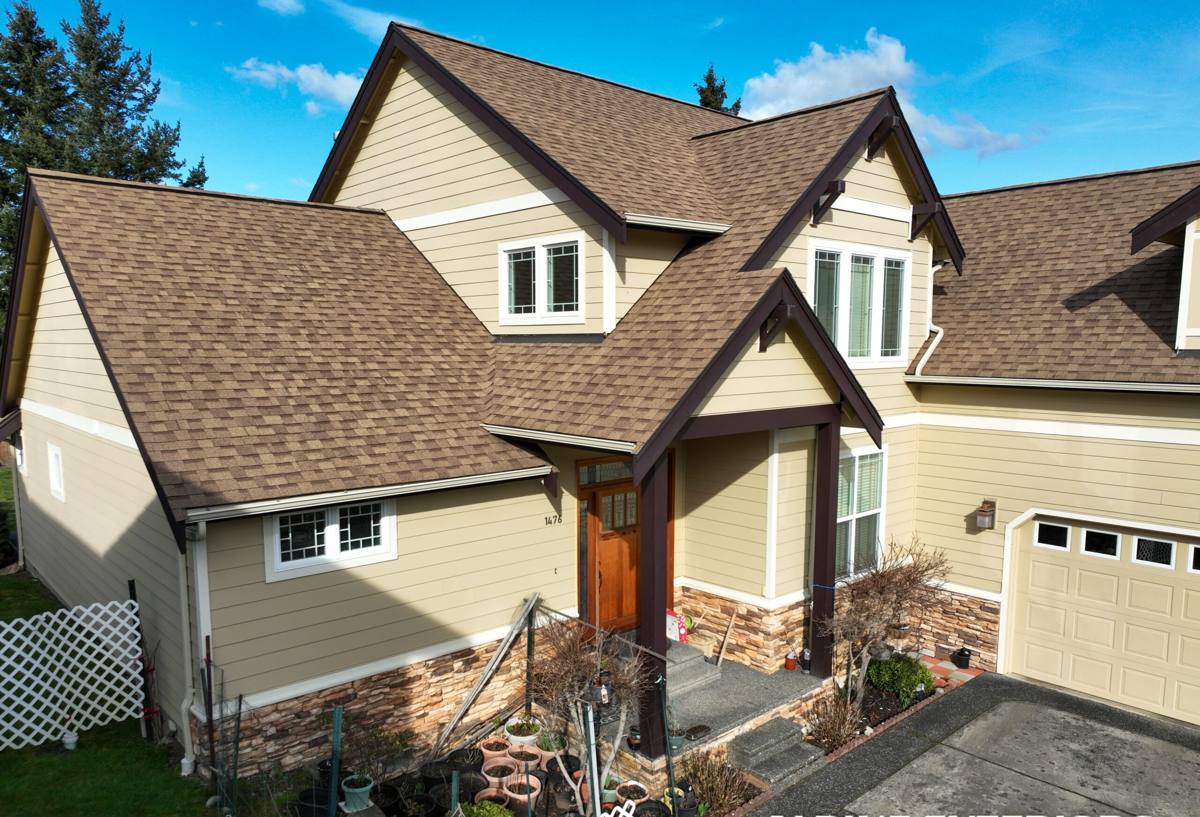
What Actually Counts as Storm Damage
Not every roof problem after a windy night is storm damage in the insurance or structural sense, and not every storm damage claim is obvious. Here's what we typically find when we inspect a Fairhaven roof after weather:
- Shingles lifted, creased, or torn loose by wind gusts off the water
- Granule loss from wind-driven rain that accelerates aging on south and west-facing slopes
- Flashing pulled away or bent at chimneys, skylights, and roof-to-wall transitions
- Fascia or roof edge damage from falling branches during wind events
- Moss and organic buildup that trapped moisture and softened the deck before the storm ever hit
- Gutter and downspout damage that redirects water where it shouldn't go
That last point deserves attention. Moss doesn't cause a storm, but it's often the reason storm damage becomes serious. A roof with a healthy moss-management routine sheds wind and rain the way it's designed to. A roof with a thick moss mat holds water against the shingles and deck, so the same storm that barely touches a well-maintained roof next door can tear into a neglected one.
The Salt Air and Moss Factor
Two things define roofing conditions in this part of Bellingham: proximity to salt water and the length of the wet season. Salt air accelerates corrosion on exposed metal — flashing, fasteners, gutter hardware, and vent caps — well before a homeowner would expect it based on the age of the roof alone. We look at metal components closely during any storm repair, because a shingle repair over corroded flashing is a repair that fails again within a year or two.
Moss season in this region runs long, often from fall through spring, and it doesn't take much shade for moss to establish itself on a north-facing slope or under tree cover. Once moss gets a foothold, it lifts shingle edges, holds moisture against the roofing material, and creates the soft spots where wind can do the most damage. Any storm repair we do in Fairhaven includes an honest look at moss growth, because fixing the storm damage without addressing what let the storm in doesn't hold up.
What a Correct Repair Actually Involves
Full-System Inspection, Not a Patch Job
A rushed storm repair replaces the shingles that are obviously missing and calls it done. A correct repair checks the roof deck underneath for soft or water-stained sections, verifies the underlayment is intact around the damaged area, and confirms flashing is sealed and fastened properly before new material goes down. Skipping this step is the single most common reason a "repaired" roof leaks again in the next storm.
Matching Materials, Not Just Colors
Shingle repairs should match the existing roof in profile and weight, not just approximate color. Mismatched shingles create uneven wear patterns and can interfere with how water sheds off the repaired section. On older Fairhaven homes, exact matches aren't always available, and we'll tell you honestly when a full slope replacement makes more sense than chasing a discontinued shingle line.
Flashing and Transitions
Most roof leaks trace back to flashing, not the field of the roof. Chimney flashing, skylight flashing, valley flashing, and wall transitions all need to be re-secured and properly sealed, using materials suited to the corrosion pressure of coastal air. We don't caulk over a flashing problem and call it repaired — caulk is a short-term seal, not a fix.
Moss and Debris Cleanup
Any storm repair on a roof with existing moss growth should include removal of moss and organic debris from the repair area and, where reasonable, the rest of the roof. Leaving moss in place next to a fresh repair undermines the work before it's even finished curing.
How We Approach a Storm Damage Call in Fairhaven
- Inspection and documentation. We walk the roof, photograph the damage, and check the deck and flashing around the visible problem — not just the spot that's obviously missing shingles.
- Honest scope assessment. We tell you whether this is a targeted repair, a slope replacement, or something bigger, and why. If a repair will hold, we don't upsell you into a full roof.
- Insurance-ready paperwork. If you're filing a claim, we provide documentation your adjuster can work from, including photos and a written scope of the damage.
- The repair itself. Deck check, matched materials, proper flashing work, and a clean tie-in to the surrounding roof so the repair doesn't stand out as a patch.
- Cleanup and final check. Debris and old material hauled off, and a final look to confirm the repair sheds water correctly.
Working With Your Insurance Company
Storm damage claims move faster and get approved more consistently when the documentation is thorough from the start. We provide clear photos, a written description of the damage, and a scope of work that an adjuster can review without back-and-forth delays. We're not a public adjuster and won't promise a claim outcome, but we will make sure the paperwork reflects the actual condition of your roof, not a guess.
One thing worth knowing: adjusters who aren't local to Whatcom County don't always recognize how moss and salt exposure factor into storm damage claims here. Having a repair estimate from a crew that works this area regularly helps make that case clearly.
Cost Factors for Storm Damage Repair
Every roof and every storm is different, so we don't quote pricing blind. The table below outlines the general factors that move a repair estimate up or down, so you know what to expect before we're on your roof.
| Repair Scope | Typical Situation | What Affects Cost |
|---|---|---|
| Spot shingle repair | A handful of shingles lifted or torn in one area | Accessibility, shingle age/match, deck condition underneath |
| Flashing repair | Leak at chimney, skylight, or wall transition | Corrosion level, complexity of the transition, materials needed |
| Moss and debris remediation | Heavy moss buildup contributing to or found during storm damage | Roof pitch, extent of growth, whether treatment is needed |
| Multi-slope or partial replacement | Widespread wind damage or deck rot found under shingles | Square footage, deck repair or replacement, material grade |
| Gutter and edge repair | Damage from wind-driven branches or debris | Length affected, whether fascia or soffit is also damaged |
As a general rule, targeted repairs are the most affordable option and are often all that's needed if the storm damage was caught early. The costlier jobs almost always trace back to moisture that had time to work into the deck before repairs were made — another reason not to wait once you notice something's off.
Signs Your Fairhaven Roof Needs a Storm Inspection
You don't need visible missing shingles to have storm damage worth addressing. After any significant wind or rain event, it's worth checking for the following:
- Granules collecting in gutters or at the base of downspouts
- Daylight visible through the roof deck from inside the attic
- Water stains on ceilings or in the attic, even faint ones
- Shingles that look curled, lifted at the edges, or out of alignment
- Metal flashing that looks bent, separated, or rusted
- A noticeable increase in moss or dark streaking since the last storm
- Debris on the roof that wasn't cleared and is holding moisture
If you notice any of these, it's worth getting a professional look before the next round of rain rather than waiting for a leak to confirm the problem.
Why Local Experience in Fairhaven Matters
A lot of Fairhaven's housing stock includes older homes with roofing details — steep pitches, mature tree cover, tight lot access — that aren't universal across Bellingham. A crew that regularly works this neighborhood already knows how salt air treats fasteners and flashing here, how aggressively moss grows under the tree canopy common to the area, and how to navigate narrow streets and limited staging space without adding time or cost to your repair.
That familiarity also means faster, more accurate assessments. We're not guessing at how coastal exposure has aged your roof — we see it on Fairhaven roofs regularly and know what to check first.
Get a Straight Answer About Your Roof
If a recent storm has left you wondering whether your roof needs attention, we're happy to take a look and give you an honest read on what's actually going on — no pressure, no upsell. Fill out the form below to request a free estimate for storm damage roof repair in Fairhaven.