 Bellingham
 New-Construction Windows Are a Different Job Than Replacement
When a home is being built or added onto in Ferndale, the windows go in during framing — before siding, before the final layer of house wrap, sometimes before the roof is fully dried in. These are nailing-fin windows, built with a flange around the perimeter that gets fastened directly to the sheathing and integrated into the weather-resistive barrier (WRB) as part of the wall assembly. That's a fundamentally different job than replacement or insert windows, which get set into an existing opening after the siding is already up.
The reason this distinction matters: with new construction, you get one shot to do the flashing and drainage detailing correctly. Once the siding closes over that window, nobody sees the sill pan, the jamb flashing, or the head flashing again unless something fails and the wall has to be opened up. In a marine climate like ours, "something fails" usually means water finding its way behind the cladding over a few wet seasons and rotting sheathing or framing that could have been protected for the cost of a roll of flashing tape.
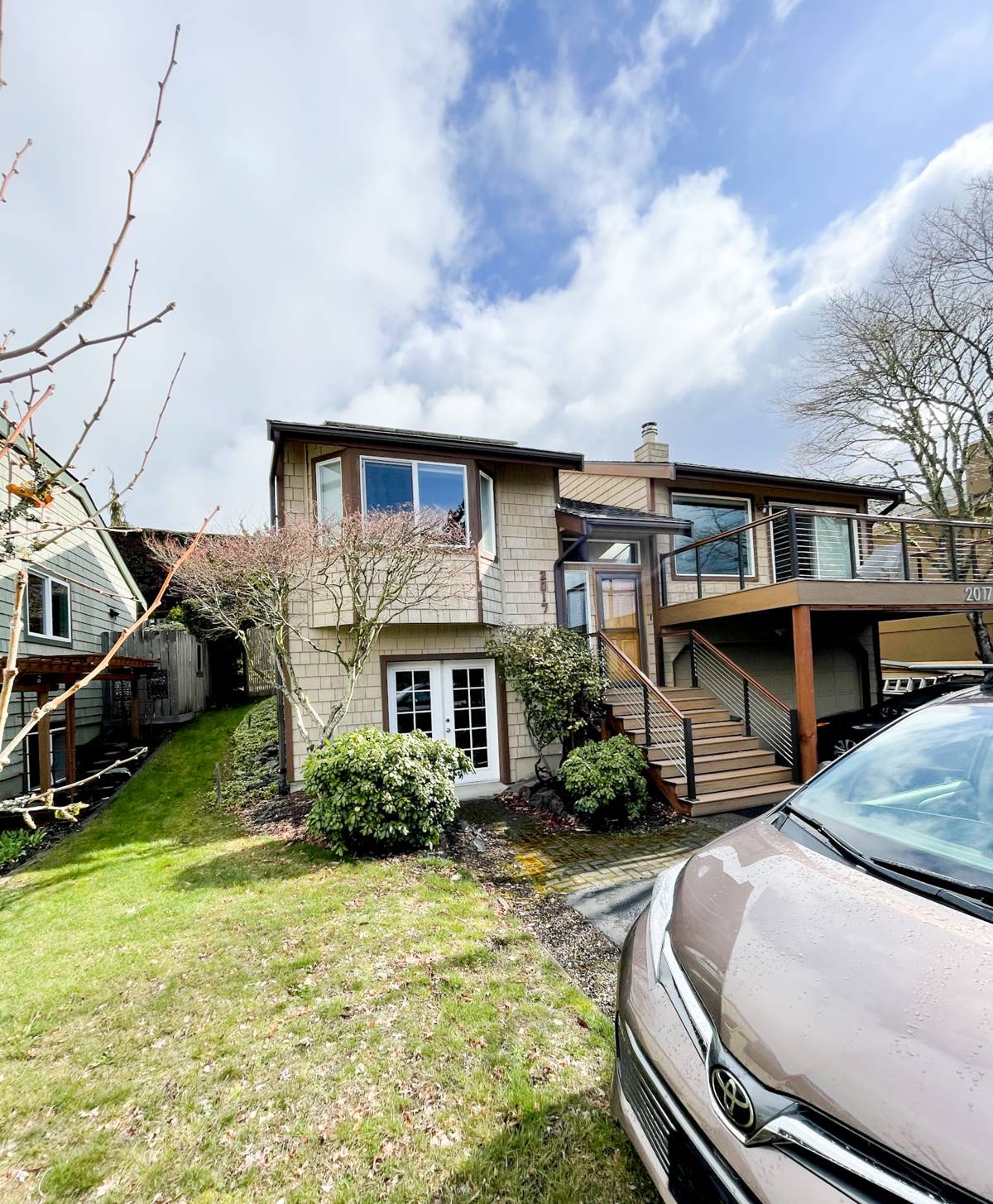
What Ferndale's Climate Actually Demands From the Install
Ferndale sits close to the Salish Sea coastline in Whatcom County, which shapes three things about how a new-construction window needs to be handled here: salt-laden air, wind-driven rain off the water, and a damp season that runs long enough to keep moss and algae established on shaded surfaces most of the year.
Salt Air and Corrosion
Homes near the water pick up airborne salt that accelerates corrosion on anything untreated — cheap fasteners, uncoated hinge hardware, and low-grade flashing metal all degrade faster here than they would fifty miles inland. On a new build, we spec corrosion-resistant fasteners and flashing components from the start rather than relying on paint or coatings to make up the difference later. It costs a little more up front and saves a callback five years down the road.
Wind-Driven Rain and Flashing Sequence
Winter storms coming off the water don't just fall straight down — they push rain sideways, up under trim, and into any gap that isn't properly lapped. A correct install uses a sloped sill pan with end dams to kick water back out before it ever reaches the framing, jamb flashing that's shingle-lapped into the WRB, and head flashing that tucks under the housewrap above the opening rather than sitting on top of it. Get that lap sequence backward anywhere on the window and you've built a funnel instead of a barrier.
A Long Damp Season and Hidden Rot
Whatcom County's marine climate keeps exterior surfaces damp for a large part of the year, which is exactly the environment moss and algae need to take hold on north-facing walls, horizontal trim, and anywhere sun and airflow don't reach. Visible moss on siding or trim is mostly a cosmetic and maintenance issue — but the same conditions that grow moss on the surface will grow rot behind the surface if a window's drainage plane has a flaw. That's why we treat the flashing detail, not just the window unit itself, as the part of the job that actually protects the house.
Choosing the Right Window for New Construction Here
Frame material matters more in a coastal marine climate than it does in a dry one. We install several materials depending on budget, exposure, and the look the design calls for, and we'll walk you through the real tradeoffs rather than pushing one option.
| Frame Material | Moisture Tolerance | Maintenance | Typical Cost |
|---|---|---|---|
| Vinyl | Good — won't rot or corrode, but seals and hardware need to be quality-grade for coastal exposure | Low — occasional cleaning | Lowest |
| Fiberglass | Excellent — dimensionally stable in wet-dry cycling, holds paint well | Low to moderate | Mid to upper-mid |
| Wood-clad (exterior-clad) | Good on the exterior face if the cladding and flashing are done right; the interior wood still needs normal upkeep | Moderate — sealant and finish checks over time | Highest |
For most Ferndale new-construction projects, vinyl or fiberglass covers the practical needs well. Wood-clad shows up more on higher-end or architecturally specific builds where the interior wood look is part of the design. Whatever the frame material, we won't install a window whose hardware or fastener package isn't rated for coastal use — that's a corner that shows up as a warranty claim, not a savings.
What a Correct Installation Actually Involves
A window that "looks installed" and a window that's actually protected against this climate aren't always the same thing from the outside. Here's what we check on every unit, every opening, no exceptions:
- Sloped sill pan flashing with end dams, so any water that gets past the window drains back out instead of pooling
- Self-adhered flexible flashing at both jambs, shingle-lapped correctly into the housewrap
- Head flashing installed and lapped under the upper course of house wrap, never on top of it
- Shimming and fastening per the manufacturer's schedule — enough to hold the unit square without over-driving fasteners and bowing the frame
- Backer rod and sealant at the joints designed to be sealed — not caulking every gap, which can trap moisture instead of letting it drain
- Interior air sealing done properly, separate from exterior weatherproofing
- Final check for square, level, plumb, and even reveal before the window is signed off
Skipping any one of these doesn't usually show up on move-in day. It shows up two or three wet seasons later, as a soft spot in the sheathing or a stain on an interior sill that traces back to a lapping mistake nobody could see once the siding went on.
How Our Process Works on Ferndale New-Construction Projects
Timing With Your Build Schedule
Windows go in at a specific point in the framing sequence — after the wall sheathing and primary WRB are on, before the siding closes things up. We coordinate directly with the builder or general contractor to hit that window so the trades that follow us aren't waiting, and so our flashing work is fully in place and checked before it gets covered.
Coordinating With Your Builder or GC
On new construction, we're one piece of a larger sequence — framers, the WRB installer, siding, trim, and sometimes a separate roofer all touch the same walls. We communicate directly with whoever's running the job site so our flashing details tie into the rest of the building envelope correctly, rather than each trade assuming the other handled the transition.
Inspection and Sign-Off
Before any opening gets covered by siding, we walk it and document that the flashing sequence, fastening, and sealant are correct. That's the point where a mistake is a five-minute fix. Once the wall is closed up, it's a much bigger job — which is exactly why we don't skip this step to save time.
Energy Code and Performance in Whatcom County
Washington's state energy code sets minimum performance requirements for new-construction glazing, and those requirements are stricter than a lot of homeowners expect. We select window packages that meet or beat the U-factor targets for this climate zone, and we pay attention to how the glass performs in Pacific Northwest light specifically — low-E coatings tuned for a mostly overcast climate behave differently than the glass packages sold for sunnier regions. A window that technically passes code but fogs with condensation on cold mornings or feels drafty near the frame isn't doing its job, even if the paperwork says it should.
Why a Crew That Already Works Ferndale Matters
New-construction window installation isn't a generic skill you can apply the same way in every climate. A crew that regularly works Whatcom County new builds already knows which elevations take the worst of the wind-driven rain, how local building departments want flashing and drainage details documented, and how to sequence with the builders active in Ferndale's newer subdivisions without slowing the job down. That familiarity is the difference between a window install that's technically correct on paper and one that's actually built for the weather this house will see for the next thirty years.
After Move-In: What to Keep an Eye On
A correctly installed new-construction window is largely maintenance-free, but the climate doesn't stop working on your house once you move in. A few habits go a long way:
- Keep an eye on north-facing and shaded elevations where moss and algae are most likely to establish — a soft-wash cleaning now and then keeps growth from working into caulk lines and trim joints
- Make sure gutters and drip edges above windows stay clear so water is actually being directed away from the opening as designed
- Have sealant joints checked every few years, especially on south and west exposures that see the most temperature swing and UV
- Report any interior staining near a sill or jamb early — caught quickly, it's almost always a simple fix
If you're building new or adding on in Ferndale and want windows installed by a crew that treats the flashing and drainage details as seriously as the window itself, we're happy to take a look at your plans and walk the site. Reach out for a free, no-pressure estimate using the form below.