 Bellingham
 Birchwood's Siding Challenge: Salt Air, Driving Rain, and Moss
Birchwood sits close enough to Bellingham Bay and the Salish Sea that homes here deal with a specific combination of stresses most siding products were never designed to handle. Salt-laden air corrodes fasteners and lifts paint film. Wind-driven rain off the water finds every gap in a wall assembly, not just the ones facing the weather. And Whatcom County's long, damp shoulder seasons — where surfaces stay wet for days at a time under tree cover and low sun angles — turn north-facing walls and shaded siding into a moss and algae farm if the material and the installation don't account for it.
None of this is unique to any one street or block in Birchwood, but it is more pronounced here than in drier inland parts of the county. A siding product and installation method that works fine in eastern Washington can fail early on a home a few miles from the bay. That gap between "rated for the climate" and "actually holds up in this climate" is where most premature siding problems start.
What Correct Installation Requires in This Climate
Fiber cement is only as good as the details underneath it. In a marine climate, the installation choices that don't matter much in a dry region become the difference between siding that lasts decades and siding that fails at year eight or ten.
Clearance and Drainage
Siding needs a gap above grade, above roof lines, and above decks and patios so splashing rain and standing moisture can't wick into the bottom edge. It also needs a drainage plane behind it — typically a weather-resistant barrier plus a rainscreen gap — so any water that gets past the siding face has somewhere to go besides the sheathing. Skipping the rainscreen is common on cheaper jobs and is one of the fastest ways to trap moisture against a wall in a climate this wet.
Fastening and Flashing
Every penetration — windows, doors, hose bibs, light fixtures, vents — is a place water will try to get in during a driving rain event. Correct flashing and sequencing (installed shingle-style so upper layers overlap lower ones) matters more here than in a climate with less wind-driven rain. Fastener choice matters too: in salt air, the wrong fastener corrodes, stains the siding, and eventually loosens, which is why we use fasteners rated for the exposure rather than whatever is cheapest.
Caulking and Paint Lines
Joints and butt seams need to be treated correctly at install, not caulked over as an afterthought. Factory-finished siding reduces one point of failure by eliminating field-painted cut edges as a weak spot, provided the cut edges themselves get properly sealed during installation. This single detail — sealing the ends you cut on site — is skipped constantly on rushed jobs and is one of the most common causes of early edge swelling on fiber cement anywhere on the water.
Why This Crew Installs Only James Hardie
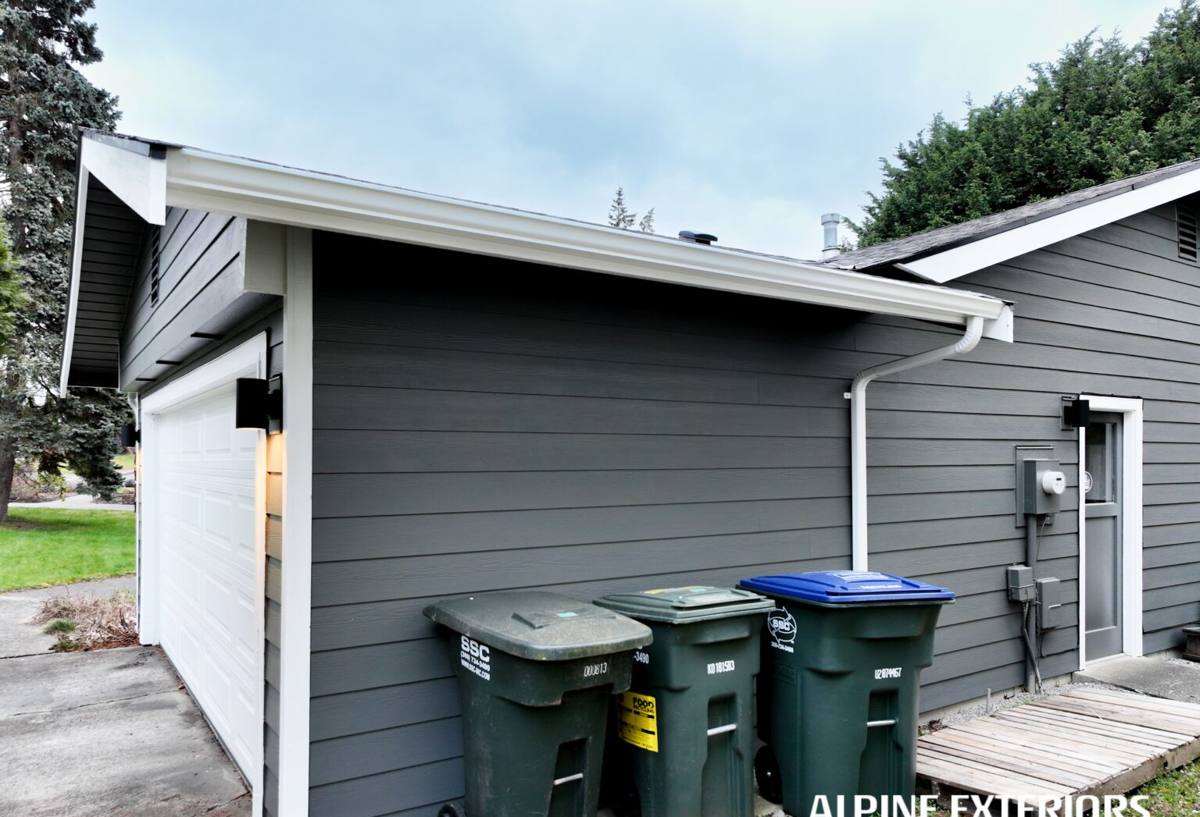
We don't install LP SmartSide, vinyl, Cemplank, Allura, primed spruce, or cedar. That's a deliberate standard, not a supply preference. James Hardie is non-combustible, holds its factory-applied ColorPlus finish far longer than field-painted alternatives, and backs its product with a strong transferable warranty when installation follows their specifications. In a climate that punishes moisture-sensitive materials and stresses paint film with salt air and UV off the water, those differences show up in how a wall looks and performs ten and twenty years out — not just on day one.
HardieZone HZ10: Built for Marine Climates Like Whatcom County
James Hardie engineers its siding differently depending on regional climate risk, under what they call the HardieZone system. Homes in high-moisture, marine-influenced climates — which includes Whatcom County and the rest of western Washington — call for the HZ10 formulation, engineered around resistance to moisture, humidity, and the freeze-thaw cycling that happens when damp siding sees a cold snap. Using the correct formulation for the region isn't a marketing detail; it's a material-science decision that affects how the board handles years of exactly the weather Birchwood gets.
Choosing the Right Hardie Product for a Birchwood Home
Most Birchwood homes are well served by one of three Hardie product types, depending on the home's style and exposure. The table below is a starting point for the conversation, not a substitute for looking at your specific walls, elevations, and existing trim.
| Product | Best Suited For | Climate Consideration |
|---|---|---|
| HardiePlank lap siding | Traditional and most common home styles; full-wall replacement | Widest range of profiles; performs well on all exposures when rainscreen-installed |
| HardieShingle | Accent gables, dormers, Craftsman and cottage-style details | More seams than lap siding, so flashing and fastening precision matters more in driving rain |
| HardiePanel | Modern styles, board-and-batten accents, garages and outbuildings | Vertical seams need careful batten and joint treatment to shed water in wind-driven rain |
Color and finish choice also matters more here than in drier climates. Darker colors on walls that face prevailing wind and rain off the bay will show water spotting and mineral deposits sooner than the same color on a sheltered elevation — something worth discussing before you commit to a color for the whole house.
Our Birchwood Installation Process
The process doesn't change because a job is in Birchwood specifically, but the judgment calls along the way do — we've made them on enough homes in this part of Bellingham to know where water actually goes on a wall exposed to bay-driven weather.
- Walkthrough and assessment. We look at existing siding condition, trim, window flashing, and problem areas — moss buildup and staining patterns tell us a lot about where water is currently getting past the wall.
- Tear-off and sheathing check. Removing the old siding lets us inspect the sheathing underneath for rot or trapped moisture before anything new goes on. Covering up a wet wall is how small problems become expensive ones.
- Weather-resistant barrier and rainscreen. We install a proper drainage plane so bulk water that gets past the siding face has somewhere to drain instead of sitting against the wall.
- Flashing at every penetration. Windows, doors, and fixtures get flashed and sequenced correctly before siding goes up around them.
- Hardie installation to spec. Correct fastener type, spacing, clearances above grade and roof lines, and sealed cut ends throughout.
- Trim, caulking, and final detail pass. Joints, corners, and transitions get finished properly rather than caulked over as a shortcut.
- Walkthrough with the homeowner. We go over the finished work and what routine maintenance looks like going forward.
Living With Fiber Cement in a Moss Season
Correctly installed Hardie siding is low-maintenance, not zero-maintenance. In a climate where shaded and north-facing walls stay damp for extended stretches, a little seasonal attention keeps siding looking good for the long run and prevents small issues from becoming bigger ones.
- Rinse siding annually, especially shaded walls and areas under overhangs where moss and algae tend to establish first.
- Keep gutters clear so overflow doesn't run down the siding face repeatedly during heavy rain events.
- Trim back vegetation and tree cover that keeps a wall section shaded and damp longer than the rest of the house.
- Check caulking at trim and window joints every couple of years and have any cracked or missing sections resealed.
- Watch for chalky residue or color fade on sun-and-wind-exposed elevations, which can signal it's time for a maintenance check even on a ColorPlus finish.
- Address any soft spots, staining, or bubbling immediately rather than waiting — those are early signs water is getting behind the siding somewhere.
Why a Crew That Already Works Birchwood Matters
A contractor who works this part of Bellingham regularly has already seen how salt air, bay-driven rain, and shaded moss-prone walls behave on homes with similar exposure, orientation, and age to yours. That translates into fewer surprises during tear-off, better judgment about where extra flashing or rainscreen detail is worth the effort, and a realistic sense of how a given color or product line will actually hold up on your specific elevation rather than in a showroom. It also means a local point of contact if a warranty question or maintenance question comes up years down the road, instead of a crew that installed once and moved on.
If you're weighing a siding replacement in Birchwood, we're glad to walk your home, look at what your current siding and trim are telling us, and put together a straightforward estimate — no pressure, no obligation.