 Bellingham
 Board & Batten in a Neighborhood That Sees Real Weather
Happy Valley sits close enough to Bellingham Bay that salt-laden air is a constant, and close enough to the hillside drainage patterns of south Bellingham that driving rain off Puget Sound hits home exteriors from more than one direction. Add Whatcom County's long, damp winters, and you have a neighborhood where siding either holds up to real weather or it starts showing problems within a few seasons. Board and batten is a popular choice here for good reason: the vertical lines suit the craftsman, farmhouse, and modern-cottage styles common on Bellingham's south side, and the deep shadow lines it creates read well against evergreen backdrops and gray winter skies alike. But the style only works long-term if the material and the installation are matched to what this specific location throws at a house.
This page is about that match: what Happy Valley homes need from board and batten siding, what a correct installation actually involves, and why we install this style exclusively in James Hardie fiber cement rather than the wood, vinyl, or engineered wood alternatives also sold as "board and batten."
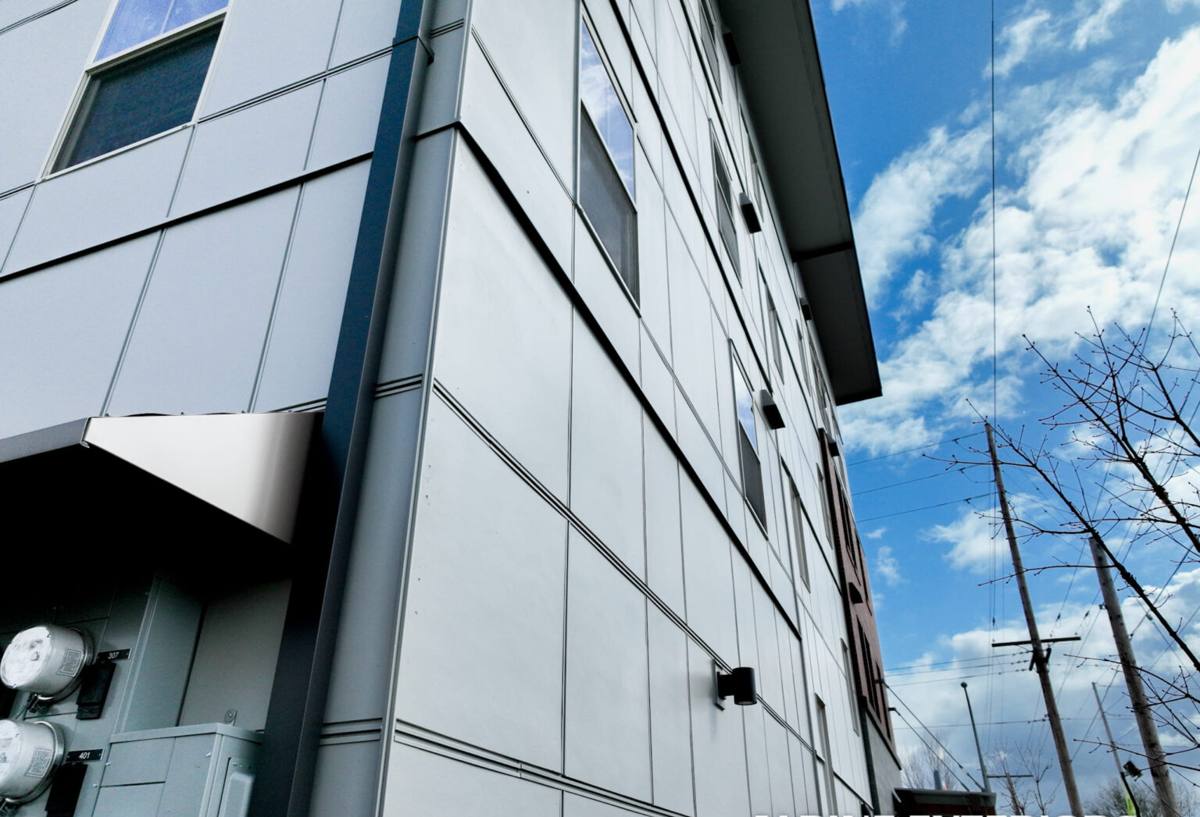
What Bellingham's Climate Does to Vertical Siding
Salt Air
Even a few blocks inland from the bay, airborne salt accelerates corrosion on fasteners, flashing, and any metal trim tied into a siding system. Board and batten has more exposed vertical seams and more fastener points than lap siding, which means more places for salt exposure to find a weak spot if the wrong hardware or a rushed installation is used.
Driving Rain
Wind-driven rain doesn't just run down a wall, it gets pushed sideways and upward into gaps, laps, and butt joints. Board and batten relies on the battens to shed water away from the seams underneath them — if the reveal, fastening pattern, or water-resistive barrier behind the panels isn't done correctly, that rain finds its way behind the siding instead of off of it.
Moss and Sustained Dampness
Whatcom County's moss season isn't a few weeks, it's most of the year. Moss and algae hold moisture against a wall surface far longer than open air would, and on siding materials that absorb water — untreated wood, some engineered wood products — that sustained dampness is where rot and delamination start. A siding material that doesn't absorb moisture in the first place removes a huge part of that risk.
Why We Only Install James Hardie for Board & Batten
Board and batten shows up in several materials — cedar, primed spruce, engineered wood (like LP SmartSide), vinyl, and fiber cement. We've made a standing decision to install James Hardie fiber cement exclusively, and on a neighborhood like Happy Valley the reasoning is straightforward:
- It doesn't absorb water the way wood-based products do. Fiber cement is cement, sand, and cellulose fiber — it doesn't swell, cup, or rot from sustained moisture contact the way solid wood or wood-fiber composite panels can.
- It's non-combustible. That matters more each fire season in this part of Washington, and it's a real difference from wood and engineered-wood sidings.
- The factory finish (ColorPlus) is baked on and warrantied, not field-applied. Salt air and UV both work on paint film over time; a factory-cured finish holds color and adhesion longer than a coat applied on site.
- Hardie's HZ5 product line is engineered for this climate zone — freeze-thaw cycling, moisture exposure, and coastal conditions are part of the product spec, not an afterthought.
- The warranty is transferable and backed by a large manufacturer, not a regional mill or a vinyl extruder that may not be around in twenty years.
None of that means the alternatives are junk — cedar looks great and vinyl is inexpensive, and we're honest with clients about that. It means that for the specific conditions Happy Valley homes face, we don't think those trade-offs (ongoing maintenance, moisture sensitivity, or a shorter realistic service life) are worth it, and we'd rather turn down installing a product than install something we don't think will perform here.
What Correct Board & Batten Installation Actually Involves
Board and batten is visually simple but easy to install wrong in ways that don't show up for a few years. A correct installation includes:
Water-Resistive Barrier and Flashing First
The house wrap and flashing details behind the siding do the real waterproofing work — the siding is the second line of defense, not the first. Every penetration (outlets, hose bibs, light fixtures) needs proper flashing before a single panel goes up.
Correct Reveal and Fastening Pattern
James Hardie specifies exact fastener spacing, panel gaps, and batten overlap for board and batten assemblies. Following the manufacturer's fastening schedule — not a shortcut version of it — is what keeps the warranty valid and keeps the assembly performing in wind-driven rain.
Rain Screen Gap Where Called For
On many Bellingham-area homes, a small ventilated gap between the water-resistive barrier and the siding lets any moisture that does get behind the panels drain and dry out instead of sitting against the wall sheathing. Given how much of the year this area spends damp, that detail is worth doing right rather than skipping.
Trim, Caulk, and Paint at Cut Edges
Every field-cut edge on a fiber cement panel needs to be sealed and painted to match — an exposed cut edge is the one place moisture can get into the material itself. This is a small step that's easy to rush and expensive to fix later.
Comparing Board & Batten Materials for This Climate
| Material | Moisture Behavior | Maintenance | Realistic Lifespan Here |
|---|---|---|---|
| James Hardie Fiber Cement | Does not absorb/swell; engineered for coastal exposure | Occasional wash; factory finish holds color | 30+ years with proper install |
| Cedar (solid wood) | Absorbs moisture; needs a working finish to stay protected | Refinish/reseal every few years | Variable; heavily maintenance-dependent |
| Engineered Wood (e.g. LP SmartSide) | Resin-treated but still wood-based; edge sealing is critical | Field-applied finish needs upkeep; edge checks | Shorter than fiber cement in sustained damp exposure |
| Vinyl | Doesn't absorb water but can warp/crack with UV and cold | Low, but color fades and isn't repaintable | Moderate; seams can loosen over time |
This is a general comparison, not a claim that any of these products fail on a fixed timeline — how any siding performs depends heavily on the specific installation. It's the reason installation quality gets its own section above: the best material installed poorly will still fail early, and a decent material installed correctly will outperform expectations.
Our Process for Happy Valley Projects
- Walk the exterior with you. We look at existing siding condition, trim, window flashing, and any moisture staining before quoting anything.
- Plan the batten layout to the house. Batten spacing gets laid out to work with window and door openings so the pattern looks intentional, not stretched or crowded at corners.
- Address what's underneath first. If house wrap, flashing, or sheathing needs attention, we deal with that before siding goes up — covering a problem with new siding doesn't fix it.
- Install to Hardie's published fastening and clearance specs. Not a shortcut version — the version that keeps the manufacturer's warranty intact.
- Final detail pass. Cut-edge sealing, caulk lines, and trim get checked before we call a job finished.
Living With Board & Batten Through Moss Season
Even a well-installed, non-absorbent siding benefits from basic upkeep in a climate like this. A yearly rinse to knock off moss spores and organic buildup, keeping gutters clear so water isn't sheeting down the wall in sheets during heavy rain, and trimming back vegetation that holds shade and dampness against the siding all go a long way. None of that is siding-specific maintenance — it's the same thing every exterior surface in Whatcom County needs — but it matters more on vertical board and batten because the battens themselves create ledges where debris and moss spores can settle.
What Board & Batten Typically Costs to Do Right
Pricing depends on the size of the home, how much of the existing siding and sheathing needs replacement versus reuse, trim complexity, and access. Rather than quoting a number that won't hold up house to house, here's what actually moves the price:
- Square footage of wall area and number of stories
- Condition of the sheathing and water-resistive barrier underneath the existing siding
- Amount of trim, corner detail, and window/door flashing work involved
- Whether a rain screen gap is being added
- Site access — hillside lots and tight setbacks common in this neighborhood can add labor time
We give a firm number after walking the actual house, not a phone estimate, because the condition behind the existing siding is usually what separates a straightforward job from one that needs extra prep work.
What to Ask Before You Hire
- Do they install to the manufacturer's published fastening schedule, or their own shortcut version?
- Will they show you the water-resistive barrier and flashing before covering it with siding?
- Do they seal and paint every field-cut edge, not just the factory edges?
- Can they explain why they chose the specific product line for this climate, not just "board and batten in general"?
- Is the warranty from the manufacturer, transferable, and separate from a generic labor warranty?
A crew that's worked in Happy Valley and the surrounding Bellingham neighborhoods knows the difference a proper rain screen detail and correct flashing make here, because they've seen what happens on the houses where those steps got skipped.
If you're weighing board and batten for a home in Happy Valley, we're glad to walk the exterior with you and give you a straight, no-pressure estimate — including an honest read on what's underneath your current siding before we talk about what goes on next. Use the form below to get started.