 Bellingham
 Fiber Cement Siding for Happy Valley Homes
Happy Valley sits close enough to Bellingham Bay to catch the marine air, with mature tree canopy over much of the neighborhood that keeps yards and north-facing walls shaded for long stretches of the year. That combination — salty, moisture-laden air and shade that never quite lets a wall dry out — is a tough environment for exterior siding, and it shows up on plenty of homes in this part of Whatcom County as premature paint failure, soft trim, and moss creeping up from the foundation line. Fiber cement siding handles that environment better than most materials, but only when it's specified and installed correctly for this specific climate, not treated like a drop-in replacement for whatever was on the wall before.
We install James Hardie fiber cement exclusively, and every job we run in Happy Valley is detailed around what salt air, driving rain, and a long moss season actually do to a wall over ten, twenty, and thirty years.
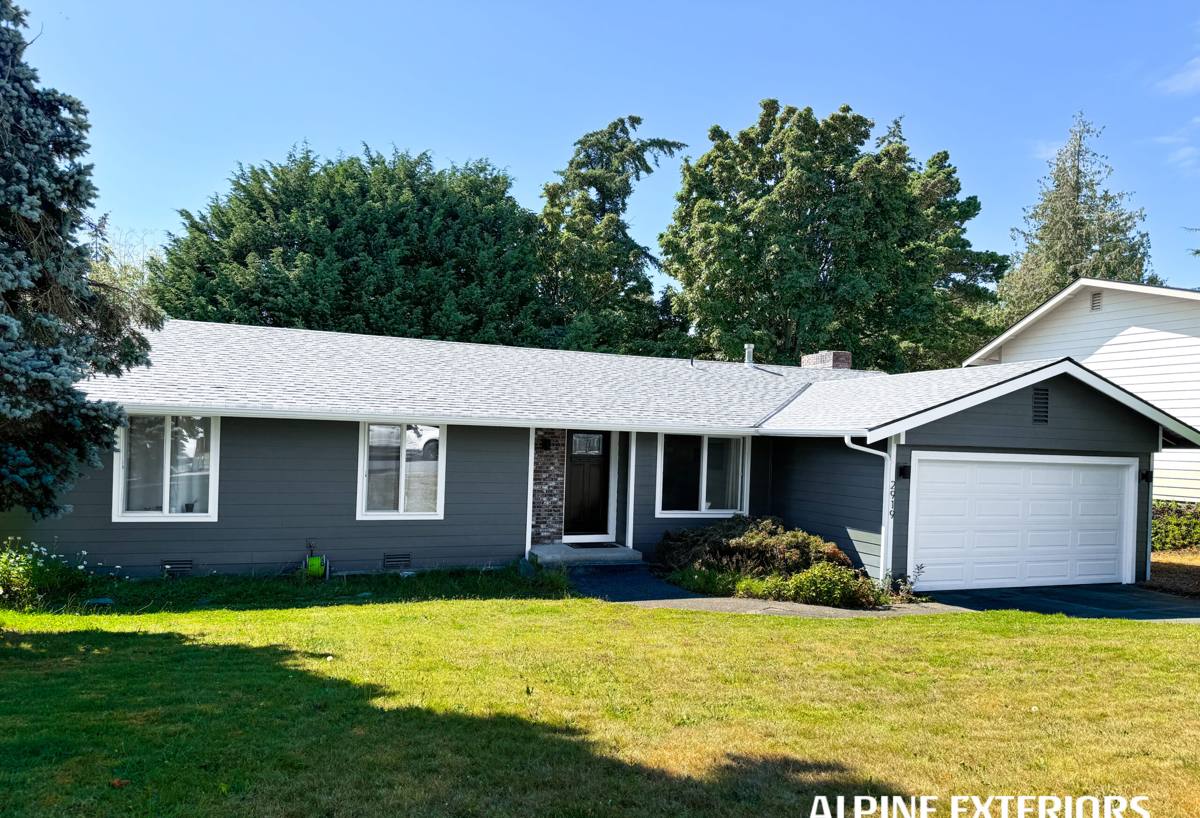
What Happy Valley's Climate Asks of a Wall
Salt Air and Driving Rain
Wind off Bellingham Bay rarely lets rain fall straight down — it drives sideways into walls, especially on homes with less tree cover to break the wind. That wind-driven rain gets pushed up under laps and into seams that would stay dry in a calmer climate, and the salt content in that air is hard on any exposed metal fastener over time. A wall built for this area needs siding that resists moisture intrusion at the joint level and fasteners specified to hold up under sustained salt exposure, not just whatever ships with the cheapest install package.
The Long Moss Season
Happy Valley's tree canopy is part of what makes the neighborhood attractive, but it also means a lot of walls stay shaded and damp well after a storm has passed elsewhere in town. Moss and algae need exactly that combination of moisture and low light to take hold, and once they're established on a painted or unfinished surface, they hold water against the material and accelerate whatever decay process was already underway. Whatcom County's moss season effectively runs most of the year on shaded walls, which means a siding product's resistance to moss and mildew matters here more than it would in a drier, sunnier climate.
What a Correct Fiber Cement Install Actually Involves
Water Management Behind the Siding
Fiber cement is only as good as the wall assembly behind it. A correct install starts with weather-resistant barrier, properly lapped and taped, with flashing at every window, door, and horizontal transition designed to shed water outward rather than let it track behind the cladding. Skipping or shortcutting this step is invisible on installation day and shows up years later as rot in the sheathing — by which point the siding itself usually isn't the problem, the water management behind it is.
Clearance, Fastening, and Caulk Joints
Fiber cement needs clearance from grade, roof lines, and decks to keep splash-back and standing moisture away from the bottom edge of the wall. Fasteners need to be corrosion-resistant and driven to the manufacturer's spec — not overdriven, which crushes the material's edge and opens a path for water. Caulk joints at trim and penetrations need to be sized and placed according to the manufacturer's requirements, since an oversized or misplaced bead can trap moisture instead of shedding it.
Cut-Edge Sealing
Every cut made on site exposes raw fiber cement that isn't protected by the factory finish. Priming and sealing those cut edges before installation is a basic step that's easy to rush on a tight schedule, and it's one of the most common shortcuts we see when we tear off a competitor's work. In a climate this consistently wet, an unsealed cut edge is a slow, guaranteed entry point for moisture.
Why This Crew Installs Only James Hardie
We don't offer LP SmartSide, vinyl, Cemplank, Allura, primed spruce, or cedar siding. Those are legitimate products, and other contractors install them competently — we simply made a professional decision to standardize on one system we trust completely rather than offer a lower-cost alternative that shifts maintenance risk onto the homeowner down the road. James Hardie's fiber cement core is non-combustible and dimensionally stable, meaning it doesn't swell, cup, or warp the way wood-based products can when they take on moisture. The factory-applied ColorPlus finish is baked on under controlled conditions, which holds color and resists moss far better than a field-painted surface exposed to Happy Valley's damp, shaded walls. Hardie also engineers its HZ product lines by climate zone, and the HZ5 formulation used in this region is built specifically for higher-moisture, marine environments like ours.
Matching the Right Product to This Climate
Not every siding material handles Happy Valley's conditions the same way. Here's how the common options compare on the factors that actually matter in this environment:
| Material | Moisture & Moss Behavior | Salt Air Durability | Maintenance in This Climate | Realistic Lifespan |
|---|---|---|---|---|
| James Hardie fiber cement | Dimensionally stable; factory finish resists moss growth | High, with correct fastener spec | Low; occasional wash, no repainting cycle | 30+ years with proper install |
| Vinyl | Doesn't rot, but can trap moisture behind it unnoticed | Moderate; can become brittle over time | Low visible upkeep, hidden issues hard to catch | 20-30 years, variable |
| LP SmartSide (engineered wood) | More sensitive to moisture at cut edges and fastener holes | Moderate; edge sealing needs upkeep | Moderate; edge maintenance and repainting cycle | 15-25 years, climate-dependent |
| Cedar | Absorbs moisture readily; moss and mildew take hold without upkeep | Low without diligent sealing | High; recurring sealing or repainting | 15-25 years with consistent upkeep |
The pattern across this table is consistent: materials that absorb or trap moisture struggle more in a shaded, salt-exposed, high-rainfall neighborhood like Happy Valley than in a drier climate, regardless of how they perform elsewhere in the country.
Our Process for a Happy Valley Job
Assessment and Tear-Off
We start by walking the property, noting shade patterns, drainage paths, and any areas where the existing siding shows signs of moisture damage. Tear-off includes inspecting the sheathing underneath — if we find soft spots or rot, we address them before anything new goes up, because covering a wet substrate with new siding just delays the same problem.
Water Barrier and Flashing
We install and lap the weather-resistant barrier correctly, then detail flashing at every window, door, and horizontal joint according to James Hardie's published requirements for this climate zone. This is the step that determines whether the wall stays dry for decades or starts failing quietly behind the new siding within a few years.
Installation and Finish
Boards go up to spec — correct clearances, fastener pattern, and caulk detailing — with every field cut primed before it's set. We finish with a walkthrough covering what little maintenance fiber cement actually needs, so you know what you're looking at if you ever want to check the wall yourself.
Signs Your Current Siding Is Losing the Battle
A few warning signs show up consistently on Happy Valley homes before a full siding failure:
- Moss or algae staining that keeps returning to the same shaded sections of wall within months of cleaning
- Paint that's peeling, bubbling, or chalking faster on north-facing or tree-covered walls than on sun-exposed ones
- Soft or spongy spots when you press on the siding near the bottom courses or around window trim
- Visible gaps, cupping, or warping at board seams
- Rust streaking from fastener heads, a sign of corrosion working from the inside out
- A musty smell near exterior walls, which can indicate moisture trapped behind the siding
Keeping Fiber Cement Siding Looking Right
James Hardie fiber cement asks very little of a homeowner compared to wood or engineered wood siding, but a little attention goes a long way in this climate:
- Rinse shaded, moss-prone sections of the wall once or twice a year with a garden hose and soft brush — no pressure washer, which can force water behind laps
- Keep gutters clear so overflow doesn't run down the wall face repeatedly in the same spot
- Trim back branches and shrubs that keep a section of wall in constant shade or touching the siding directly
- Check caulk joints at trim and penetrations every couple of years and have any cracked or missing caulk redone
- Have any impact damage or cracked boards repaired promptly rather than left exposed through a wet season
Why Hire a Crew That Already Works Happy Valley
A siding install that looks right on a dry summer afternoon doesn't tell you much about how it'll hold up through a Whatcom County winter. A crew that's worked this neighborhood through multiple wet seasons already knows which walls hold moss longest because of the tree cover, how much clearance actually holds up against wind-driven rain off the bay versus what a generic install guide assumes, and which flashing details matter most on the home styles common to this area. That judgment doesn't show up on a spec sheet or a sales brochure — it shows up ten years later in whether the wall still looks and performs the way it did on installation day.
If you're weighing fiber cement siding for a home in Happy Valley, we're happy to walk the property, talk through what your specific walls need given their shade and exposure, and put together a straightforward, no-pressure estimate. There's a form below — reach out and we'll set up a time to take a look.