 Bellingham
 Why Siding Choice Matters More in Barkley
Barkley sits in a part of Bellingham where three climate stresses stack on top of each other: salt-laden air moving in off Bellingham Bay and the Strait, long stretches of driving rain that push moisture sideways into wall assemblies, and a moss season that can run most of the year on shaded, north-facing walls. None of these factors alone would destroy a siding system quickly. Together, over a Whatcom County winter and the damp shoulder seasons that follow, they punish anything that isn't dimensionally stable, properly sealed, and finished to resist both water and biological growth.
That's the lens we use on every Barkley project. A siding job here isn't just about matching a color or covering the sheathing — it's about choosing a product and installation method that will still be doing its job in twenty years, not just looking fine in the first two.
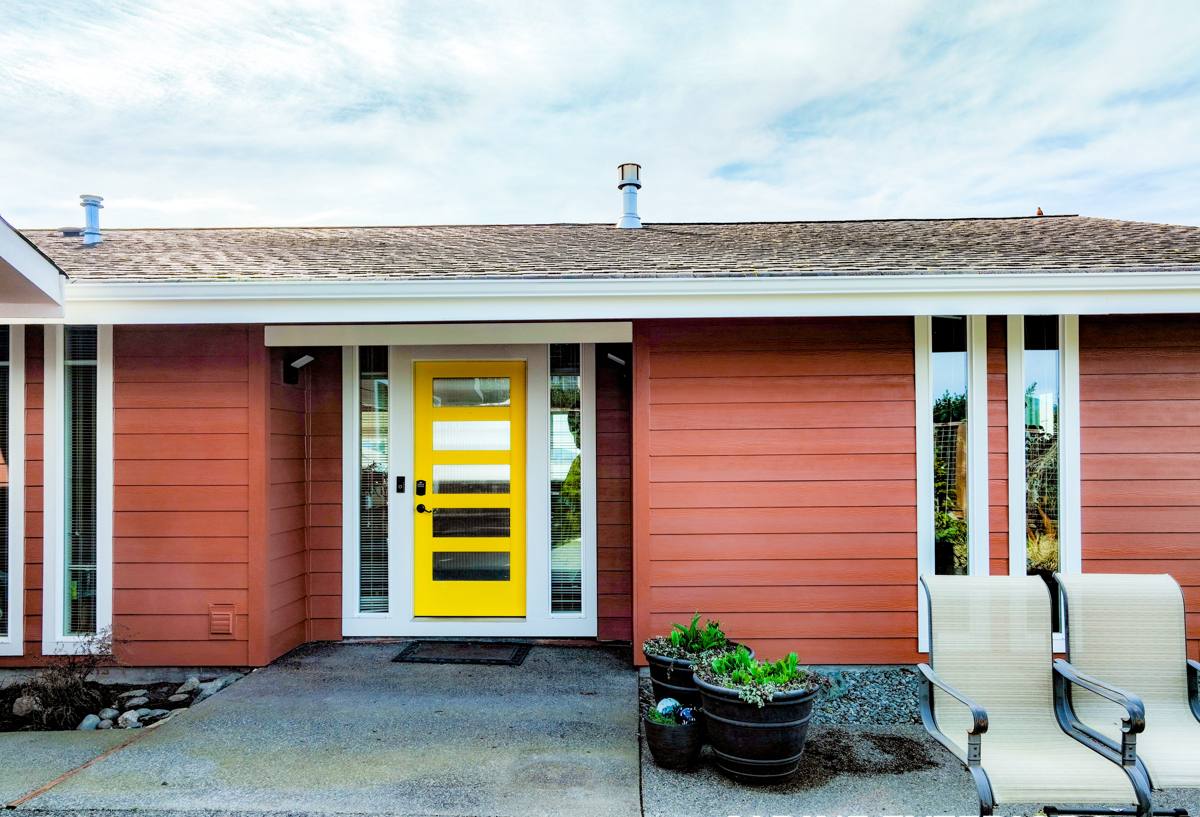
What Barkley's Climate Actually Does to Siding
Salt air
Proximity to the Salish Sea means airborne salt is a constant, low-level presence. Salt is hygroscopic — it pulls moisture out of the air and holds it against a surface. On siding materials that aren't formulated to handle that, this accelerates finish breakdown, encourages fastener corrosion, and speeds up rot in any wood-based product.
Driving rain
Bellingham's rain rarely falls straight down. Wind-driven rain gets forced horizontally into lap joints, corner trim, and butt seams. A siding system with poor water management at these transition points doesn't just get wet on the surface — it lets water track behind the cladding, where it can sit against sheathing and framing for months without anyone noticing until there's a soft spot or a stain on the interior wall.
Moss and biological growth
Shaded elevations, roof overspray, and the general dampness of a Pacific Northwest winter combine to make moss and algae growth a near-certainty on the wrong surface. Beyond the cosmetic issue, moss holds moisture against siding long after the rain has stopped, extending the amount of time a wall assembly stays wet.
Why We Install Only James Hardie
We standardized on James Hardie fiber cement for every siding job we do, including in Barkley, and we don't install vinyl, LP SmartSide, or other fiber cement alternatives. That's a deliberate professional decision, not a sales pitch:
- Non-combustible core: Hardie's fiber cement won't ignite or contribute fuel to a fire, which matters increasingly for insurance underwriting in the region.
- Dimensionally stable: Fiber cement doesn't swell, cup, or warp with moisture cycling the way wood-based siding can, which matters directly in a climate that cycles between soaked and dry constantly.
- Factory-cured ColorPlus finish: The finish is baked on at the factory under controlled conditions, rather than field-applied paint, which gives it better adhesion and UV resistance against salt-air degradation.
- Climate-engineered HZ product line: Hardie makes a version of its product specifically engineered for the wetter, more humid parts of the country — which is exactly the specification we use here.
We're not going to pretend every siding product on the market is bad. Vinyl is inexpensive and low-maintenance in mild climates; engineered wood products have real fans. But given what we see happen to lower-tier products in this specific climate over a 10-20 year window — fading, moisture intrusion at seams, moss retention, fastener failure — we've made the call that Hardie is the only product we're willing to put our name behind here.
The HZ5 Specification and Why It's Used Here
James Hardie sells regionally engineered versions of its siding, matched to five climate zones (HZ5 through HZ10, generally). Western Washington, including Whatcom County, falls into the wetter, more humid zone specification. The practical differences in that specification include adjustments to the substrate formulation for moisture exposure and finish requirements suited to a climate that rarely gets a long, fully dry season. Installing the correct zone specification isn't optional upgrade — it's the version of the product actually engineered for what Barkley's weather does to a house.
What a Correct Installation Actually Involves
Fiber cement siding is only as good as the assembly behind it. Most of the siding failures we get called out to inspect on older homes weren't caused by the siding material — they were caused by installation shortcuts. On every Barkley project we control for the following:
| Installation Detail | Why It Matters in This Climate |
|---|---|
| Weather-resistive barrier, correctly lapped | Directs any water that gets behind the siding back out, rather than trapping it against sheathing |
| Rainscreen gap where called for | Lets driving rain drain and air circulate behind the siding, reducing moisture dwell time and moss retention |
| Manufacturer-specified fastener pattern and type | Prevents blow-off in wind events and corrosion from salt-laden air over time |
| Correct gapping and caulking at butt joints and trim | Keeps wind-driven rain from tracking sideways into the wall assembly |
| Proper flashing at windows, doors, and penetrations | The single most common failure point on any siding job, regardless of cladding material |
| Minimum ground clearance | Reduces splash-back moisture and keeps the siding's bottom edge out of standing moisture |
Every one of these is inspectable. A homeowner walking a job site can ask their crew to point out the rainscreen gap, the flashing at a window head, or the fastener pattern being used — a contractor who can't answer those questions plainly is not one you want finishing the job.
Our Process for a Barkley Siding Job
- On-site assessment: We look at existing siding condition, moisture history (stains, soft spots, past moss buildup), sun/shade exposure per elevation, and any trim or window flashing that needs attention before new siding goes on.
- Tear-off and substrate check: Old siding comes off and we inspect the sheathing underneath for rot or water damage before anything new goes up — this is the point where hidden problems get caught and fixed, not covered over.
- Weather barrier and drainage plane: A new, correctly lapped weather-resistive barrier goes on, with a rainscreen gap where the wall assembly calls for one.
- Flashing detail work: Windows, doors, and any wall penetrations get flashed correctly before siding closes around them — this is the step that prevents the majority of long-term water problems.
- Hardie installation to spec: Correct fastener type and pattern, proper gapping, and factory-finished ColorPlus panels or lap siding installed per manufacturer requirements to keep the warranty intact.
- Final detail and cleanup: Caulking, trim finish work, and a walk-through so you know exactly what was done and why.
Living With Hardie Siding in Barkley's Climate
Maintenance on correctly installed Hardie siding is genuinely low compared to wood-based alternatives, but "low-maintenance" doesn't mean "no maintenance" in this climate. A yearly rinse-down on shaded or north-facing walls helps keep moss from establishing itself, and it's worth walking the exterior once a year — ideally before the wet season sets in — to check caulking at joints and trim for any cracking or separation. Catching a failed caulk joint early is a five-minute fix; catching it three years late can mean addressing water damage behind the wall.
What to Check Before You Hire Anyone for This Job
- Ask what siding product and product line they're specifying, and why — a contractor who can't explain the climate-zone reasoning likely isn't tailoring the job to Barkley's conditions
- Ask specifically about rainscreen/drainage plane details for your walls
- Ask how they handle flashing at windows and doors, and ask them to explain it, not just claim it's done "to code"
- Ask for the manufacturer-specified fastener schedule they'll be using
- Confirm whether the crew doing the physical installation has worked in Barkley or similar Bellingham neighborhoods before, not just fiber cement in general
- Get a clear answer on warranty terms — both the manufacturer's product warranty and the contractor's labor warranty
Why Local Experience in Barkley Specifically Matters
Bellingham isn't a uniform climate zone from one neighborhood to the next. Wind exposure, tree cover, elevation, and proximity to the water all shift the moisture and salt-air load a given house actually deals with. A crew that has worked Barkley homes already knows which elevations tend to hold moss longest, where driving rain hits hardest given typical lot orientation, and what kind of wall assemblies are already behind the siding on homes of a similar age in the area. That knowledge doesn't replace doing the installation correctly — but it does mean fewer surprises once the old siding comes off, and a job that's planned around how this specific area actually behaves rather than a generic specification.
If you're weighing a siding project on a Barkley home, we're happy to take a look and walk you through what we'd recommend and why — no pressure, no obligation. Use the form below to request a free estimate.