 Bellingham
 Composite Decking Built for Lynden's Marine Climate
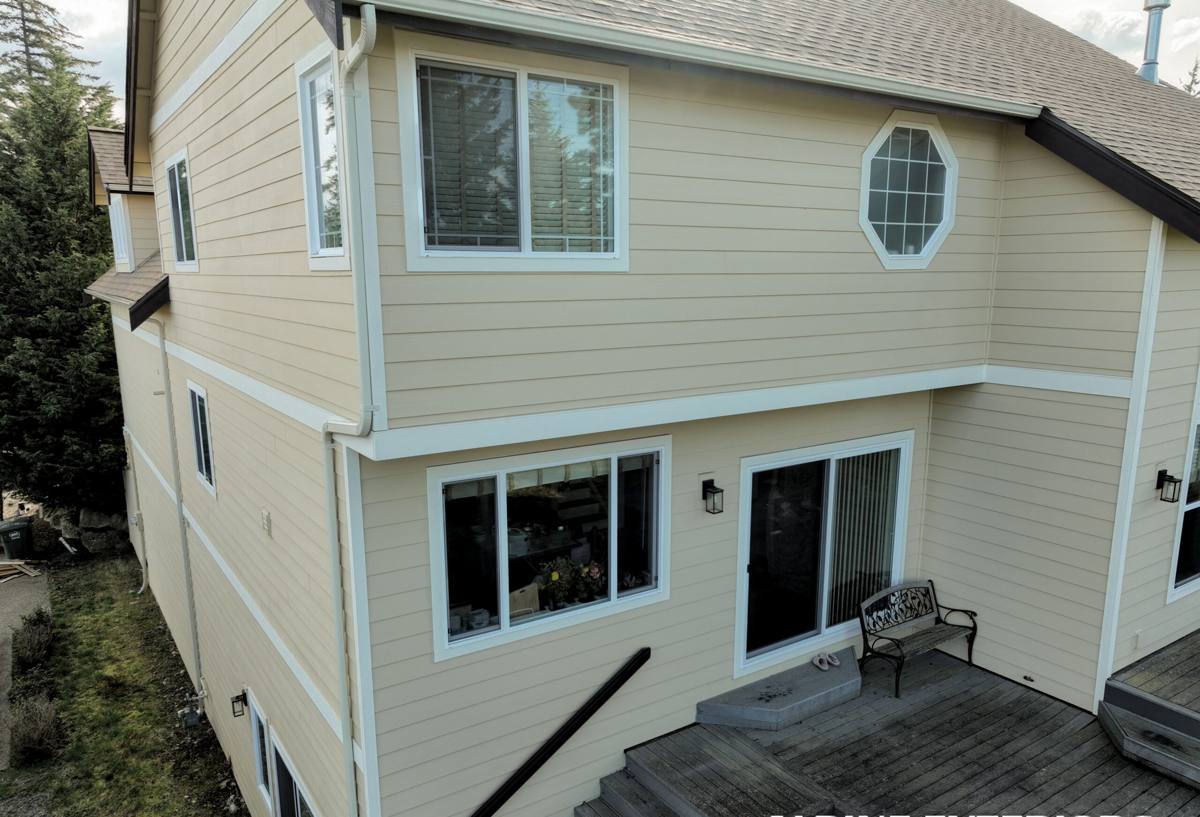
Lynden sits inland from Bellingham Bay, but it still lives inside the same damp, marine-influenced weather system that shapes all of Whatcom County. Salt-tinged air moves in off the Salish Sea, driving rain settles in for months at a stretch, and a moss season that can run from October into April coats anything horizontal that doesn't drain or dry fast enough. A deck left outside all year takes the full brunt of that, and it shows first in the wood — graying boards, soft spots near the ground, and a green film that comes back no matter how many times it gets scrubbed off.
Composite decking was built to handle exactly that kind of exposure. It doesn't absorb water the way wood fibers do, it doesn't need yearly staining to keep from splitting, and the better products resist the mold and algae growth that thrives in this area's long wet stretches. That doesn't mean every composite deck holds up the same, though — the board is only as good as the framing, drainage, and fastening underneath it, and that's where most of the difference between a deck that lasts and one that doesn't actually comes from.
What This Climate Actually Does to a Deck Over Time
Moisture That Doesn't Let Up
Whatcom County doesn't get brief downpours followed by dry stretches — it gets weeks of steady, low-intensity rain. That kind of weather doesn't just wet the surface of a deck; it works its way into end grain, fastener holes, and any spot where two boards meet without a gap. On a wood deck, that moisture sits in the fibers and slowly breaks them down from the inside, which is why rot so often shows up first at butt joints and around post bases rather than out in the open field of the deck.
Moss and Algae on Shaded Boards
Decks on the north or east side of a house, or shaded by mature trees — common on older Lynden lots — stay damp longer after every rain. That's exactly the condition moss and algae need to take hold. Once moss gets a foothold in wood grain or in the grooves of a poorly finished composite board, it holds moisture against the surface and becomes a slip hazard, not just a cosmetic problem.
Freeze-Thaw and Seasonal Movement
Whatcom County doesn't see extreme cold most winters, but it does see enough freeze-thaw cycling to matter. Water that's worked into a crack or a fastener hole expands when it freezes, widening the damage a little more each cycle. Composite boards move with temperature too — less than wood, but enough that gapping and fastening have to account for it, or you end up with buckled or popped boards a few seasons in.
Composite vs. Wood vs. PVC Decking
Every decking material is a different set of trade-offs. Here's how the three most common options actually compare for a project in this climate:
| Material | Moisture Resistance | Maintenance | Typical Lifespan Here | Upfront Cost |
|---|---|---|---|---|
| Pressure-treated wood | Absorbs water; needs sealing | Annual cleaning and re-staining | 10–15 years before major repair | Lowest |
| Composite (capped) | Resists moisture absorption | Periodic washing, no staining | 25–30+ years | Mid to upper |
| Solid PVC | Fully impervious to moisture | Occasional washing | 25–30+ years | Highest |
Composite lands in the middle for most Lynden homeowners: a real step up from wood in a climate this wet, without the higher cost and different installation requirements that come with solid PVC. Our standard recommendation is a fully capped composite board — capped on all four sides, not just the top — because the cap is what keeps moisture and mildew from getting into the core material where it can't be cleaned off.
What a Correct Composite Deck Installation Actually Involves
Substructure First
The composite boards get all the attention, but the framing underneath does the real work of keeping a deck dry and stable. In a climate like this, joists need consistent spacing — typically 16 inches on center, tighter if boards run at an angle — and the framing lumber itself needs to be rated for ground contact where it's close to grade. Skipping this step to save time is one of the most common shortcuts we see on decks we're asked to repair or replace.
Ledger Attachment and Flashing
Where a deck attaches to the house, flashing has to be installed correctly so water sheds away from the ledger board instead of running behind it into the wall framing. This is one of the highest-consequence details on the entire project, because a poorly flashed ledger can drive moisture into the house structure itself, not just the deck — and in a county that sees this much sustained rain, a small gap in the flashing eventually becomes a real problem.
Fastening and Board Layout
Hidden fastener systems are standard on most composite decks now, and they matter for more than looks — a clean top surface with no exposed screw heads means fewer places for water to pool and fewer entry points for moisture into the board. Boards also need a consistent gap between them, both for drainage and to allow for the material's natural expansion and contraction through the year.
Airflow Underneath
A deck built low to the ground with poor ventilation underneath stays damp longer after every rain, which speeds up mildew growth on the underside of the boards and around the framing. Where grade and local code allow it, skirting should include venting, and landscaping shouldn't be allowed to grow up against the structure and trap moisture against it.
Our Process for a Composite Deck Build in Lynden
- On-site assessment — we look at the existing deck or build site, note drainage patterns, shade exposure, and any framing or ledger issues before we talk materials.
- Design and material selection — board tier, color, railing style, and layout, matched to the home and to how the space actually gets used.
- Permitting — for most attached decks in Whatcom County, a permit is required; we handle the application and inspection scheduling as part of the job.
- Tear-out — if an old deck is coming out, we remove it and check the ledger, posts, and any framing that's being reused for hidden damage.
- Framing and flashing — substructure built to spec, with ledger flashing and footings sized for local frost depth.
- Decking, railing, and fascia installation — boards fastened with proper gapping, railing set and secured, fascia and edge trim finished out.
- Final walkthrough — we go over the finished deck with you, including basic care specific to the product installed.
What Affects the Cost of a Composite Deck in Lynden
Composite decking costs more upfront than pressure-treated wood, but the gap is often smaller than homeowners expect once you factor in the staining and repairs a wood deck needs over the same years. The biggest cost drivers on any given project are usually the ones below:
| Cost Factor | Why It Matters |
|---|---|
| Deck size and shape | Complex shapes, angles, and multiple levels add labor and cut waste |
| Board tier | Entry-level capped composite vs. premium lines with deeper wood-grain texture and longer warranties |
| Substructure condition | Reusing sound existing framing costs less than a full tear-out and rebuild |
| Railing type | Composite or aluminum railing systems cost more than basic wood railing but need far less upkeep |
| Site access and grade | Sloped Lynden lots or tight side-yard access can add time to framing and material staging |
| Permit and inspection | Required on most attached decks; factored into the project timeline, not just the fee |
As a broad range, mid-tier composite deck projects in this area typically run somewhere in the neighborhood of $30 to $60 per square foot installed, though a written, on-site quote is the only way to know what a specific project actually costs — square footage alone doesn't capture framing condition, railing choice, or site access.
Maintenance a Composite Deck Actually Needs Here
One of the appeals of composite is how little upkeep it needs compared to wood — but "low-maintenance" doesn't mean "no maintenance," especially with this much rain and moss pressure. A short seasonal routine keeps a composite deck looking and performing the way it should for the long haul:
- Rinse the deck surface and gaps between boards at least twice a year to clear out trapped debris
- Soft-wash shaded or north-facing sections where moss and algae are most likely to take hold — avoid high-pressure washing, which can damage the cap layer
- Clear leaves and needles out of board gaps and off the substructure before fall rains set in
- Check railing hardware and any visible fasteners once a year for looseness
- Make sure gutters and downspouts near the deck are directing water away, not onto it
- Keep nearby vegetation trimmed back so air can move freely under and around the deck
- Have the ledger flashing and any framing you can access visually inspected every year or two
Permits and Local Considerations in Whatcom County
Most attached decks above a certain height in Lynden and the rest of Whatcom County require a building permit, and inspections typically check footing depth, ledger attachment, and railing height along the way. Setback requirements from property lines can also come into play depending on the lot. We handle the permit process as part of a full build, but if you're comparing quotes, it's worth asking directly whether permitting is included — leaving it out is one of the easier ways for a bid to look lower than it actually is.
Why Hire a Crew That Already Works in Lynden
A lot of what makes a composite deck last in this climate isn't on the spec sheet — it's knowing how deep to set footings for this area's frost depth, which board colors and finishes actually hold up under this much cloud cover and moisture, and where moss tends to establish itself first on a given lot's orientation. A crew that's already doing this work across Whatcom County has seen which installation shortcuts fail here specifically, not just in a manufacturer's general guidelines written for a much drier climate. That local familiarity translates into fewer surprises during the build and a deck that's actually set up to handle a Lynden winter, not just a mild one.
If you're weighing options for a new deck or thinking about replacing an aging wood one, we're happy to take a look and put together a free, no-pressure estimate — just fill out the form below.