 Bellingham
 Metal Roofing Built for Barkley's Weather, Not Just Its Looks
Barkley sits close enough to Bellingham Bay and the surrounding wetlands that homes here deal with a specific combination of punishment: salt-tinged air drifting in off the water, long stretches of driving rain through fall and winter, and shaded lots that stay damp long enough to grow moss on almost anything that isn't actively shedding water. A roof that works fine in a drier part of Whatcom County doesn't automatically work here. Metal roofing, installed correctly for this climate, handles all three of those stresses better than most other roofing materials — but "installed correctly" is doing a lot of work in that sentence, and it's where a lot of roofs in this area go wrong.
This page covers what a metal roof needs to do in Barkley specifically, what a proper installation involves, and how we approach the job when we're on your roof.
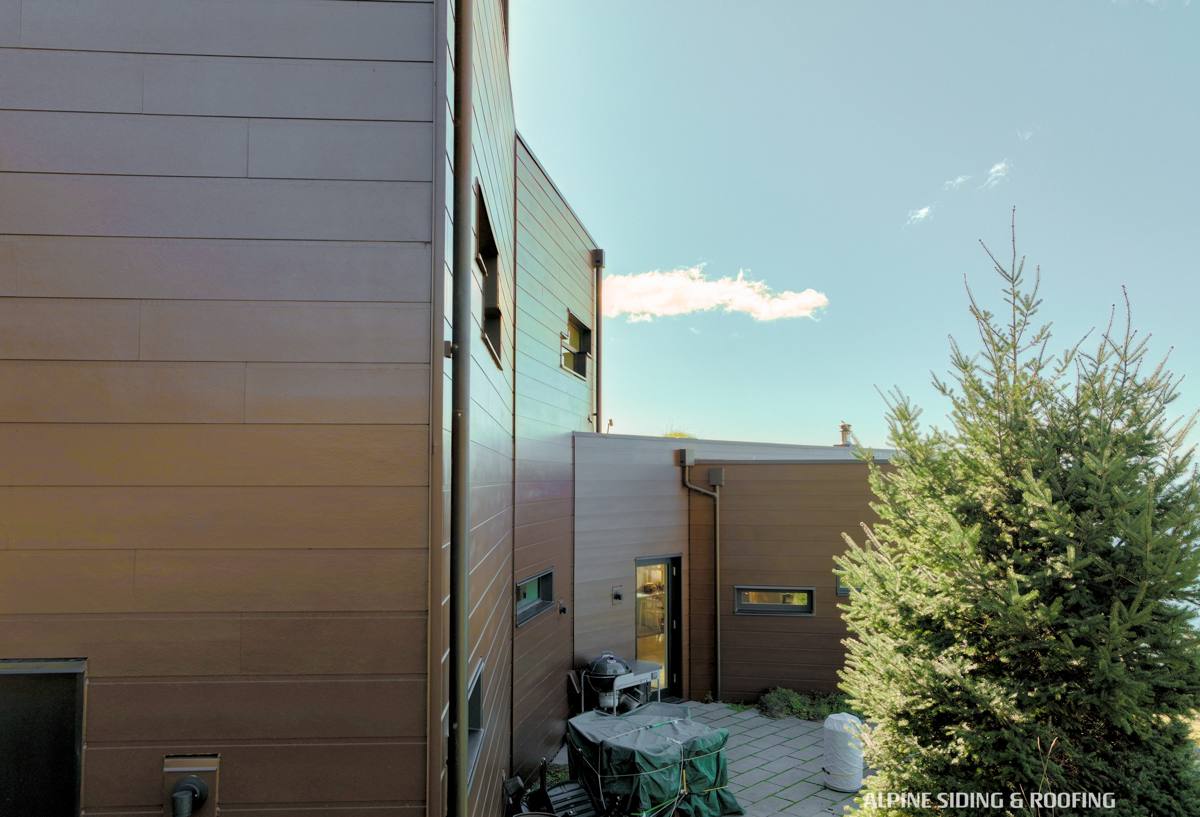
What Barkley's Climate Actually Does to a Roof
Salt Air
Being close to Bellingham Bay means airborne salt is a real factor, even a few miles inland. Salt accelerates corrosion on any exposed metal — fasteners, flashing, panel edges — especially where two dissimilar metals touch and start a slow electrolytic reaction. It's not dramatic; it's slow and it's cumulative, which is exactly why it gets ignored until a roof is 12 years old and the fasteners are the weak point instead of the panels themselves.
Driving Rain
Whatcom County rain doesn't always fall straight down. Wind off the water pushes it sideways, which means water finds its way under laps, around penetrations, and into any seam that wasn't detailed with that in mind. A roof spec'd for a calm, dry climate and installed here without adjustment will leak at the exact spots you'd expect: valleys, chimney flashing, and wherever two roof planes meet.
Moss Season
Between the shade cover common in Barkley's more wooded lots and the sheer number of wet months per year, moss isn't an occasional nuisance — it's a season. On asphalt shingles, moss roots into the granule surface and lifts it. On a properly installed metal roof, moss has almost nothing to grab onto and drains too fast to establish itself in the field of the roof. It can still take hold in debris that collects in valleys or against poorly flashed penetrations, which is a maintenance point, not a metal roofing flaw.
Why Metal Roofing Fits This Specific Combination
No single roofing material is the right answer everywhere — that's a fair trade-off conversation, not a sales pitch. But for Barkley's particular mix of salt exposure, wind-driven rain, and moss pressure, metal has real structural advantages:
- Steep water shed and minimal surface texture means less standing moisture and far less for moss to anchor into
- Continuous panel runs reduce the number of seams and laps where wind-driven rain can get pushed uphill
- Coated steel and aluminum systems resist the slow granule loss and surface breakdown that asphalt shingles experience under constant damp-and-dry cycling
- Longer service life spreads the material cost over more years, which matters when you're weighing upfront price against how often you're re-roofing
The trade-off worth being honest about: metal costs more upfront than asphalt shingles, and it demands more precision at every seam, fastener, and flashing detail. A mediocre metal roof install can actually underperform a well-installed shingle roof. The material isn't magic — the installation is what earns the durability.
What a Correct Metal Roof Installation Involves Here
Underlayment and Moisture Barrier
Given how much rain Whatcom County sees, we don't treat underlayment as an afterthought. A synthetic, high-temp underlayment rated for the panel type goes down as a genuine secondary water barrier, not just a formality between deck and metal. Ice-and-water shield style membrane goes in valleys and around penetrations — the spots wind-driven rain targets first.
Fastener and Flashing Compatibility
This is the salt-air detail that gets skipped most often. Fasteners, flashing, and panel material need to be compatible metals, or properly isolated from each other, to avoid galvanic corrosion. We match fastener coatings to the panel system and avoid mixing metals that will react with each other over time in a coastal-influenced climate.
Panel Seams and Laps
Standing seam and mechanically-locked panel systems handle wind-driven rain better than exposed-fastener panels because there's no fastener penetrating the panel face for water to find. Where exposed-fastener panels are the right fit for a budget or a roof style, lap and overlap dimensions get set generously, not to the bare minimum, specifically because of the sideways rain this area gets.
Valleys, Penetrations, and Transitions
Valleys are where water concentrates and where moss debris tends to collect. Custom-formed flashing, not generic trim stock, at valleys, chimneys, skylights, and wall transitions is the difference between a roof that sheds water cleanly for decades and one that needs attention in year six.
Ventilation
Moss and moisture pressure on the outside only tell half the story — attic ventilation controls condensation and moisture buildup from the inside. A metal roof installed over an under-ventilated attic can trap moisture against the underside of the deck, which undercuts everything done right on the exterior.
Our Process for a Barkley Metal Roof Project
- On-site assessment — we look at your existing roof structure, deck condition, ventilation, tree cover, and how water currently moves across the roof before we recommend a system.
- System and panel selection — we walk through panel style, gauge, and coating options with the actual trade-offs for your home, not just the upsell option.
- Written scope and pricing — you get a clear, itemized plan before anything is scheduled, including flashing and ventilation work if it's needed.
- Deck prep and underlayment — any soft or damaged decking gets addressed before panels go on; underlayment and valley membrane go down next.
- Panel installation — panels, fasteners, and flashing installed to spec, with attention to the seam and lap details covered above.
- Final walkthrough — we go over the finished roof with you, including what routine maintenance (gutter and valley debris clearing, mainly) looks like going forward.
Cost Factors on a Metal Roof in This Area
| Factor | Why It Moves the Price |
|---|---|
| Panel type | Standing seam costs more than exposed-fastener panel systems but has fewer long-term seam vulnerabilities |
| Roof complexity | More valleys, dormers, and penetrations mean more custom flashing labor |
| Deck condition | Rot or soft decking under an old roof adds repair work before panels can go on |
| Coating and gauge | Heavier gauge and higher-grade coatings cost more upfront and hold up longer against salt exposure |
| Ventilation upgrades | Adding or correcting attic ventilation is sometimes needed alongside a re-roof, especially on older Barkley homes |
| Tear-off vs. overlay | Removing old roofing adds labor cost but lets us actually inspect and fix the deck underneath |
We don't quote a job without seeing the roof — pitch, complexity, and existing condition all move the number too much for a phone estimate to mean anything.
Signs Your Current Roof Is Struggling With This Climate
- Moss buildup returning within months of being cleaned off, especially in valleys or shaded sections
- Rust streaking near fasteners or flashing on an existing metal roof
- Granule loss or curling shingles concentrated on the side of the house facing prevailing wind and rain
- Staining or water marks on interior ceilings near valleys or chimney flashing after wind-driven rain events
- Visible daylight or gaps at flashing transitions when viewed from the attic
Any one of these on its own isn't necessarily an emergency, but they're worth having looked at before the next wet season, not after a leak shows up inside the house.
Why a Crew That Already Works Barkley Matters
The technical details above — fastener compatibility, lap dimensions, valley detailing — aren't unique to Barkley. What is local is knowing which of those details actually matter for a given lot: how much tree cover it has, how exposed it is to wind off the bay, whether the neighborhood's older homes tend to have ventilation issues. A crew that's worked roofs across Bellingham and Whatcom County has already seen which corners get cut on production installs in this climate and which details actually prevent callbacks. That's less about local pride and more about not re-learning the same lessons on your roof that we've already learned on someone else's.
Get a Straightforward Estimate
If you're weighing a metal roof for a home in Barkley, or dealing with an existing roof that isn't holding up to the moss and rain the way it should, we're glad to take a look and give you an honest read on what it needs. Reach out for a free, no-pressure estimate using the form below.