 Bellingham
 Why South Hill's Climate Puts a Roof to the Test
South Hill sits up above downtown Bellingham with a clear line to Bellingham Bay, which is exactly why the neighborhood's roofs work harder than roofs a few miles inland. Salt-laden air moves off the water and settles on exposed metal, fasteners, and flashing. Add driving rain that comes in sideways during winter storms, and you've got moisture finding its way into every seam, lap, and penetration that wasn't detailed correctly the first time. Layer on the tree cover that gives South Hill's older streets their shade, and you get slower drying times after every storm — which is exactly what moss needs to get established on a roof and stay there for months at a stretch.
None of this is unique to South Hill, but the combination is more pronounced here than on newer, more exposed subdivisions elsewhere in Whatcom County. A roofing material and installation approach that works fine on a flat, sunny lot in a different climate can underperform on a shaded hillside lot that stays damp longer after every system that rolls through.
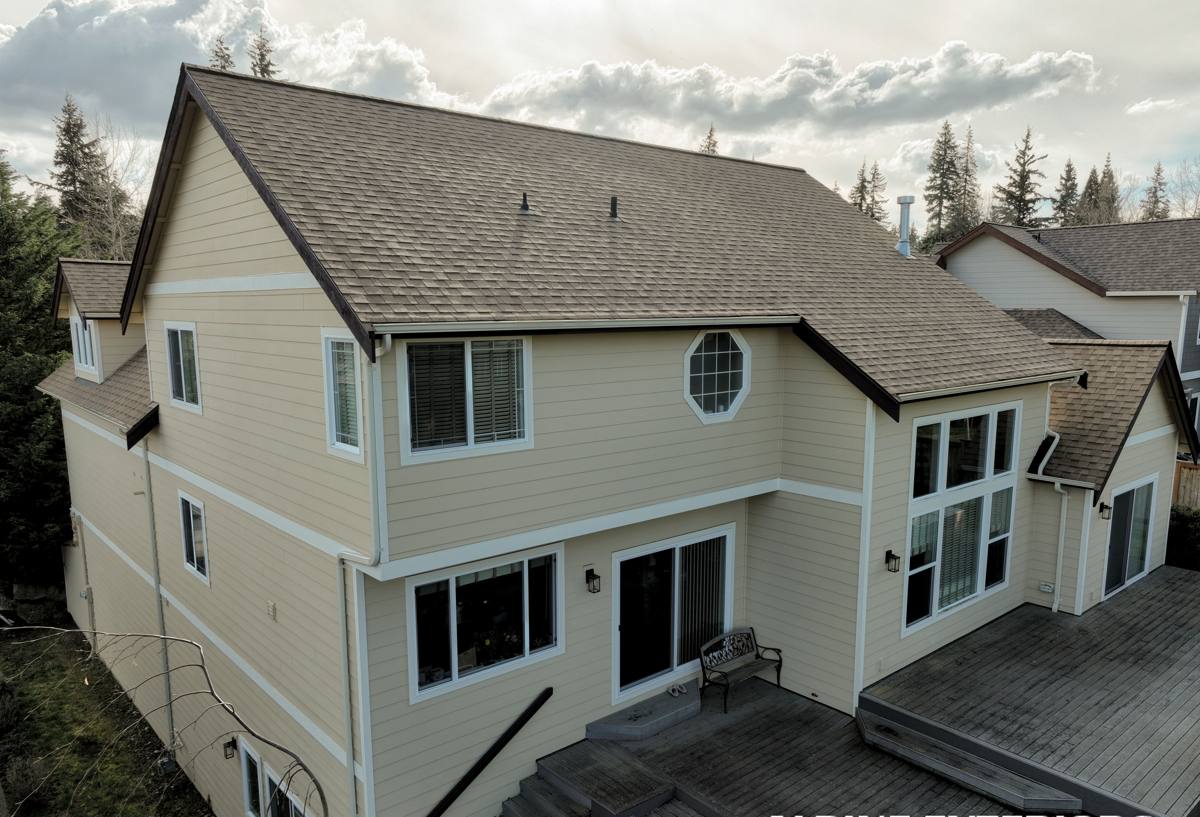
What a Correct Metal Roof Install Requires Here
Metal roofing has a real advantage in this climate: it sheds water fast, doesn't absorb moisture the way organic shingle mat does, and gives moss far less to grab onto. But those advantages only show up if the installation details are right. On South Hill homes specifically, we pay close attention to:
Underlayment and Water Management
A synthetic underlayment rated for the full roof, with self-adhered ice-and-water membrane at eaves, valleys, and around every penetration, is non-negotiable here. Driving rain off the bay can push water uphill under panels if the laps and fastening pattern aren't tight, so we treat every valley and low-slope transition as a place where water will actually test the roof, not just run off it.
Flashing at Every Transition
Chimneys, dormers, skylights, and wall-to-roof transitions are where most metal roof leaks actually start — the field panels rarely fail first. We custom-fabricate flashing to match the panel profile rather than relying on generic trim pieces that leave gaps for wind-driven rain to exploit.
Fastener and Metal Compatibility
Salt air accelerates galvanic corrosion when dissimilar metals touch — for example, the wrong fastener in the wrong panel material can start rusting years before the panel itself would. We match fastener metallurgy to the panel and use factory-matched sealant washers, not whatever happens to be on the truck.
Ventilation
A long, overcast, wet season means attic moisture has fewer chances to dry out between storms. Balanced ridge and soffit ventilation keeps condensation from forming on the underside of the deck, which protects both the roof structure and the metal panels from the inside out.
Panel Types and Where Each One Fits
Not every metal roofing product is the right call for every South Hill home. Older Craftsman and early-20th-century homes in the neighborhood often call for a different look and detailing approach than a newer build a few streets over. Here's how the common options compare:
| Panel Type | Best For | Trade-offs |
|---|---|---|
| Standing seam (concealed fastener) | Modern homes, low-slope sections, long-term low-maintenance ownership | Higher upfront cost; requires experienced crews for crisp seams and clean flashing |
| Exposed fastener panel | Outbuildings, additions, budget-conscious re-roofs | Fasteners need periodic inspection and eventual re-tightening or replacement over the roof's life |
| Stone-coated steel shingle | Older or historic-character homes where a traditional shingle profile matters | More seams and cut edges than standing seam, so flashing detail work matters even more |
We'll walk through which profile fits your home's roofline, pitch, and the look you're going for — there isn't one "right" metal roof for every South Hill property.
How We Approach a South Hill Metal Roofing Project
- On-site assessment — we look at pitch, decking condition, existing ventilation, tree exposure, and drainage patterns specific to your lot.
- Tear-off or overlay decision — we check the existing deck for rot or moisture damage before recommending either approach; a roof that looks fine from the ground can hide deck problems underneath.
- Deck prep and underlayment — any soft or damaged decking gets replaced before anything goes back on; underlayment and ice-and-water membrane go down next.
- Panel installation — panels go on with the fastening pattern and clearances the manufacturer specifies for our wind and rain exposure, not a generic pattern.
- Flashing and trim — custom-fabricated flashing at every valley, chimney, and wall transition.
- Cleanup and walkthrough — magnetic sweep for stray fasteners, full site cleanup, and a walkthrough so you know how the roof is put together and what to watch for.
Keeping Moss and Debris From Taking Over
Metal roofing resists moss far better than composition shingle, but "resists" isn't "immune" — especially under mature tree canopy, which is common on South Hill's older, more established streets. A little seasonal attention goes a long way:
- Clear gutters and downspouts at least twice a year, more often if you're under conifers that drop needles year-round
- Keep overhanging branches trimmed back so the roof gets more light and air movement, which speeds drying after storms
- Ask about zinc or copper strips near the ridge on shaded sections — they release trace metal ions with every rain that discourage moss growth over time
- Skip pressure washing; it can drive water under laps and strip factory finishes — a soft wash or manual clearing is safer for the panels and the warranty
- Have fasteners, sealant, and flashing points checked periodically, particularly after any major windstorm off the bay
What Drives the Cost of a Metal Roof on a Hillside Lot
Every South Hill home is different, so we don't quote off square footage alone. The factors that actually move the price:
| Factor | Why It Matters |
|---|---|
| Roof pitch and complexity | Steeper roofs and multiple valleys, dormers, or ridgelines take more time and material to detail correctly |
| Tear-off vs. overlay | Removing old roofing and repairing deck damage adds labor but is often the more honest long-term choice |
| Panel material and gauge | Heavier-gauge steel and premium finishes cost more upfront but hold up longer against salt air and weather |
| Chimneys, skylights, dormers | Each penetration needs custom flashing, which adds labor time regardless of roof size |
| Site access and staging | Hillside lots, narrow driveways, and mature trees can affect how easily we can stage material and equipment |
As a broad range, metal roofing typically runs more than a comparable composition shingle job upfront, but the tradeoff is a much longer service life and far less maintenance over the years — worth discussing against your specific roof and timeline rather than a flat number.
Why Hiring a Crew That Already Works South Hill Matters
A roofing crew that hasn't worked this neighborhood before is learning on your house. We already know how South Hill's tree cover affects drying time, how the elevation and exposure to weather off the bay changes flashing priorities compared to a sheltered lot inland, and how to stage a job efficiently on the narrower, sloped lots common to the neighborhood's older streets. We're also familiar with the City of Bellingham's permitting process, which matters if your project involves structural changes or falls near any historic-character guidelines for the area — getting that step right the first time avoids delays.
That local familiarity isn't a marketing line — it's the difference between a crew guessing at how a roof will perform here and a crew that's already seen how South Hill's climate treats a roof over its first few winters.
Signs Your South Hill Roof May Be Ready for Metal
Not every home needs a new roof right now, but a few signs are worth a professional look sooner rather than later:
- Recurring moss that comes back within a season or two of cleaning
- Granule loss or bald patches on an aging composition shingle roof
- Curling, cracked, or missing shingles after a windy winter
- Water stains on interior ceilings, especially near chimneys or valleys
- A roof approaching or past its expected service life, particularly one that's been under heavy tree cover for years
If you're seeing any of these, it's worth having someone take a real look before the next wet season sets in rather than waiting for a leak to force the decision.
If you're weighing a metal roof for a South Hill home, we're glad to take a look and walk you through what your roof actually needs — no pressure, no upsell. Fill out the form below for a free estimate.