 Bellingham
 Building a Deck That Actually Holds Up in Puget
Puget is a quieter pocket of Bellingham, and like most of Whatcom County, the homes here sit under a lot of tree cover, catch a steady flow of moisture off Bellingham Bay, and go months at a time without more than a day or two of real sun. A deck built for a drier climate — or built fast by a crew that doesn't work this area regularly — tends to show its age within a few seasons here. A deck built correctly for Puget's conditions, on the other hand, can go decades with nothing more than routine care.
This page is about that one job — deck building in Puget, Bellingham — and what it actually takes to get it right in this specific spot, not a generic write-up of deck construction in general.
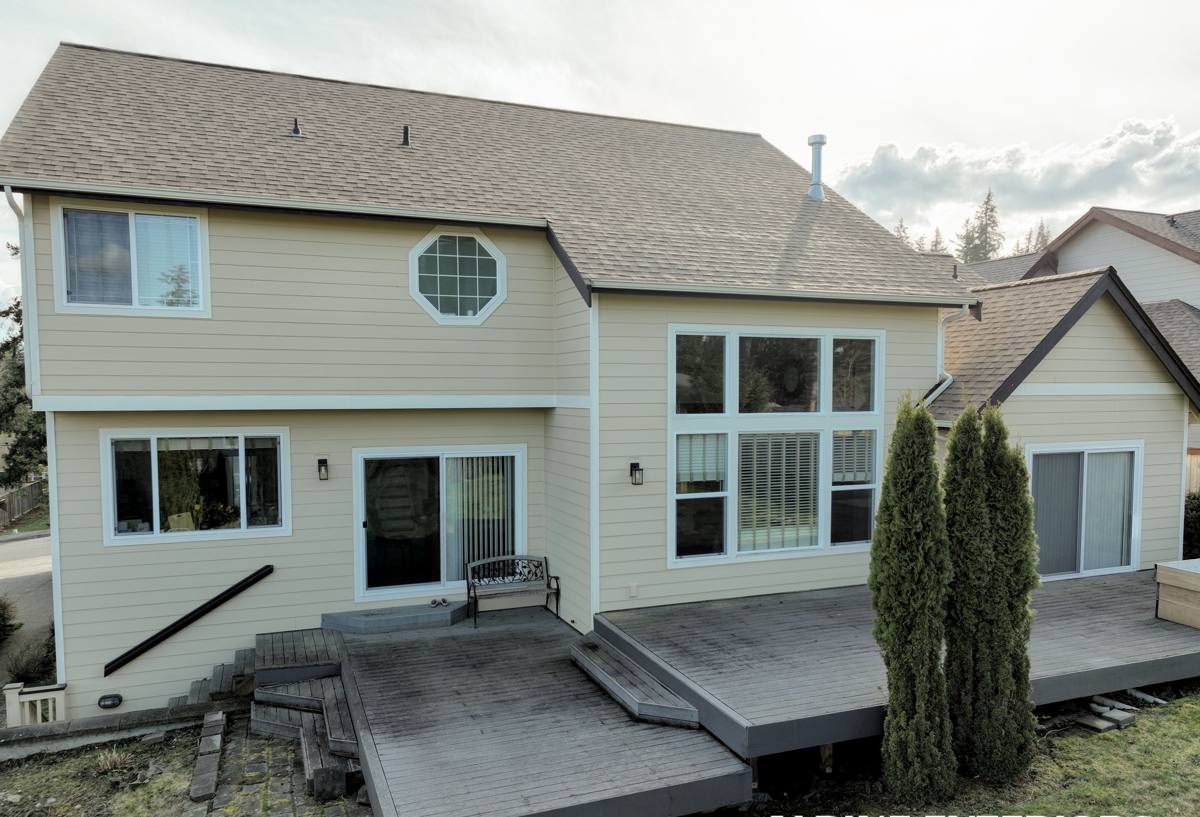
What Puget's Climate Does to an Improperly Built Deck
Three things define this area's toll on outdoor structures: salt-tinged air off the water, driving rain that comes in sideways during winter storms, and long stretches of shade and dampness that grow moss on anything that isn't sloped and ventilated properly.
- Salt air accelerates corrosion on any fastener, bracket, or hardware that isn't rated for it — this shows up first as rust bleeding through deck boards around screw heads.
- Driving rain gets pushed sideways and upward, which means the ledger board connection to the house and any exposed end grain take on water most contractors from drier regions don't design for.
- Moss and constant dampness settle into any deck surface that doesn't drain and dry quickly, turning boards slick and, over years, breaking down wood fiber from the surface down.
None of these are exotic problems. They're just the normal cost of building outdoors in this part of Whatcom County — and they're entirely manageable with the right materials and detailing.
What a Correctly Built Deck Involves
Footings and Framing for Saturated Ground
Ground around Bellingham stays wet for much of the year, and Puget's soil is no exception. Footings need to be set below frost depth and sized for the soil conditions on that particular lot — not just poured to a minimum code number and called done. Framing lumber should be pressure-treated and rated for ground contact where it's close to or in the soil, and joists benefit from a breathable protective tape over the top edge so standing water doesn't sit in fastener holes and start rot from the inside out.
Fasteners, Flashing, and Hardware That Resist Salt Air
This is where a lot of decks in this area fail early. Standard zinc-coated screws and brackets can start showing surface rust within a couple of years this close to the water. We use stainless steel or heavily coated, corrosion-rated fasteners and structural hardware throughout, and we flash the ledger board connection to the house properly so wind-driven rain can't work its way behind the siding. That ledger flashing detail alone is one of the most common shortcuts we see on older or poorly built decks, and it's usually the first place a moisture problem shows up.
Choosing a Decking Material for This Climate
There's no single "correct" decking material for Puget — it depends on budget, how much upkeep you want to do, and how the deck is shaded. Here's how the common options actually perform under this area's rain and moss conditions:
| Material | Moss/Moisture Resistance | Maintenance | Typical Lifespan Here |
|---|---|---|---|
| Pressure-treated wood | Fair — needs sealing and regular cleaning to resist moss | Annual cleaning, re-sealing every 1-2 years | 10-15 years with upkeep |
| Cedar | Good natural rot resistance, but greys and can host moss if not maintained | Periodic cleaning and oiling | 15-20 years with upkeep |
| Capped composite | Very good — dense surface sheds water and resists moss buildup | Occasional wash-down, no sealing | 25+ years |
| PVC decking | Excellent — non-porous, doesn't absorb moisture | Occasional wash-down | 25+ years |
We'll walk through these trade-offs honestly during an estimate — capped composite and PVC cost more up front but ask almost nothing of you afterward, while wood costs less initially but only performs well if it's actually maintained on schedule. Neither choice is wrong; it's about matching the material to how much maintenance you actually want to do.
Moss, Drainage, and Long-Term Maintenance
Even a well-built deck in Puget needs to be designed to dry out quickly, because it will get wet often. That means proper board spacing for drainage and airflow underneath, a slight slope away from the house, and — where a deck sits under heavy tree cover — decking with a texture and color that doesn't trap moss spores as readily. Gutters and downspouts near the deck should direct water away from the structure rather than dumping it onto or under the deck, which is a common oversight that shortens a deck's life regardless of what it's built from.
For homeowners, the maintenance reality in this climate is simple: a deck that gets swept and rinsed off a couple of times a year, with gutters kept clear, will vastly outlast one that's left to collect wet leaves and needle litter all winter.
Permits and Local Code Considerations
Deck permitting in Bellingham and unincorporated Whatcom County generally depends on the deck's height above grade, its size, and whether it's attached to the house. Decks above a certain height typically need guardrails and sometimes engineered stamped plans for the footings, and there are usually setback requirements from property lines to account for. Rather than guess at your specific situation, we handle the permit conversation with the local building department directly as part of the process, so you're not the one tracking down requirements.
Our Process for a Puget Deck Build
- Site visit: We look at the lot's drainage, tree cover, sun exposure, and how the deck will tie into the house.
- Design and material selection: We talk through layout, size, and decking material options against your budget and maintenance preference.
- Permitting: We prepare and submit what's needed with the local jurisdiction before any digging starts.
- Footings and framing: Built to the soil and frost conditions on your specific lot, not a generic minimum.
- Flashing, fastening, and decking: Corrosion-rated hardware throughout, proper ledger flashing, and the decking material you chose installed with correct spacing for drainage.
- Final walkthrough: We go over the finished deck with you, including what maintenance it actually needs going forward.
Why a Crew That Already Works in Puget Matters
A contractor who builds decks all over the region — dry-side Washington, other states, wherever the next job happens to be — isn't necessarily thinking about salt air corrosion or moss-driven drainage by default. A crew that regularly works Puget and the surrounding Bellingham neighborhoods already knows which fastener grades hold up, which decking finishes fight moss well under heavy tree cover, and how the local building department wants ledger flashing and footing details documented. That familiarity shows up less in the sales pitch and more in how few callbacks a deck needs five years later.
Cost Factors for a Puget Deck
Every deck is priced around its own specifics, but these are the factors that move the number most:
| Factor | Why It Affects Cost |
|---|---|
| Size and footprint | More square footage means more material, framing, and labor hours |
| Decking material | Wood costs less upfront; composite and PVC cost more but need far less upkeep |
| Height and stairs | Taller decks need more footing depth, guardrails, and stair framing |
| Site access and slope | Difficult access or a sloped lot adds labor time for footings and material handling |
| Permitting requirements | Engineered plans or inspections add time and, sometimes, design cost |
We give straightforward, itemized estimates so you can see exactly what's driving the price — no vague lump-sum numbers.
A Quick Checklist Before You Build
- Confirm the contractor uses stainless or corrosion-rated fasteners and hardware, not standard zinc-coated screws
- Ask how the ledger board will be flashed against wind-driven rain
- Check that footing depth accounts for local frost and soil conditions, not just a code minimum
- Decide upfront how much ongoing maintenance you're willing to do, and let that guide your decking material choice
- Make sure permitting and any required inspections are handled before construction starts, not after
- Ask about board spacing and slope for drainage, especially if the deck will sit under tree cover
If you're planning a new deck or replacing one that's struggling with moss, rot, or rust in Puget, we're happy to come take a look and put together a free, no-pressure estimate — just fill out the form below.