 Bellingham
 Why Puget Homes Need Siding Built for This Climate
Puget sits close enough to Bellingham Bay and the Sound that homes here deal with a specific combination of stresses most siding products were never engineered for: salt-laden air moving off the water, driving rain that comes in sideways during winter storms, and a wet season that stretches long enough to grow moss on anything that stays damp too long. None of these things are dramatic on their own. What they do is compound, year after year, until a siding system that looked fine going in starts showing its weaknesses five or ten years later — usually right where two products meet, or where a fastener wasn't set quite right.
This page is specifically about James Hardie fiber cement siding installed on homes in and around Puget. We're not going to give you a generic rundown of siding options. We install James Hardie exclusively, and this is what that product needs to look like and be installed like to actually hold up to a Whatcom County coastal microclimate rather than just survive a sales pitch.
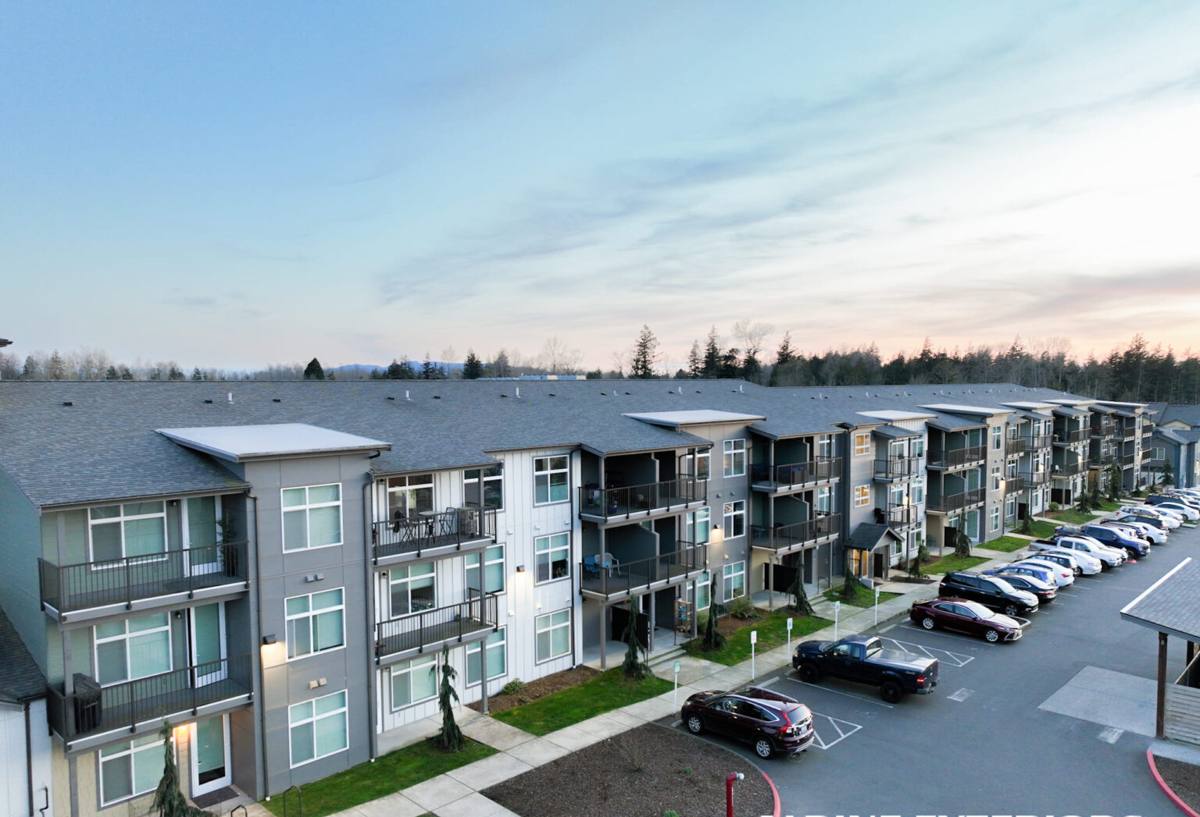
What Salt Air, Rain, and Moss Actually Do to Siding
Salt Air
Airborne salt is corrosive to exposed metal — fasteners, flashing, trim screws — and it accelerates the breakdown of finishes that aren't formulated to resist it. On a lot of siding products, the factory finish is a coating applied over a substrate that wasn't really designed with coastal exposure in mind. Over time the finish chalks, fades unevenly, or lets moisture reach the substrate underneath.
Driving Rain
Bellingham's storms don't just fall straight down — wind-driven rain gets pushed sideways into laps, seams, and penetrations (hose bibs, light fixtures, vents). Any siding system depends on water being shed at every horizontal lap and directed away from the wall assembly at every penetration. If the laps, flashing, and house wrap details aren't right, wind-driven rain finds the gap.
Moss Season
Whatcom County's wet season runs long, and shaded lots — common in and around Puget where mature trees sit close to homes — stay damp for extended stretches. Moss and algae need sustained moisture and organic material to root, and they'll happily colonize any siding surface that holds water or has a porous, absorbent face. Once moss gets a foothold, it holds even more moisture against the wall, which is exactly what you don't want against wood-based or moisture-sensitive siding.
Why We Install Only James Hardie in Puget
We made a decision as a company to install James Hardie fiber cement siding and nothing else — not vinyl, not LP SmartSide, not Cemplank or Allura, not primed spruce or cedar. That's not a marketing position, it's a standard we hold because of what we've seen these products do (and not do) in exactly this kind of coastal, wet-climate environment.
- Fiber cement is non-combustible, which matters more every year given regional wildfire smoke seasons and general fire-risk awareness — it won't ignite or contribute fuel the way wood-based products can.
- James Hardie's ColorPlus factory finish is baked on and warrantied against fading and peeling, which holds up better against salt air than field-applied paint on other substrates.
- Hardie's HZ5 product line is engineered specifically for regions with freeze-thaw cycles and moisture exposure like ours — it's not a one-size-fits-all product shipped the same way to every climate zone in the country.
- Fiber cement doesn't absorb and swell with moisture the way wood-based composite products can, which matters directly in a long, wet moss season.
- Hardie backs installations with a transferable limited warranty, which carries real weight if you sell the home down the road.
We're not going to tell you every other product is worthless — vinyl is inexpensive and low-maintenance in the right application, and cedar has real aesthetic appeal for the right homeowner. But given what this specific climate does to a wall over 15-20 years, we don't think those trade-offs make sense on homes we're putting our name behind, so we don't install them.
The Right James Hardie System for a Puget Home
James Hardie makes several product lines, and choosing the wrong one — or the wrong exposure and fastening spec — is how a Hardie job underperforms. For coastal Whatcom County homes we're typically specifying HZ5 zone products, factory-primed or ColorPlus-finished lap siding or panel systems depending on the home's architecture, with trim and soffit components matched to the same system.
| Factor | What It Means for Puget Homes |
|---|---|
| Climate zone rating | HZ5 formulation resists moisture and freeze-thaw cycling better than a generic HZ10 (warm/humid) spec would |
| Finish | ColorPlus factory finish resists salt-air fading and chalking better than field-painted alternatives |
| Fastener material | Corrosion-resistant fasteners are non-negotiable this close to the Sound — standard fasteners will rust and stain over time |
| Lap exposure | Correct exposure and overlap keeps wind-driven rain shedding outward instead of wicking behind the course above |
| Trim system | Matched Hardie trim avoids the dissimilar-material gaps where moss and moisture tend to start |
What a Correct Installation Actually Involves
Fiber cement siding is only as good as the installation underneath it, and this is where most of the real-world failures we get called out to fix actually start. A correct James Hardie install on a Puget home includes:
- A properly lapped and sealed weather-resistive barrier behind the siding, with all penetrations flashed before the first board goes up
- Rainscreen or furring strip installation where the wall assembly calls for it, giving the wall a drainage and drying gap rather than trapping moisture directly against sheathing
- Correct starter strip and first-course height so water sheds cleanly at the base of the wall
- Manufacturer-specified nailing pattern and fastener depth — overdriven or underdriven fasteners are one of the most common causes of early siding failure
- Proper flashing and z-flashing at every horizontal trim transition, window head, and roof-to-wall intersection
- Caulked and back-primed cut edges at every field cut, since an unsealed cut edge is the fastest way for moisture to get into the board
- Correct clearance from grade, decks, and roof lines so the siding isn't sitting in standing water or splash-back
Skip any one of these and you can still end up with a wall that looks like a proper James Hardie install from the curb — but performs like a much cheaper job once the wet season sets in.
Our Process, Start to Finish
We walk every Puget job through the same sequence:
- Free on-site estimate — we look at your existing siding, wall assembly, sun/shade exposure, and any moisture or moss issues already present before we quote anything.
- Product and color selection — we walk you through the relevant Hardie lines and ColorPlus color options for your home's style and exposure.
- Tear-off and wall inspection — once old siding comes off, we inspect sheathing for hidden rot or moisture damage before closing the wall back up.
- Weather barrier and flashing — this is the step that determines how the wall performs for the next 20-30 years, and we don't rush it.
- Hardie installation — installed to manufacturer spec for our climate zone, with corrosion-resistant fasteners throughout.
- Final walkthrough — we go over caulking, trim, and touch-up with you before calling the job done.
Living With Hardie Siding Through a Long Moss Season
James Hardie siding doesn't need much upkeep, but "not much" isn't "none" in a climate like this. A few habits keep it performing the way it's supposed to:
- Rinse the siding annually, especially on shaded or north-facing walls, to keep organic buildup from getting a foothold
- Keep gutters clear so overflow isn't running down the wall face during heavy storms
- Trim back vegetation and tree limbs that keep a section of wall shaded and damp longer than the rest of the house
- Re-caulk trim joints if you notice any cracking or gapping — small caulk failures are easy to fix before they become moisture problems
- Watch roof-to-wall intersections and deck ledger areas, which are the most common spots for hidden leaks on any home in this region
Why Hiring a Crew That Already Works Puget Matters
A lot of siding problems we get called to fix weren't caused by a bad product — they were caused by an installer applying a generic install spec to a wall assembly that needed something more specific to the site's exposure and moisture load. A crew that's already worked homes in this neighborhood knows which walls tend to sit in shade all winter, which lots see the worst wind-driven rain off the water, and where moss tends to establish first. That local pattern recognition is part of what keeps a Hardie installation performing the way the product is actually capable of performing.
What This Typically Costs
| Cost Factor | Why It Moves the Price |
|---|---|
| Home size and wall complexity | More corners, gables, and trim details mean more labor and material |
| Tear-off scope | Removing existing siding down to the sheathing costs more than installing over a prepped, sound surface |
| Sheathing repair | Hidden rot found during tear-off adds cost but is far cheaper to fix now than to side over |
| Product line and finish | Panel vs. lap, and factory ColorPlus vs. field-painted, affect material cost |
| Site access | Steep lots, limited driveway access, or tight setbacks common around Puget can add labor time |
We don't quote real numbers without seeing the house — anyone who does is guessing. What we can tell you is that a correct James Hardie installation is a long-term investment in a wall system built for exactly the conditions Puget homes deal with, not a patch job that needs revisiting in a decade.
If your siding is showing moss, staining, or wear and you want a straight answer on what it would take to do it right with James Hardie, we're happy to come take a look. The estimate is free, there's no pressure, and you'll get a real answer about your specific home — just fill out the form below.