 Bellingham
 Why Fairhaven Roofs Take a Different Kind of Beating
Fairhaven sits close to the water, and that proximity to Bellingham Bay changes how a roof ages here compared to homes further inland in Whatcom County. Salt-laden air moves off the bay and settles on exposed metal, granules, and fasteners day after day. Add Bellingham's long stretch of wind-driven rain each fall and winter, then the shaded, damp conditions that let moss take hold for months at a stretch, and you have a roofing environment that punishes shortcuts. A patch job that might last a decade in a drier climate can fail in a fraction of that time here if it isn't done with these specific stresses in mind.
That's the lens we bring to every roof repair call in Fairhaven: not just "what's leaking today," but what the combination of salt exposure, rain, and moss is doing to the roof system as a whole, and what the repair needs to address to actually hold up through the next few wet seasons.
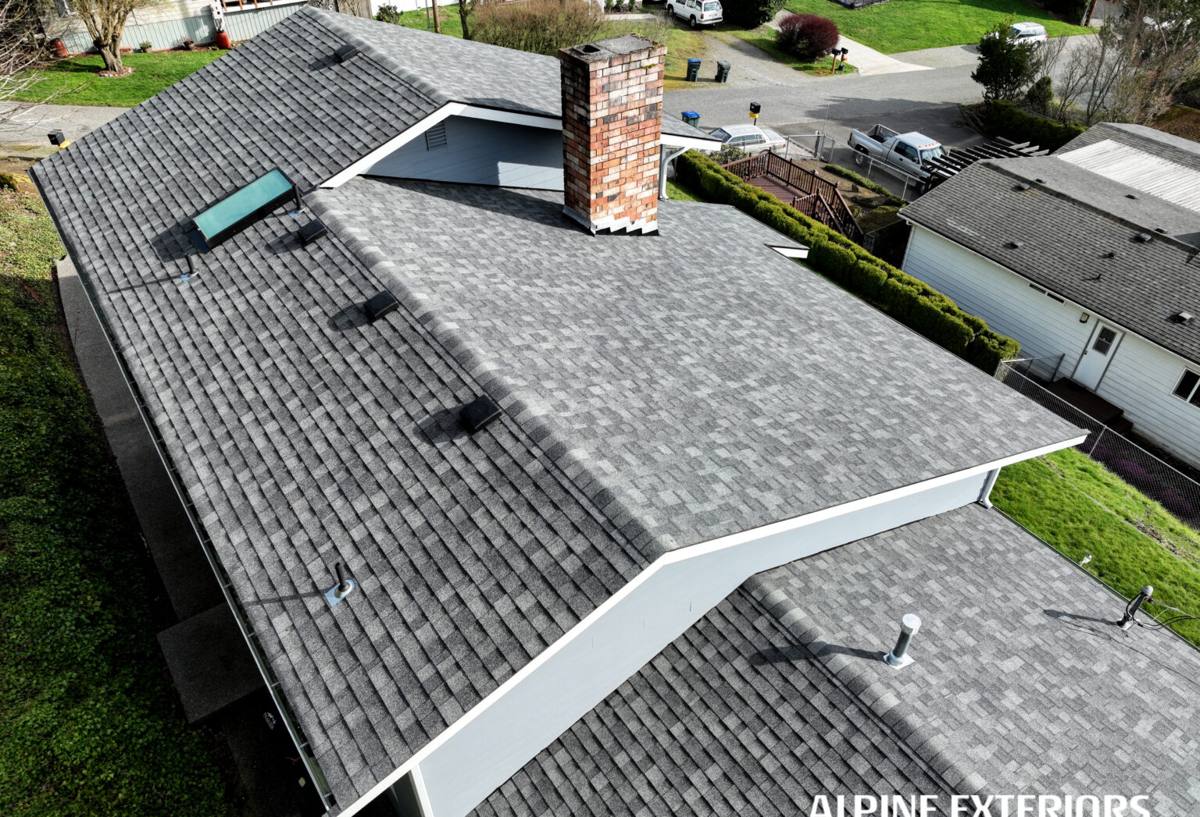
How Salt Air, Rain, and Moss Actually Damage a Roof
Salt Air and Metal Components
Flashing, fasteners, vents, and gutter hardware are usually the first parts of a roof to show salt-air wear. Lower-grade fasteners and flashing can corrode faster this close to the water than they would a few miles inland, and once a fastener head or a flashing seam starts to pit, it stops sealing the way it was designed to. That's often where a small leak actually starts — not in the shingles themselves, but in the metal details around them.
Wind-Driven Rain
Bellingham doesn't necessarily see the highest rainfall totals in the region, but it gets a lot of horizontal, wind-driven rain, especially during fall and winter storms. That kind of rain finds gaps a straight-down downpour never would — under shingle tabs, along poorly lapped underlayment, and through undersized or misaligned flashing at walls, chimneys, and valleys. A repair that doesn't account for wind direction and water path tends to leak again in the next storm, even if it looked fine the day it was finished.
Moss and a Long Wet Season
Between marine humidity and the shaded lots common around Fairhaven's mature tree canopy, moss has a long growing season here. Moss holds moisture against the roofing surface far longer than the material was ever designed to handle, and as it spreads under shingle edges it lifts them slightly — just enough to let wind-driven rain work its way in underneath. Left alone, moss also accelerates granule loss on asphalt shingles, which quietly shortens the roof's remaining service life even where there's no active leak yet.
Common Roof Repair Needs We See in Fairhaven
Fairhaven's mix of established homes and an older housing stock in and around the historic district means we see a fairly consistent set of repair calls, season after season:
- Flashing failure around chimneys, skylights, and roof-to-wall transitions
- Valley leaks where two roof planes meet and water volume concentrates
- Moss-related shingle lifting and granule loss on north-facing or shaded slopes
- Corroded or loosened fasteners on older metal roofing and flashing
- Gutter and downspout backups that push water under the roof edge
- Soft or stained decking discovered only after shingles are pulled back
Older homes in particular sometimes carry more than one roofing layer, aging underlayment, or a prior repair that was never properly tied into the rest of the system. None of that is unusual on its own, but it does mean an honest repair estimate has to account for what's underneath the surface layer, not just what's visible from the ground or a ladder at the eave.
What a Correct Roof Repair Actually Involves
A roof repair done right is diagnostic first and corrective second. In practice, that breaks down into a few distinct steps.
Finding the Real Source, Not Just the Symptom
Water doesn't always show up directly below where it enters. A stain on a ceiling in one room can trace back to a flashing gap several feet away, once it's traveled along a rafter or a sheathing seam. A repair that only addresses the spot where water is visibly dripping, without tracing the path back to its source, is a repair that gets called out again within a season or two.
Checking What's Underneath
Before closing anything back up, we check the decking and underlayment in the affected area for soft spots, staining, or rot. Shingles can look intact on the surface while the wood underneath has already started to fail from sustained moisture — a common outcome after a slow leak has been running quietly for a season or more.
Matching Materials and Technique
Repairs need to tie into the existing roofing system correctly: proper shingle lapping, flashing overlap running the right direction so water sheds over each layer instead of into it, and fasteners rated for the exposure this close to the bay. On older or less common roofing materials, that sometimes means sourcing a close match rather than an exact one, and being upfront with the homeowner about that tradeoff before the work starts.
Addressing the Cause, Not Just the Leak
If moss is the underlying reason shingles have lifted, a repair that skips moss removal and a plan to slow regrowth is only a temporary fix. If undersized or clogged gutters are backing water up under the roof edge, that belongs in the same conversation as the repair itself — otherwise you're paying to fix the same spot twice.
Repair or Replace? What We Actually Weigh
Not every roof problem in Fairhaven calls for a full replacement, and not every leak is safely solved with a patch. The table below outlines the factors that typically point one direction or the other.
| Factor | Usually Points to Repair | Usually Points to Replacement |
|---|---|---|
| Roof age | Well within expected service life | At or past expected service life for the material |
| Extent of damage | Isolated to one area, like a valley or a single flashing point | Spread across multiple slopes or a repeated leak history |
| Decking condition | Solid, no soft spots found on inspection | Soft, stained, or rotted decking in multiple areas |
| Moss and granule loss | Light, localized moss with granules still intact | Heavy moss coverage with visible bare or thinning patches |
| Repair history | First repair on an otherwise sound roof | A long history of patches on an aging roof |
We'll tell you honestly which side of that line your roof falls on — including when a repair is genuinely the right call and a replacement would just be spending money you don't need to spend yet.
Our Process for Fairhaven Roof Repairs
- Inspection: We get on the roof itself, not just a look from the ground, and check the affected area plus the rest of the roof for related issues.
- Moisture and decking check: Where a leak has been active, we check the decking and framing underneath before finalizing the repair scope.
- Written estimate: You get a clear explanation of what's failing, why, and exactly what the repair involves — no vague line items.
- The repair itself: Completed with materials and technique matched to Bellingham's climate, not just the cheapest available fix.
- Cleanup and walkthrough: We clear debris and walk you through what was done and what to keep an eye on going forward.
Why Local Experience in Fairhaven Matters
A roofing crew that works Fairhaven regularly already knows which details tend to fail first this close to the bay, how much moss pressure a shaded, north-facing slope is actually under, and what a wind-driven rain event does to flashing that would hold up fine in a calmer inland climate. That's not something you can fully judge from a photo sent over text or a drive-by estimate. It also means we're not guessing at appropriate fastener grades, flashing details, or moss-prevention steps for this specific environment — we're applying what consistently holds up here, versus what looks fine for a season and then quietly fails.
If your home is inside or near Fairhaven's historic district, we also understand that some exterior work may call for extra consideration around the home's character and existing detailing, and we're glad to talk through repair options that solve the roofing problem without fighting the look of the house.
Signs It's Time to Call for a Roof Repair
- Visible moss or dark streaking on shaded roof slopes
- Granules collecting in gutters or at downspout outlets
- Curling, lifted, or missing shingles, especially after a windstorm
- Water stains on ceilings or in the attic, even faint ones
- Rust-colored streaking below metal flashing or fasteners
- Daylight visible through the roof deck from inside the attic
- Soft-feeling spots noted by a professional walking the roof
Catching any of these early is almost always cheaper than waiting until there's an active leak inside the house, since by that point the decking underneath has usually already absorbed weeks or months of moisture.
If you're seeing any of these signs on a Fairhaven roof, or just want a straight answer about what shape yours is in, we're happy to take a look. Use the form below to request a free, no-pressure estimate.