 Bellingham
 Roof Repair Built for Happy Valley's Weather, Not a National Average
Happy Valley sits close enough to Bellingham Bay and the Whatcom County lowlands that its roofs take a specific kind of beating: salt-laden air off the water, long stretches of driving rain that comes in sideways off the Strait, and a moss season that can run eight or nine months out of the year under the tree cover common to this part of town. None of that is dramatic on any single day. It's the accumulation that gets homeowners — a roof that looked fine in July starts showing stains, soft spots, or a slow drip by the following February. A roof repair here has to account for that pattern, not just patch the spot where the water is currently showing up inside.
We work Happy Valley regularly, which matters more than it sounds like. Roofing problems in this neighborhood tend to repeat themselves — the same valley designs, the same north-facing slopes that never fully dry out, the same older flashing details around chimneys and dormers. A crew that's already seen a dozen of these roofs diagnoses faster and repairs more accurately than one working from a general playbook.
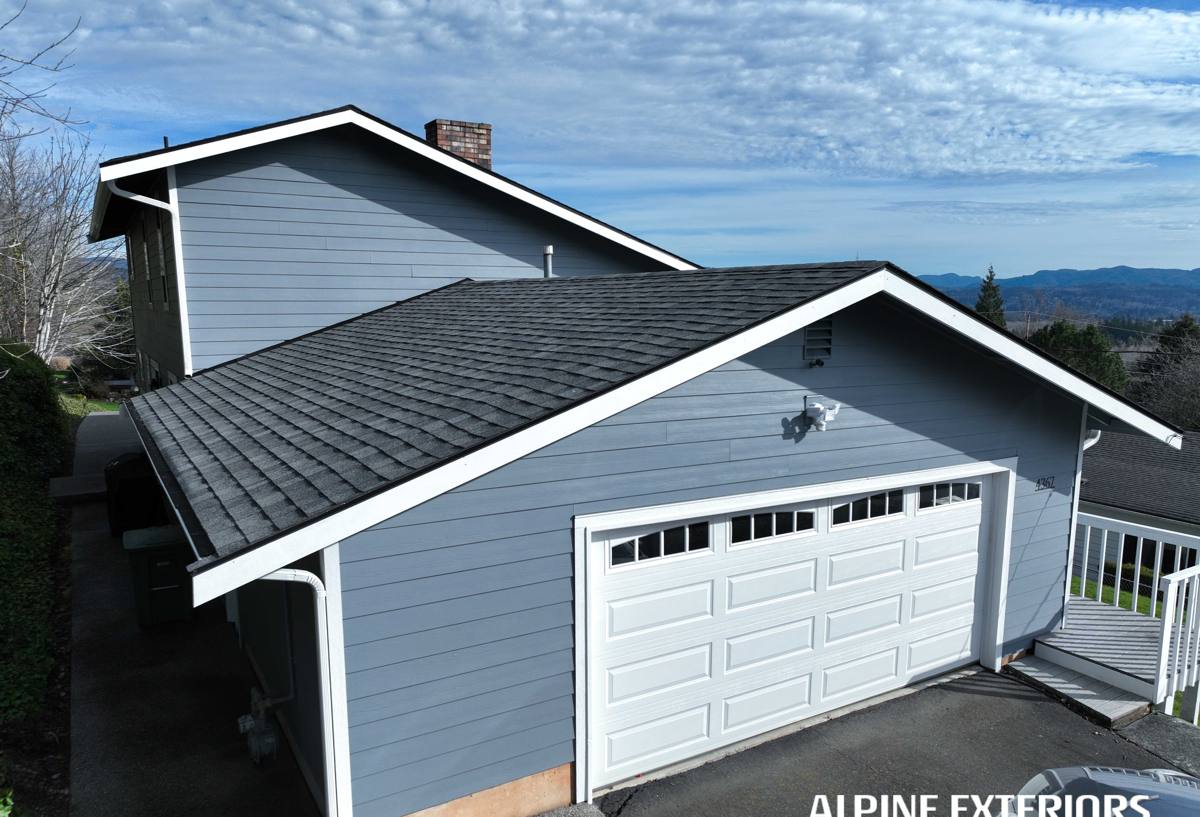
Why Salt Air, Rain, and Moss Are a Combined Problem
Each of these factors is manageable on its own. Together, they compound.
Salt Air and Metal Fatigue
Flashing, fasteners, and gutter hardware near the bay corrode faster than the same materials inland. Once a nail head or a flashing seam starts to rust, it stops sealing tight, and that's exactly where water finds its way in during a hard rain. A repair that reuses corroded fasteners or unsealed flashing is a repair that fails again within a year or two.
Driving Rain and Wind-Driven Water
Bellingham's rain doesn't always fall straight down. When wind pushes it sideways, water gets forced up under shingle laps, around vent boots, and into flashing details that would be fine in a calm rain. Roofs here need laps, seals, and flashing that are built for wind-driven water, not just vertical drainage.
Moss and Trapped Moisture
Moss doesn't just look bad — it holds moisture against the roofing material long after the rain stops, which accelerates granule loss on composition shingles and rot on wood-based decking underneath. Shaded, north-facing roof sections in Happy Valley's tree-lined lots are the most common spot we find moss-related damage, and it's often worse than what's visible from the ground.
The Roof Problems We See Most Often in This Neighborhood
| Issue | Typical Cause | What Happens If Ignored |
|---|---|---|
| Moss buildup on shaded slopes | Tree cover, limited sun exposure, poor airflow | Granule loss, shingle lifting, eventual decking rot |
| Corroded or failed flashing | Salt air exposure, age, incompatible metals | Leaks at chimneys, valleys, skylights, wall intersections |
| Lifted or cracked shingles at valleys | Wind-driven rain, granular wear, poor original installation | Water intrusion into the attic and eventually interior ceilings |
| Clogged or sagging gutters | Debris from surrounding trees, undersized systems | Water backing up under the roof edge, fascia rot |
| Soft or spongy decking | Long-term undetected leaks | Structural repair instead of a surface repair |
What a Correct Roof Repair Actually Involves
A repair that lasts starts before anyone touches a shingle. Here's what separates a durable fix from a patch that reopens next storm season.
Diagnosing the Real Source
Water travels. A stain on a ceiling is rarely directly below the actual entry point — it often runs along a rafter or decking seam before it drips. We trace the path from the interior stain back up through the attic when possible, then confirm on the roof itself, rather than repairing wherever the leak happens to be most visible.
Matching Materials, Not Just Covering the Spot
Repairs should use compatible shingle profiles, matching flashing metal, and underlayment that ties properly into the existing roof system. Mismatched materials — different metal types at a flashing joint, for example — can actually accelerate corrosion through galvanic reaction, which is the opposite of what a repair is supposed to do.
Sealing for Wind-Driven Water, Not Just Vertical Rain
Given how often rain arrives at an angle here, every lap, seal, and flashing detail on a repair gets set up to handle water moving sideways and upward under pressure, not just water falling straight down.
Checking What's Underneath
If there's been an active leak for any length of time, we check the decking underneath before closing anything up. Replacing shingles over decking that's already gone soft just delays a bigger repair — it doesn't solve it.
Our Process, Start to Finish
- Inspection and diagnosis — We look at the roof, the attic if accessible, and the interior signs together to find the actual source, not just the symptom.
- Written scope and honest options — You get a clear explanation of what's actually wrong, what it takes to fix it correctly, and a straightforward cost range before any work starts.
- Repair — Matching materials, proper flashing details, and attention to the specific failure point, done in a single visit for most straightforward repairs.
- Decking and structure check — Any water-damaged decking or framing found along the way gets flagged and addressed, not covered over.
- Cleanup and walkthrough — Debris and old material cleared, and we walk you through exactly what was done and why.
Repair or Replace? Honest Cost Factors
Not every roof problem in Happy Valley needs a full replacement, but some do. Here's how we think through it with homeowners.
| Factor | Leans Toward Repair | Leans Toward Replacement |
|---|---|---|
| Age of roof | Under 15-18 years | Near or past expected shingle lifespan |
| Extent of damage | Isolated to one section or detail | Widespread granule loss, multiple leak points |
| Decking condition | Solid, no soft spots | Soft, delaminated, or rotted in multiple areas |
| Moss/algae coverage | Localized to shaded slopes | Whole-roof coverage with shingle degradation underneath |
| Number of past repairs | First or second repair | Repeated repairs to the same areas |
We'll tell you plainly which side of that table your roof falls on. If a repair genuinely solves the problem, that's what we recommend — a full replacement isn't the right answer just because it's available.
Materials and Why We Use Them
For most Happy Valley repairs, we're matching into an existing composition shingle roof, which means using a comparable shingle profile and weight so the repaired section blends in and performs the same as the surrounding material. For flashing, we favor metal that resists the corrosion salt air accelerates, and we install it with sealing details suited to wind-driven rain rather than relying on caulk alone to do the job over time. Underlayment choice matters too — in valleys and around penetrations, a self-adhering membrane gives better protection against the kind of wind-driven and standing water this area sees than standard felt alone. None of this is exotic; it's standard trade practice applied with attention to the conditions this specific location actually deals with.
Maintenance That Keeps a Repair From Becoming a Recurring One
- Clear moss off shaded, north-facing slopes before it builds a mat that holds moisture against the shingles
- Keep gutters and downspouts clear of debris from surrounding trees, especially before the fall rains start
- Check attic insulation and ventilation — poor airflow speeds up moss growth and can trap moisture against the decking
- Have flashing around chimneys, skylights, and vent penetrations checked every few years, since these are the first points to fail near salt air
- Walk the roofline after major windstorms and note any lifted or missing shingles before the next rain finds them
- Don't pressure-wash a roof — it strips granules and shortens shingle life; use gentler moss treatment methods instead
Why Hiring a Crew That Already Works This Neighborhood Matters
A roofer who works all over the region sees a Happy Valley roof once and moves on. A crew that regularly works Bellingham and Whatcom County neighborhoods like this one has already seen how the tree cover, the bay-adjacent air, and the rain patterns specific to this area play out on real roofs over real years. That shows up in small but important ways — knowing which valley designs tend to trap moss, which flashing details fail first near the water, and how a given roof's leak history is likely to have progressed even before we get on the ladder. It also means we're not guessing at material choices; we're using what's actually held up in this specific climate.
Get a Straightforward Look at Your Roof
If you're seeing a stain, a soft spot, missing shingles after a windstorm, or just moss you'd rather deal with before it becomes a leak, we're glad to come take a look. The estimate is free, there's no pressure to sign anything on the spot, and you'll get a clear answer on whether you're looking at a repair, a bigger issue, or nothing to worry about yet. Use the form below to get started.