 Bellingham
 Roof Replacement for Sunnyland: A Neighborhood With a Lot of Roofs Reaching the Same Age
Sunnyland is one of Bellingham's established, mostly single-family residential neighborhoods, and like a lot of the city's older residential areas, it has a fair number of homes with roofs that are simply getting old at close to the same time. A roof that was installed decades ago and has quietly done its job through thousands of Whatcom County rain events doesn't usually fail with a dramatic leak. It fails slowly, at the edges and the details, until a homeowner is looking at a repair bill that keeps recurring and finally asks whether it's time to stop patching and just replace the thing.
This page is specifically about full roof replacement for Sunnyland homes, not a general roofing overview. We cover how to tell a roof is actually done rather than just tired, what Bellingham's marine climate requires from a new roof system, what a correct tear-off and replacement involves step by step, and why a crew that already works this part of Bellingham brings something a first-time-in-the-neighborhood contractor doesn't.
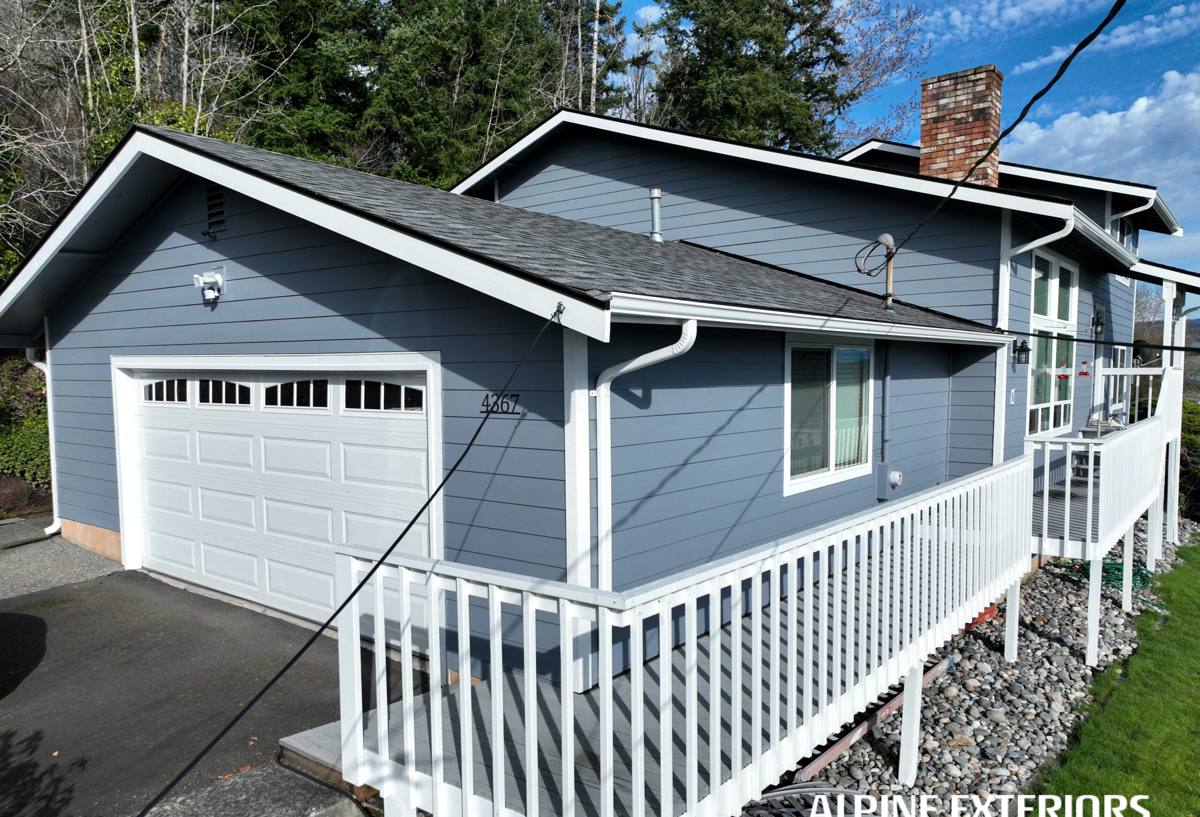
How to Tell a Sunnyland Roof Needs Replacing, Not Just Another Repair
Every roof reaches a point where the honest answer to "can this be patched" is no, but that point isn't always obvious from the ground, and it's not always about age alone. A well-maintained roof can outlast a neglected one by a decade even with the same materials and the same weather. The factors below are what we actually weigh when we're standing on a Sunnyland roof deciding which category a home falls into.
| Sign | Usually Means |
|---|---|
| One or two isolated leaks, localized damage from a fallen branch, or a single failed flashing point | Repair is likely still the right call |
| Granule loss showing bare asphalt, widespread curling or cracked shingles across multiple slopes | The shingle field itself is aging out, not just one spot |
| Soft or spongy decking felt underfoot, staining that spreads across multiple ceiling areas | Moisture has been getting past the surface for a while, not just recently |
| Repeated repair calls to the same general area within a couple of years | The underlying system is failing, not just the visible shingle |
| Roof is at or past the manufacturer's expected service life for its material and local exposure | Replacement usually costs less over time than continuing to chase repairs |
A contractor who's willing to tell you a repair will genuinely hold for a few more years, instead of pushing a full replacement on every visit, is worth more than one who always finds a reason for the bigger job. We'll give you that answer straight, even when it means a smaller invoice for us today.
What Bellingham's Marine Climate Requires From a New Roof
Salt Air and Slow Corrosion
Sunnyland sits a bit further inland than Bellingham's immediate waterfront neighborhoods, but it's still well within the reach of the salt-tinged marine air that moves off Bellingham Bay and the Salish Sea. That exposure doesn't announce itself the way a storm does. It works quietly on exposed fasteners, drip edge, and flashing metal for years, and undersized or lower-grade hardware corrodes faster here than the same materials would in a dry inland climate. A roof built for this area needs corrosion-resistant fasteners and flashing from day one, not as an upgrade added after the first sign of rust.
Wind-Driven Rain
Rain in this part of Whatcom County doesn't just fall, it gets pushed sideways and forced up under shingle edges during the region's wetter, windier stretches. That matters for a roof replacement because underlayment and flashing details that would be adequate in a calmer climate can still let water in here, specifically because the wind is driving moisture into laps and seams from an angle straight-down rain never tests.
A Long Moss Season
Mild, damp weather for much of the year plus mature tree cover common across older Bellingham neighborhoods adds up to a moss and algae season that can run most of the calendar year on shaded and north-facing roof planes. Once moss takes hold, it lifts shingle edges and holds moisture directly against the roofing material, which shortens the life of even a good product installed correctly. New roofs in Sunnyland need to account for this from the design stage, not treat moss as a problem to deal with after it shows up.
What a Correct Full Roof Replacement Actually Involves
A roof replacement is a system, and every layer in that system has a specific job. Skipping or rushing any one of them is usually where an otherwise decent-looking roof starts failing early.
Tear-Off and Deck Inspection
A full tear-off down to bare decking is the only way to actually see what's underneath decades of Bellingham weather. Soft spots, rot, and hidden moisture damage around old penetrations are common finds on tear-offs of older Sunnyland roofs, and none of it is visible with the old shingles still in place. Any layover installation, where new shingles go directly over the existing layer, simply seals those problems under a new surface instead of addressing them.
Underlayment and Ice-and-Water Barrier
Synthetic or self-adhered underlayment gives the deck a real secondary water barrier, which is the layer that actually saves a roof when wind-driven rain does get past the shingle surface. Self-adhered membrane at eaves, valleys, and other vulnerable transitions adds a second line of defense at exactly the points where water finds its way in first.
Flashing at Valleys, Chimneys, and Wall Intersections
Most roof leaks in this climate start at flashing, not in the open field of shingles. Valleys, chimney and skylight penetrations, and the transitions where a roofline meets a wall need flashing that's properly lapped and integrated with the underlayment as one continuous water path, not caulked over after the fact once the shingles are already down.
Ventilation
Balanced intake and exhaust ventilation keeps the underside of the roof deck dry through the wet season, which extends the life of the roofing material and reduces the moisture that feeds moss growth from underneath. A roof can look fine from the street and still be shortening its own service life because attic airflow was never balanced correctly.
Fastening to Spec
Nail count and placement need to follow manufacturer specification, not a faster shortcut pattern. That's what keeps a roof holding under wind load instead of lifting at ridges and edges over time, a detail that matters more on exposed lots than on tightly sheltered ones.
Comparing Roofing Systems for a Sunnyland Home
Most Sunnyland homeowners land on architectural asphalt shingle, but it's worth understanding the honest trade-offs against the other systems homeowners occasionally ask about.
| System | Typical Lifespan | Trade-Offs Worth Knowing |
|---|---|---|
| Architectural asphalt shingle | 25-30 years | Best balance of cost, appearance, and proven performance in this climate when installed with correct underlayment and flashing |
| Standing seam metal | 40-60 years | Excellent moisture shedding and moss resistance, but a higher upfront cost and requires installers experienced with the panel and seam work specifically |
| Cedar shake | 20-30 years with upkeep | Attractive traditional look, but needs regular treatment to resist moisture and moss in a climate this consistently wet, and that maintenance schedule tends to slip |
| 3-tab asphalt shingle | 15-20 years | Lowest upfront cost, but a thinner profile and lower wind rating make it a weaker long-term fit for exposed Sunnyland lots |
We're glad to install any of these where it genuinely fits the home and the homeowner's priorities. What we won't do is sell a system that looks good on a brochure but quietly shifts maintenance burden onto you a few years down the road, particularly in a climate that makes low-maintenance materials the safer long-term bet.
Cost Factors in a Sunnyland Roof Replacement
| Factor | What It Affects |
|---|---|
| Roof size and number of planes | Total material and labor time |
| Pitch and access | Staging, safety equipment, and labor time on steeper or harder-to-reach roofs |
| Tear-off layers found | Whether hidden deck repair is needed before new roofing goes down |
| Underlayment and ice-and-water shield grade | How well the finished roof resists wind-driven rain at vulnerable points |
| Flashing scope | How thoroughly valleys, chimneys, and wall transitions are addressed |
| Material tier selected | Long-term lifespan and moss resistance versus upfront price |
| Ventilation upgrades | Long-term moisture control and how long the new roof actually lasts |
Two bids for the same Sunnyland roof can land thousands of dollars apart, and the gap is almost always real scope rather than one contractor padding a number. A written estimate that breaks these line items out separately tells you far more than a single lump sum, and it's worth asking any contractor to walk you through theirs before comparing prices side by side.
How Our Roof Replacement Process Works
- In-person inspection: We walk the roof and attic ourselves rather than quoting from a photo or a satellite measurement alone.
- Written, itemized estimate: Tear-off, underlayment, flashing, ventilation, and material selection are each broken out, not bundled into one vague number.
- Scheduling around weather: We build reasonable flexibility into the timeline, since wet-season delays are a normal part of working in this region.
- Tear-off and deck repair: Old roofing comes off completely, and any decking damage we find gets repaired before new material goes down.
- Underlayment, flashing, and roofing installation: Each layer goes on to manufacturer specification, with particular attention at valleys, penetrations, and wall transitions.
- Final walkthrough and cleanup: We review the finished roof with you in person and do a full site and magnetic nail sweep of the property before calling the job done.
Why a Crew That Already Works Sunnyland Matters
A crew that regularly works roofs in this part of Bellingham has already seen how salt-tinged air corrodes underspecified hardware, how wind-driven rain finds gaps in poorly lapped underlayment, and which roof orientations in this neighborhood hold moss longest through the wet months. That experience shows up in dozens of small, practical decisions over the course of a job, decisions a crew working here for the first time might not think to make at all. It also matters after the job is finished. A workmanship warranty is only as good as the company standing behind it years later, and a contractor with an ongoing, established presence in Bellingham is one you can still reach if a question comes up down the road.
A Practical Checklist Before You Choose a Roofer for a Full Replacement
- Do they perform a complete tear-off with deck inspection, not a layover over existing shingles?
- Does the estimate specify underlayment type, ice-and-water shield placement, and shingle or panel product by name?
- Is flashing work at valleys, chimneys, and wall intersections written into the bid explicitly?
- Do they carry current Washington contractor licensing, liability insurance, and workers' compensation?
- Can they point to real, recent work in or near Sunnyland or comparable Bellingham neighborhoods?
- Does the bid clearly separate the manufacturer's material warranty from the contractor's own workmanship warranty?
If your Sunnyland roof is getting old, keeps needing the same repair, or you just want an honest opinion on whether replacement makes more sense than another patch, we're glad to take a look. Use the form below to request a free, no-pressure estimate.