 Bellingham
 Roofing in Sehome: A Climate That Doesn't Cut a Roof Any Slack
Sehome sits on one of Bellingham's older, more established hillsides, with mature tree cover, a mix of home ages, and enough elevation change that roofs here see a little bit of everything the Pacific Northwest throws at them. Add in the fact that Bellingham sits right on Bellingham Bay, and you get a combination that's harder on a roof than most homeowners realize: salt-tinged air moving in off the water, long stretches of driving rain, and a moss season that can run from fall clear through spring in shaded, tree-covered spots.
None of that means asphalt shingles are the wrong choice for a Sehome home — they're still one of the most practical, cost-effective roofing systems available, and they perform well here when they're installed correctly for this specific climate. The problems we get called out for almost never trace back to the shingle itself. They trace back to underlayment that wasn't right for the exposure, ventilation that was skipped or half-done, or flashing details that were rushed. A roof built for Whatcom County's weather, on a lot with Sehome's tree cover and hillside exposure, needs a few things done deliberately that a generic install in a drier climate wouldn't require.
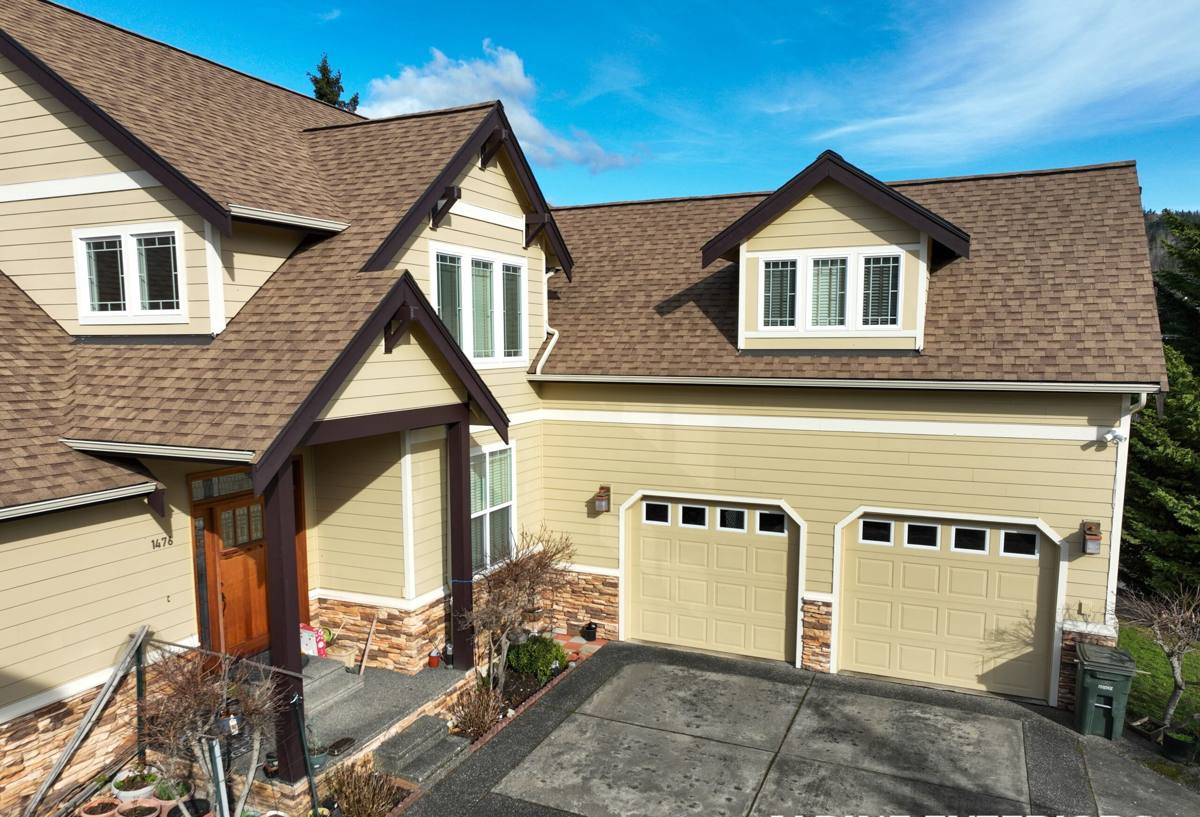
What Salt Air, Rain, and Moss Actually Do to a Shingle Roof
Salt Air
Homes closer to Bellingham Bay pick up airborne salt that settles on roofing, siding, gutters, and any exposed metal. Over years, that salt content accelerates corrosion on unprotected flashing, fasteners, and vent stacks. It's slow damage — you won't see it happen — but it's why we pay attention to metal quality and coating on every flashing detail and fastener we use, not just the shingle brand.
Driving Rain
Bellingham doesn't just get rain — it gets wind-driven rain that comes in at an angle, which means water is regularly pushed sideways into laps, valleys, and edges rather than simply running straight down. A shingle system that's only built to shed water moving downhill will eventually leak here. Every valley, sidewall, chimney, and penetration needs flashing and underlayment sized for water that's actively being pushed uphill and sideways by wind, not just gravity-fed runoff.
Moss and Algae
Sehome's tree canopy is a genuine asset to the neighborhood, but shaded, damp roof sections under a full canopy are exactly where moss and algae take hold fastest. Moss isn't just cosmetic. Once it establishes on a shingle, its root structure holds moisture against the granule surface, lifts shingle edges over time, and can work its way under laps and flashing. A roof with heavy moss growth is aging faster than its neighbor in full sun, even if both were installed the same year.
Signs a Sehome Roof Needs Attention
Most asphalt shingle failures give warning signs well before there's an active leak inside the house. Here's what we tell homeowners to watch for, especially on roof sections shaded by trees or facing the prevailing weather:
- Dark streaking or green-black patches on shingles, especially on north-facing or shaded slopes
- Visible moss clumps, particularly along ridges, valleys, and lower roof edges where debris collects
- Granules building up in gutters or at downspout outlets — a sign the shingle surface is wearing
- Shingle edges that look curled, cupped, or lifted rather than lying flat
- Rusty streaking below metal flashing, vent boots, or nail heads
- Soft or discolored ceiling spots inside the home, even small or intermittent ones
- Daylight visible through the roof deck from inside an unfinished attic
- A roof age past 18–20 years that has never had underlayment or flashing addressed
Any one of these on its own isn't necessarily an emergency, but they're worth a real inspection rather than a guess from the ground.
What a Correctly Built Asphalt Shingle Roof Includes Here
An asphalt shingle roof is really a layered system, and in a climate like Whatcom County's, every layer matters. We build to the following standard on Sehome homes:
Underlayment
Synthetic underlayment across the full roof deck, with self-adhered, waterproof membrane at eaves, valleys, and any low-slope transitions where wind-driven rain and ice-damming risk are highest. This is the layer that protects the deck if wind ever drives water under a shingle lap, and it's not a place to cut corners.
Flashing
Properly stepped flashing at every sidewall, new flashing at chimneys and skylights rather than reusing old pieces, and corrosion-resistant metal chosen with the area's salt exposure in mind. Flashing failure — not shingle failure — is the single most common source of roof leaks we find on older homes in this area.
Ventilation
Balanced intake and exhaust airflow through the attic, sized to the home. Good ventilation controls moisture buildup in the attic, which matters in a climate this damp, and it also keeps shingles from cooking from underneath in the summer, which shortens their life regardless of brand.
Shingle Installation
Correct nailing pattern and placement (not staples, and not nails placed too high or too low on the shingle), proper starter strip at eaves and rakes, and manufacturer-specified exposure so every course ties into the next with full water-shedding overlap.
Our Asphalt Shingle Roofing Process
We run the same disciplined process on every Sehome roofing job, whether it's a full replacement or a targeted repair:
- On-roof inspection. We walk the roof, not just look from the driveway, and check the deck, flashing, ventilation, and shingle condition in person before quoting anything.
- Honest scope. We tell you plainly whether you need a full replacement, a repair, or whether the roof still has useful life left. We're not going to sell a full tear-off when a repair will genuinely hold.
- Tear-off and deck check. Old roofing comes off down to the deck, and we inspect the sheathing for soft spots or rot before anything new goes down — this is where hidden moisture damage from years of Bellingham rain often shows up.
- Underlayment and flashing. Synthetic underlayment and self-adhered membrane go down first, followed by new flashing at every valley, wall, and penetration.
- Ventilation correction. If intake or exhaust airflow is undersized or blocked, we address it as part of the job, not as an upsell afterward.
- Shingle installation. Installed to manufacturer specification for nailing, exposure, and starter courses, with attention to wind-driven rain detailing at every edge and transition.
- Cleanup and walkthrough. Magnetic sweep for stray fasteners, full debris cleanup, and a walkthrough where we show you the completed work and explain what was done.
Shingle Options: What Fits a Sehome Home
Asphalt shingles come in a few grades, and the right one depends on your budget, your roof's exposure, and how long you want to go before your next full re-roof. We install products from established, mainstream manufacturers rather than off-brand or discontinued lines, since warranty support and consistent product performance matter more here than a marginal cost savings.
| Shingle Type | Typical Lifespan | Wind Rating | Best Fit |
|---|---|---|---|
| 3-Tab | 15–20 years | Lower | Budget-focused projects, rental properties, flatter architectural style |
| Architectural / Laminate | 25–30 years | Higher | Most Sehome homes — better wind performance and appearance for the added cost |
| Premium / Designer | 30+ years | Highest | Homes prioritizing curb appeal, longevity, or matching a higher-end exterior |
Given Bellingham's wind-driven rain, we lean toward architectural shingles for most homes in this neighborhood — the extra thickness and wind rating pay for themselves over time, especially on roof sections exposed to weather coming off the bay.
Repair, Replace, or Recover: Making the Right Call
Not every roof problem in Sehome means a full replacement. We evaluate each situation on its own, and here's generally how the decision breaks down:
| Situation | Likely Approach | Why |
|---|---|---|
| Isolated flashing leak or storm damage on a roof under 12–15 years old | Repair | The shingle field is still sound; the failure point is localized |
| Widespread granule loss, curling, or moss damage on an older roof | Full replacement | The shingle mat itself is degrading; patching won't address the underlying age |
| Sound existing deck and one shingle layer already down | Recover (in limited cases) or replace | We generally recommend a full tear-off in this climate so underlayment and flashing can be properly renewed underneath, rather than covering old problems |
We're candid about which category your roof falls into. A repair that genuinely holds is a better outcome for you than a replacement you didn't need — but we'll also tell you plainly when a repair is just delaying an inevitable, more expensive failure.
Keeping a New Roof Performing in This Climate
Once a shingle roof is installed correctly, a small amount of upkeep goes a long way toward getting full value out of it in Whatcom County's conditions:
- Keep gutters and downspouts clear, especially in fall when leaf and needle debris peaks under tree cover
- Have moss growth treated or removed before it spreads, rather than waiting until it's visible from the street
- Avoid pressure washing shingles — it strips granules and shortens shingle life; a soft wash or manual removal is safer
- Trim back overhanging branches to reduce shade, debris, and physical abrasion on the roof surface
- Schedule a periodic visual inspection, particularly after major windstorms off the water
Why It Matters to Hire a Crew That Already Works in Sehome
Roofing crews that mostly work drier inland climates sometimes underbuild for what this coastline actually demands — lighter underlayment, minimal flashing at transitions, or ventilation that's adequate somewhere else but not here. A crew that regularly works Sehome and the surrounding Bellingham neighborhoods already knows which roof sections take the worst of the wind off the bay, which lots hold moss longest under tree cover, and which older flashing details on homes in this area tend to fail first. That local pattern recognition shows up in the details you can't see once the roof is finished — the underlayment choice, the flashing at a tricky valley, the ventilation sized correctly for the attic — not just in the shingle color you picked.
If you're weighing a repair, a full replacement, or just want a straight answer on where your roof actually stands, we're happy to take a look. Reach out for a free, no-pressure estimate using the form below, and we'll give you an honest read on what your roof needs — nothing more, nothing less.