 Bellingham
 Siding Repair in Columbia: A Neighborhood That's Hard on Siding
Columbia is one of the older, more established neighborhoods in Bellingham, and that shows in its housing stock — a mix of early-1900s homes, mid-century additions, and newer infill, most of them within a few miles of Bellingham Bay. That proximity to the water is part of what makes the neighborhood desirable, and it's also exactly what wears siding down faster than it would inland. Salt-laden air, driving rain off the water, and a long, damp moss season put steady pressure on exterior walls here, year after year.
Siding repair in Columbia isn't just about patching a crack or swapping a warped board. Done right, it means understanding why that section failed in the first place, checking what's happening behind it, and fixing the actual cause — not just the symptom. This page covers what local homes need from a repair, what a correct job looks like, and how we approach it here.
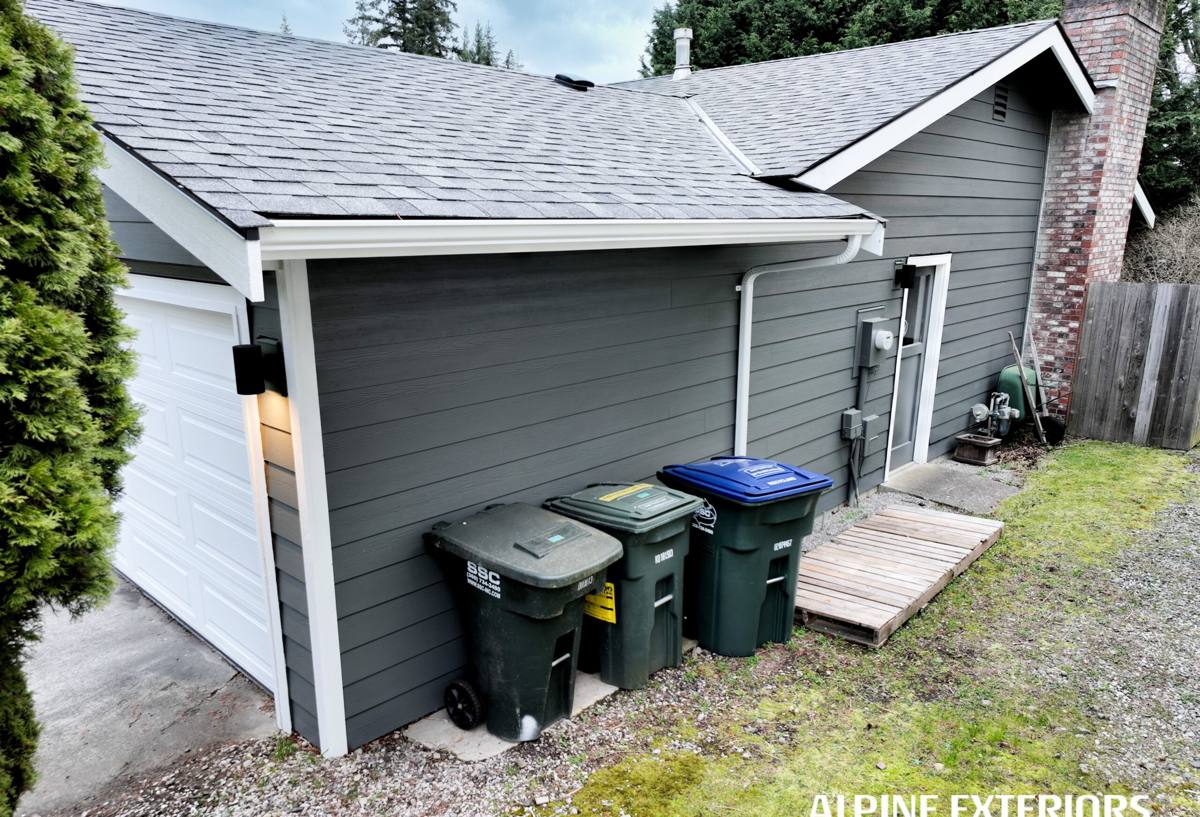
Signs Your Siding Needs Repair, Not Just a Cleaning
Not every stain or streak means trouble. But some signs point to actual material failure or hidden moisture, and those shouldn't wait.
- Soft, spongy, or crumbling spots when you press on the siding, especially near the bottom courses or under windows
- Visible cracks, splits, or chips in boards, particularly after a hard freeze or a windstorm
- Paint that's peeling, bubbling, or failing in one specific area rather than evenly across the wall
- Gaps opening up at seams, corners, or trim where caulking has shrunk or pulled away
- Persistent moss or black algae growth that keeps coming back within weeks of cleaning
- Warping, bowing, or boards that no longer sit flat against the wall
- Musty smells or discoloration on interior walls that share an exterior wall with a damaged section
Any one of these can be isolated and minor. Several of them together, or damage that keeps recurring in the same spot, usually means water is getting behind the siding — and that's a repair that needs to happen before it spreads.
Why Bellingham's Climate Is Hard on Siding in Columbia
Salt Air and Moisture
Homes closer to Bellingham Bay deal with salt-laden air more than homes further inland. Salt is hygroscopic — it pulls moisture out of the air and holds it against surfaces, which keeps siding, fasteners, and trim damp longer than they'd otherwise stay. Over years, that constant low-grade dampness accelerates paint failure, corrodes exposed fasteners, and gives mold and algae a head start.
Driving Rain and Wind-Driven Water
Bellingham doesn't just get a lot of rain — a good share of it comes in sideways, driven by wind off the water. Wind-driven rain finds weaknesses that a straight-down rain never would: it pushes water up under laps, into nail holes, and behind poorly sealed trim. Siding and flashing details that would be fine in a calmer climate can fail here simply because the water pressure is different.
Moss, Algae, and a Long Wet Season
Whatcom County's wet season runs long, and shaded, north-facing walls in tree-covered neighborhoods like Columbia often stay damp for weeks at a stretch. That's ideal growing conditions for moss and algae, which hold moisture against the siding surface and, over time, work into seams and fastener holes. Left unaddressed, sustained moss growth is one of the more common reasons we find hidden rot when we open up a wall for repair.
Repair or Replace? How We Make That Call
Not every damaged section needs a full re-side, and not every problem is fixable with a patch. The right call depends on how much of the wall is affected, what's causing the damage, and what condition the water-resistive barrier and sheathing are in underneath.
| Factor | Points Toward Repair | Points Toward Replacement |
|---|---|---|
| Extent of damage | Isolated to one or two sections | Spread across multiple walls or elevations |
| Underlying sheathing | Sound and dry once opened up | Soft, delaminated, or rotted |
| Siding material | Still available or reasonably matchable | Discontinued, or original material is failing systemically |
| Age of siding | Well within its expected service life | Nearing or past the age where recurring failures are likely |
| Root cause | A single fixable issue (bad caulk joint, one impact spot) | A systemic issue (wrong material for the exposure, chronic moisture) |
We'll always tell you honestly which side of that table your situation falls on. A targeted repair is often the right, cost-effective answer — we're not in the business of upselling a full re-side when a proper repair will hold.
What a Correct Siding Repair Actually Involves
Diagnosing the Real Cause First
A repair that only replaces the visible damaged board, without figuring out why that board failed, tends to fail again in the same spot. Before we touch anything, we look at what's happening around the damage: is water tracking down from a flashing gap above, pooling because of poor drainage below, or wicking up from grade contact? The visible damage is often just where the problem finally showed itself, not where it started.
Checking What's Behind the Siding
Once a section is opened up, we check the water-resistive barrier and sheathing underneath. If moisture has gotten past the siding, it's usually gotten into the layers behind it too, and those need to be sound before new material goes back on. Patching over a compromised barrier just hides the problem for another season.
Matching Material and Finish
Matching existing siding — especially older painted wood, or cedar that's weathered over years — is one of the harder parts of a good repair. Profile, reveal, and finish all need to line up, or the patch reads as a patch. This is one reason factory-finished fiber cement holds up better over time as a repair material: the color is baked in at the factory to a documented formula, so a section repaired or replaced years later can be matched far more reliably than field-mixed paint.
Getting Flashing and Sealant Details Right
Given how much of Columbia's siding damage traces back to wind-driven rain finding a gap, the flashing and sealant work around a repair matters as much as the siding itself. Correct laps, properly integrated window and door flashing, and the right sealant in the right joints — not just caulk smeared over a gap — are what keep the fix from becoming next year's callback.
Why We Repair — and Install — Only James Hardie Fiber Cement
We standardized on James Hardie fiber cement siding for every job we do, repairs included, and it's a decision driven by how this climate treats different materials over time.
Fiber cement doesn't absorb water the way wood-based products can, which matters directly in a neighborhood dealing with salt air and long wet seasons. It's also non-combustible, which is a real consideration for homeowners thinking about long-term risk, not just moisture. James Hardie's ColorPlus factory finish is baked on and warrantied against fading and peeling, which solves the matching problem we mentioned above — a repair years down the road can draw from the same engineered color system rather than a hand-mixed paint match. And Hardie's HZ5 product line is engineered specifically for climates like ours: freeze-thaw cycles, sustained damp, and coastal exposure.
We don't install LP SmartSide, vinyl, Cemplank, Allura, or primed wood siding, and we're upfront about why: each of those has real strengths, but also trade-offs in moisture behavior, maintenance burden, or long-term finish durability that we've decided we're not willing to install and stand behind. When we do a repair on existing non-Hardie siding, we'll match what's there when that's the right call — but when a section needs full replacement, Hardie is what we recommend and what we put on.
Our Repair Process in Columbia
- Inspection. We walk the affected area, check for moisture with a meter where needed, and look at what's happening structurally, not just cosmetically.
- Diagnosis and plan. We explain what's causing the damage, whether it's a contained repair or something bigger, and what the repair will involve — in plain terms, before any work starts.
- Opening up the section. We remove only what needs to come off to assess and fix the problem properly, rather than pulling more siding than necessary.
- Addressing the cause. Flashing, sealant, drainage, or barrier issues get corrected — this is the step that keeps the repair from recurring.
- Reinstalling or replacing siding. New material is installed to manufacturer spec, with attention to matching existing courses and reveal.
- Final check and cleanup. We walk the finished area with you, confirm it's sealed and sound, and clean up the site.
Why It Matters to Hire a Crew That Already Works in Columbia
A repair crew that regularly works this neighborhood already knows what tends to fail here and why — which walls take the worst of the wind-driven rain, how much moss pressure a shaded elevation typically sees, and what older Columbia homes' original siding and trim details usually look like once you open them up. That's not something you can fully replace with a generic estimate; it shows up in how fast a crew can correctly diagnose a problem instead of guessing.
It also matters for accountability. A local, established crew is easy to reach if a question comes up after the work is done, and has a reputation in Whatcom County worth protecting — which is the kind of incentive that keeps a repair job done right the first time.
Get an Honest Look at Your Siding
If you're seeing damage, recurring moss, or soft spots on your Columbia home's siding, we're glad to take a look and give you a straight answer on what it needs — whether that's a targeted repair or something more. The estimate is free, there's no pressure, and we'll tell you honestly which side of the repair-versus-replace line your home falls on.