 Bellingham
 Silver Beach's mix of lake-influenced humidity, mature tree canopy, and the marine air that drifts in off Bellingham Bay creates a specific set of conditions for exterior siding. Board and batten is a popular choice in this part of Whatcom County — it suits the area's mix of craftsman bungalows, mid-century homes, and newer builds, and it gives a home a clean, vertical-line look that reads as both traditional and current. But board and batten is also one of the least forgiving siding styles to get wrong. The vertical seams, the batten strips, and the way water sheets down a wall all behave differently than they do on standard lap siding. Done correctly, with the right material and the right detailing, it's a long-lasting, low-drama exterior. Done poorly, it's a magnet for the exact problems Silver Beach's climate is best at causing.
What Silver Beach's Climate Does to Vertical Siding
Bellingham gets a lot of rain, but it's the combination of rain, wind direction, and shade that determines how hard a given wall gets hit. Silver Beach's tree cover — a mix of conifers and deciduous trees common along the lake and surrounding hillsides — keeps a lot of siding in partial shade for much of the year. That shade is good for keeping a home cooler in summer, but it also means siding stays damp longer after every rain, and it slows down drying between storms through the fall and winter.
Rain and Board Orientation
Board and batten is a vertical siding pattern, which means water runs straight down the face of the wall rather than shedding off the bottom edge of each course the way it does with horizontal lap siding. That's not a flaw in the style, but it does mean every seam, every batten strip, and every point where the siding meets a window, door, or trim piece has to be flashed and sealed correctly. A vertical board that isn't properly lapped or caulked at the right points gives water a straight path down into the wall assembly instead of off the surface.
Moss and Shaded Lots
Whatcom County's moss season runs long — realistically, most of the year in shaded spots. Board and batten's raised battens and recessed panel joints create ledges and shadow lines where moisture sits and organic growth gets a foothold, especially on north-facing walls or anywhere tree cover blocks direct sun. The material underneath those battens matters as much as the surface finish. A siding product that absorbs moisture will feed moss and mildew growth from the inside out, no matter how often the surface gets rinsed off.
Why Material Choice Matters More With Board & Batten
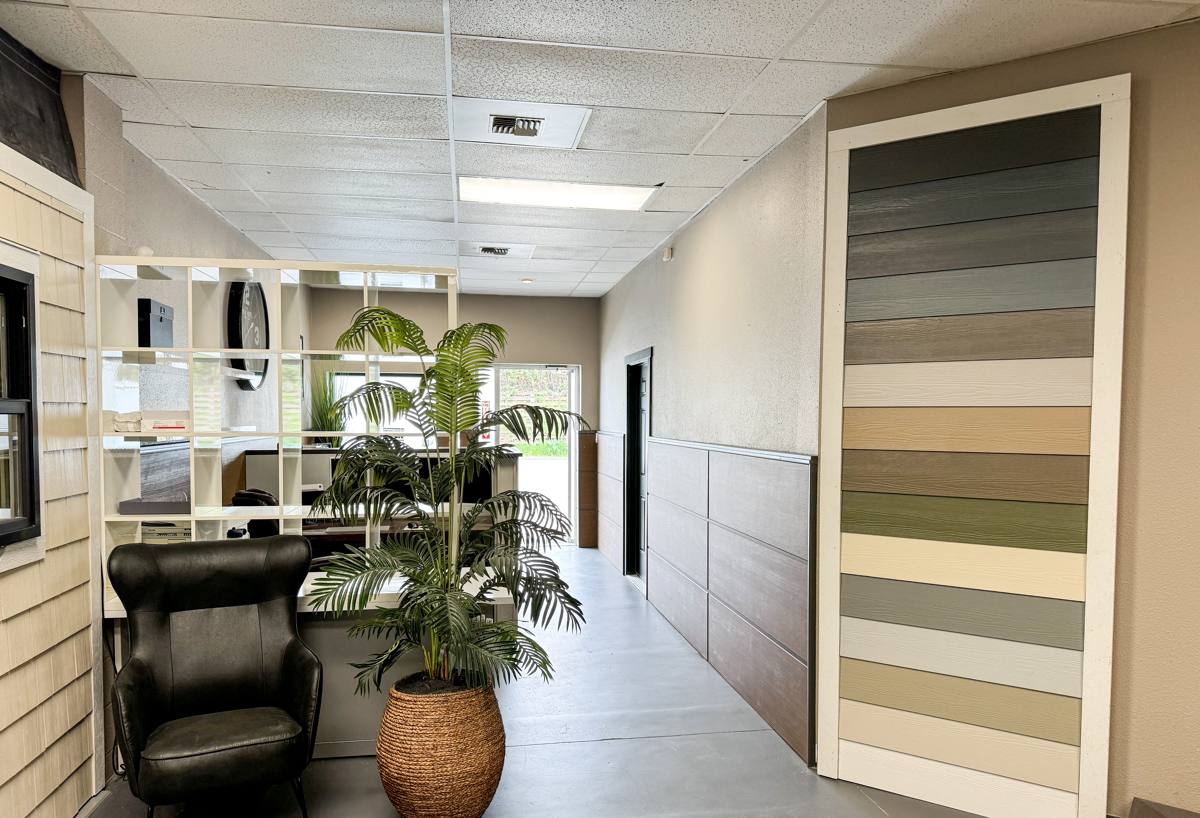
Every siding material behaves differently once you factor in the extra seams, joints, and moisture exposure that come with a vertical board and batten profile. This is where we're upfront about our standard: we install James Hardie fiber cement exclusively. We don't install vinyl, LP SmartSide, primed spruce, cedar, or other fiber cement brands like Cemplank or Allura, and board and batten applications are a big part of why.
What We Won't Install for Board & Batten
Wood board and batten — cedar or primed spruce — looks great on day one, but it's an engineered-wood or solid-wood product that moves with moisture and needs regular repainting and caulk maintenance to keep water out of the joints. In a shaded, damp neighborhood, that maintenance schedule gets tighter, not looser. Vinyl board and batten avoids rot but is a thin, flexible material with butt joints that can telegraph waviness over time and offers no real fire resistance. We won't put either on a home when a more stable, purpose-built option exists.
| Material | Moisture Behavior | Moss/Mildew Resistance | Maintenance | Fire Rating |
|---|---|---|---|---|
| James Hardie fiber cement | Dimensionally stable, doesn't swell or rot | Dense, non-organic surface resists growth | Occasional rinse; factory finish holds color | Non-combustible |
| Cedar / primed spruce | Absorbs moisture, prone to cupping and swelling | Organic material feeds growth if damp | Repaint/reseal every few years | Combustible |
| Vinyl | Doesn't rot, but flexes and can warp with heat | Surface growth still occurs in shaded areas | Low, but limited repair options if damaged | Combustible, can melt/deform |
| LP SmartSide (engineered wood) | Resists moisture better than solid wood, but is still wood-based | Moderate; edge sealing is critical | Regular caulk/paint upkeep at seams | Combustible |
Getting Board & Batten Right: What Correct Installation Involves
James Hardie doesn't manufacture individual solid "boards" for this look — the board and batten profile is built using HardiePanel vertical siding as the base layer, with HardieTrim boards installed over the panel seams as battens. The result reads as true board and batten from the street, but it's a single-material, engineered system rather than a stack of separate boards, which is part of why it holds its lines so well over time.
Water-Resistive Barrier and Flashing
Everything starts underneath the siding. A continuous water-resistive barrier, correctly lapped and taped at every seam, has to go on before a single panel is installed. Window and door openings need proper head flashing so water is directed out and away from the wall, not down behind the trim. This step doesn't show up in the finished look of the house, but it's the single biggest factor in whether a board and batten installation holds up through a Whatcom County winter.
Batten Spacing and Fastening
Battens need consistent spacing for the look to read correctly, but spacing also affects drainage — panels need a way for any moisture that gets behind the surface to escape rather than pool. Fastener placement matters too: Hardie specifies exact nailing patterns and clearances from panel edges, and getting those wrong is one of the most common causes of cracking or fastener pop on fiber cement siding.
- Continuous water-resistive barrier installed and taped before any siding goes up
- Proper flashing at every window, door, and roof-to-wall transition
- HardiePanel installed to manufacturer clearance and fastening specifications
- HardieTrim battens spaced evenly and fastened independently of the panel below
- All cut edges factory- or field-sealed per Hardie's installation requirements
- Caulking only at specified joints — not used as a substitute for correct flashing
- Final inspection for consistent reveal, plumb lines, and clean trim transitions
Our Process for Silver Beach Homes
We start with an on-site assessment of the specific wall exposures on your home — which sides get the most driving rain, which stay shaded most of the day, and whether the existing siding or sheathing shows signs of past moisture problems. From there we scope the water-resistive barrier and flashing work needed, not just the visible siding. Installation follows Hardie's fastening and clearance specs exactly, with battens laid out to keep sightlines even across window and door openings. We walk the finished job with you before we call it done, and we go over the warranty coverage — both the Hardie product warranty and our own installation workmanship — so you know exactly what's covered and for how long.
Maintenance in a Moss-Prone Neighborhood
Fiber cement board and batten is low-maintenance, not no-maintenance. In a neighborhood with as much shade and moisture as Silver Beach, an annual soft rinse of the siding — especially on north-facing and tree-shaded walls — keeps moss from getting established in the first place. Keeping tree limbs and shrubs trimmed back from the siding improves airflow and sun exposure, which does more to prevent moss than any cleaning product. It's also worth a quick visual check each fall for any caulking that's cracked or pulled away at trim joints, since that's the one maintenance item that actually matters for keeping water out.
Why Hire a Crew That Already Works in Silver Beach
Board and batten installation quality comes down to details that don't show up until years later — how the flashing was done, whether the water-resistive barrier was actually continuous, whether battens were fastened independently or just nailed through the panel below. A crew that already works this specific area knows which wall exposures in Silver Beach take the worst weather, understands Bellingham's permitting and inspection process, and isn't learning the local microclimate on your project. That local track record is worth more than a low bid from a crew unfamiliar with how homes in this part of Whatcom County actually perform over time.
Cost Factors for Board & Batten in This Area
Board and batten typically costs more per square foot than standard lap siding, mainly because of the added trim material and labor for the battens themselves. Beyond that baseline, a few factors tend to move the price on Silver Beach homes specifically:
| Factor | Why It Affects Cost |
|---|---|
| Existing siding removal | Tear-off and disposal of old wood or vinyl siding adds labor before new siding can start |
| Wall exposure and access | Steep lots, retaining walls, or limited equipment access near the lake and hillside properties can add setup time |
| Trim and batten complexity | More corners, window returns, and architectural detail mean more cut battens and more labor |
| Underlying sheathing condition | Any rot or moisture damage found during tear-off needs repair before new siding goes on |
| Color and finish selection | Factory ColorPlus finishes vs. field-painted trim can shift material cost |
We give exact numbers only after seeing the specific home, but we're happy to walk through general ranges and what drives them during a site visit.
If you're weighing board and batten for a Silver Beach home, we're glad to come take a look, walk the exterior with you, and give you a straight, no-pressure estimate — just fill out the form below to get started.