 Bellingham
 Why South Hill Roofs Wear Differently
South Hill sits close enough to the water and high enough in elevation that its roofs take a specific combination of abuse: salt-laced air drifting up from Bellingham Bay, wind-driven rain that gets pushed sideways into laps and flashing instead of just falling straight down, and a wet season that runs long enough for moss and moisture to do real damage before anyone notices. None of that is dramatic on its own. It's the accumulation that causes problems — a roof that would hold up fine in a drier inland climate starts failing years earlier here because it never gets a real chance to dry out.
We're not describing a hypothetical. This is the pattern we see call after call in this part of Whatcom County: a roof that looks fine from the ground, but has soft spots, rusted fasteners, or moss-packed valleys once you actually get up there. Roof repair here isn't just patching a leak — it's understanding why that leak happened in a climate that doesn't give a roof any downtime.
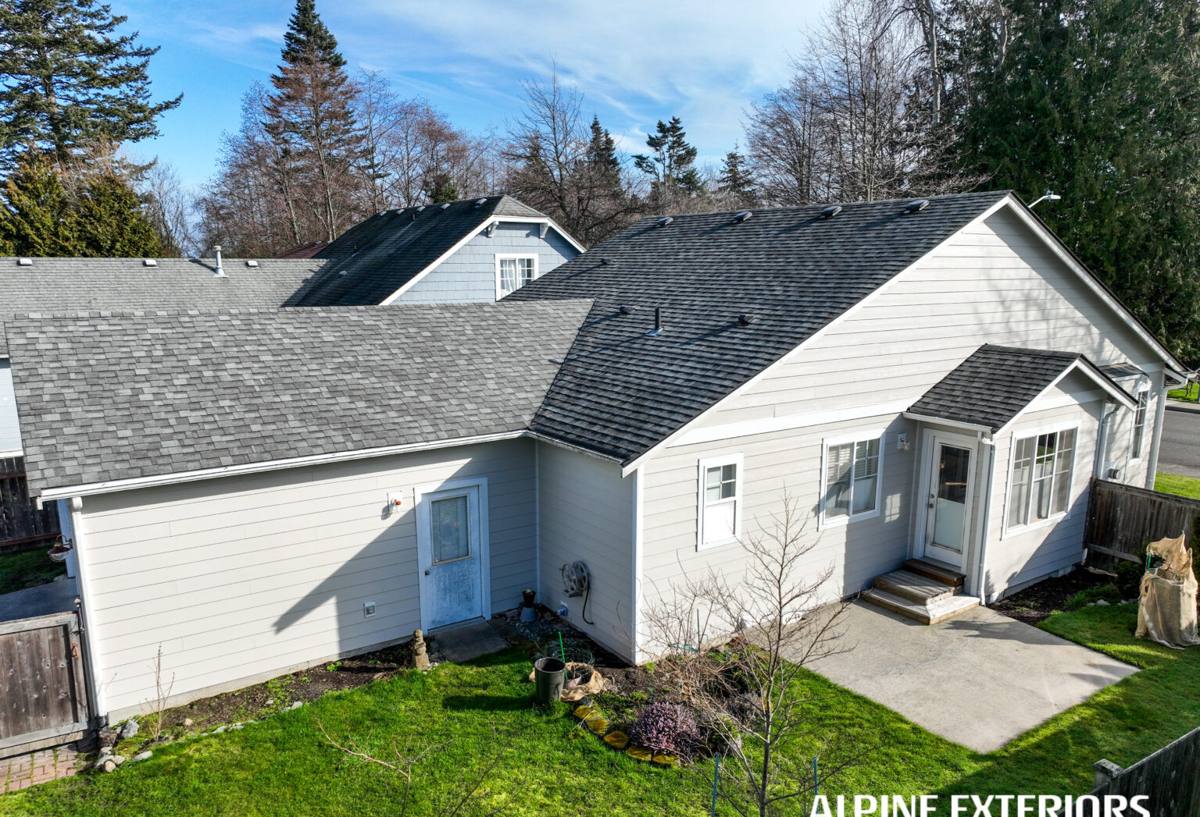
What Salt Air, Driving Rain, and Moss Actually Do
Salt Air
Salt-laden moisture speeds up corrosion on anything metal — nail heads, flashing, gutter fasteners, even the exposed edges of metal roofing. A fastener that would last decades inland can start weeping rust stains and losing its grip years sooner this close to the water. Once a fastener backs out or rusts through, the material around it loses its seal, and that's exactly where leaks start.
Driving Rain
Wind off the water doesn't just drop rain straight down — it pushes it sideways and up under shingle laps, around chimney flashing, and into any gap that a calmer climate could get away with ignoring. Roofs here need every transition — valleys, sidewalls, chimneys, skylights — sealed and flashed like wind-driven rain is the normal case, because on South Hill, it is.
Moss Season
Bellingham's wet season stretches long enough that moss doesn't just grow on a roof — it colonizes it. Moss holds moisture against the roofing material for weeks at a time, lifts shingle edges as it grows, and works its way into any granule loss or gap it can find. A roof that's shaded by trees or faces north often has moss well before the homeowner notices any performance issue — by the time there's a stain on the ceiling, the moss has usually been doing damage for a season or two already.
Signs a South Hill Roof Needs Repair Now
Most roof repairs get more expensive the longer they wait, because water finds the path of least resistance and that path usually leads to sheathing, insulation, or framing. Here's what we tell South Hill homeowners to watch for between inspections:
- Dark streaks or green/black growth concentrated in valleys, north-facing slopes, or under overhanging trees
- Granules collecting in gutters or at downspout outlets — a sign the shingle surface is wearing thin
- Curling, cupping, or lifted shingle edges, especially where moss has been sitting
- Rust streaking below metal flashing, vents, or exposed fasteners
- Soft or spongy decking felt underfoot near valleys or roof-wall intersections (do not walk a roof yourself to check this — call us)
- Daylight visible through the attic roof deck, or damp insulation below a specific spot
- Ceiling stains that appear or spread after a windy rainstorm rather than a steady one — a classic sign of wind-driven water intrusion, not a simple leak
What a Correct Repair Actually Involves
Diagnosis Before Patching
The most common mistake in roof repair isn't bad materials — it's treating the visible symptom instead of the source. Water travels. A stain on a bedroom ceiling can trace back to a flashing failure three feet away, or a valley leak two roof planes over. We trace the actual path of the water before we open anything up, because patching the wrong spot means the homeowner pays twice.
Flashing and Transitions
Given how much of our repair calls trace back to wind-driven rain finding a gap, flashing work gets priority. That means re-bedding or replacing step flashing at sidewalls, resealing chimney counter-flashing, and checking that valley metal (or woven shingle valleys) haven't been compromised by moss or granule loss. Caulk is a backup, not a repair strategy — proper flashing geometry is what actually keeps water out.
Decking and Underlayment
If water has been getting past the surface for a while, the decking underneath may be soft, delaminated, or rotted. We don't cover over compromised decking — replacing bad sheathing sections and installing proper underlayment (with ice-and-water shield at vulnerable transitions) is what makes the surface repair actually last, rather than looking fine for a season and failing again.
Matching the Existing Roof
A repair should blend in, not stand out as a visibly different patch. That means sourcing shingles or metal that match the existing color and profile as closely as possible, and understanding that some color matching will always be imperfect once a roof has weathered for several years — we'll tell you honestly what to expect before starting, not after.
Repair vs. Replace: How We Help You Decide
Not every roof problem calls for a full replacement, and not every leak can be permanently fixed with a patch. Here's the honest breakdown of what tips the decision one way or the other:
| Factor | Leans Toward Repair | Leans Toward Replacement |
|---|---|---|
| Age of roofing material | Under 12–15 years, isolated wear | Near or past its expected lifespan overall |
| Extent of damage | Localized to one area, valley, or penetration | Widespread granule loss, multiple failure points |
| Decking condition | Solid, dry decking under the affected area | Soft or rotted decking in several locations |
| Moss/algae extent | Treatable, hasn't lifted shingles broadly | Heavy colonization across large roof sections |
| History of repairs | First or second repair on this roof | Recurring leaks in different spots each season |
We'll always tell you if a repair is the honest answer, even when a replacement would be the bigger job. A roof that's fundamentally sound doesn't need to be torn off — but we'll also be direct if we think a repair is just delaying a replacement you're going to need anyway.
Our Process for South Hill Repair Calls
- Initial assessment: We look at the roof from the ground and, when safe, walk it directly — checking flashing, valleys, penetrations, and any areas prone to moss or standing water.
- Interior check: If there's an active leak, we check the attic or ceiling from the inside to trace the actual water path, not just the visible stain location.
- Written scope and estimate: You get a clear explanation of what's failing, why, and what it takes to fix it correctly — including whether we think repair or replacement is the better long-term call.
- The repair itself: Removal of compromised material, decking repair where needed, correct flashing and underlayment installation, and matched surface material.
- Final check: We confirm the fix from both the roof surface and, where relevant, the attic side, and clean up moss debris and old material before we leave.
Moss and Algae: Treatment That Doesn't Damage the Roof
Pressure washing a mossy roof is one of the fastest ways to strip granules and shorten a shingle roof's remaining life — we don't do it, and we'd advise against hiring anyone who suggests it as a standard cleaning method. Correct moss removal is a gentler process: manual removal of heavy growth, a treatment application appropriate to the roofing material, and — where it makes sense — zinc or copper strips near the ridge that let rainwater carry moss-inhibiting minerals down the roof plane over time. None of this is a one-time fix in a climate like ours; it's an ongoing maintenance rhythm, and we'll tell you honestly how often your specific roof, sun exposure, and tree cover will need attention.
Why a Crew That Already Works South Hill Matters
Roofing crews that mainly work drier, inland climates sometimes under-flash transitions or skip ice-and-water shield in spots that don't need it where they're used to working. On South Hill, those shortcuts show up as leaks within a season or two, because the wind-driven rain and long wet stretch here don't forgive gaps that would go unnoticed elsewhere. A crew that already repairs roofs in this specific pocket of Whatcom County knows which slopes catch the worst of the weather, which roof styles tend to trap moss, and which flashing details actually hold up here — not in general, but on this kind of roof in this kind of weather.
Keeping a Repair From Becoming a Recurring Job
A good repair should be the end of a problem, not the start of a maintenance relationship built on repeat leaks. Between service visits, a few habits go a long way toward protecting the work:
- Keep gutters and downspouts clear so water isn't backing up under the roof edge, especially heading into the wet season
- Trim back tree limbs that shade sections of roof and encourage moss growth
- Have valleys and flashing points visually checked after any major windstorm, not just once a year
- Address small moss patches early, before they spread and lift shingle edges
- Don't ignore a small ceiling stain waiting for it to "dry out" — get the source checked
If you're dealing with a leak, visible moss, or just want an honest opinion on a South Hill roof's condition before it becomes a bigger problem, we're glad to take a look. The estimate is free, there's no pressure to move forward, and you'll get a straight answer about whether it's a repair, a bigger fix, or nothing urgent at all — just fill out the form below.