 Bellingham
 Siding Repair in South Hill: What This Neighborhood's Homes Are Up Against
South Hill is one of Bellingham's older, established hillside neighborhoods, and that combination of age and elevation shapes what siding repair actually looks like here. A lot of the housing stock predates current building practices around house wrap, flashing, and moisture management, which means repairs on South Hill homes often turn up more than what's visible from the curb. At the same time, the hill's elevation and exposure mean these homes take on wind-driven rain and salt-laden air more directly than a sheltered lot lower in the city would.
Add in Whatcom County's long moss season and you get a specific, cumulative set of pressures — salt air, driving rain, and months of damp, shaded conditions — that don't cause dramatic failures overnight but do steadily wear down siding, trim, and fasteners over years. We work on siding repairs throughout South Hill regularly, and the approach below reflects what we actually see on this hill, not a generic repair checklist borrowed from a drier or more sheltered part of the region.
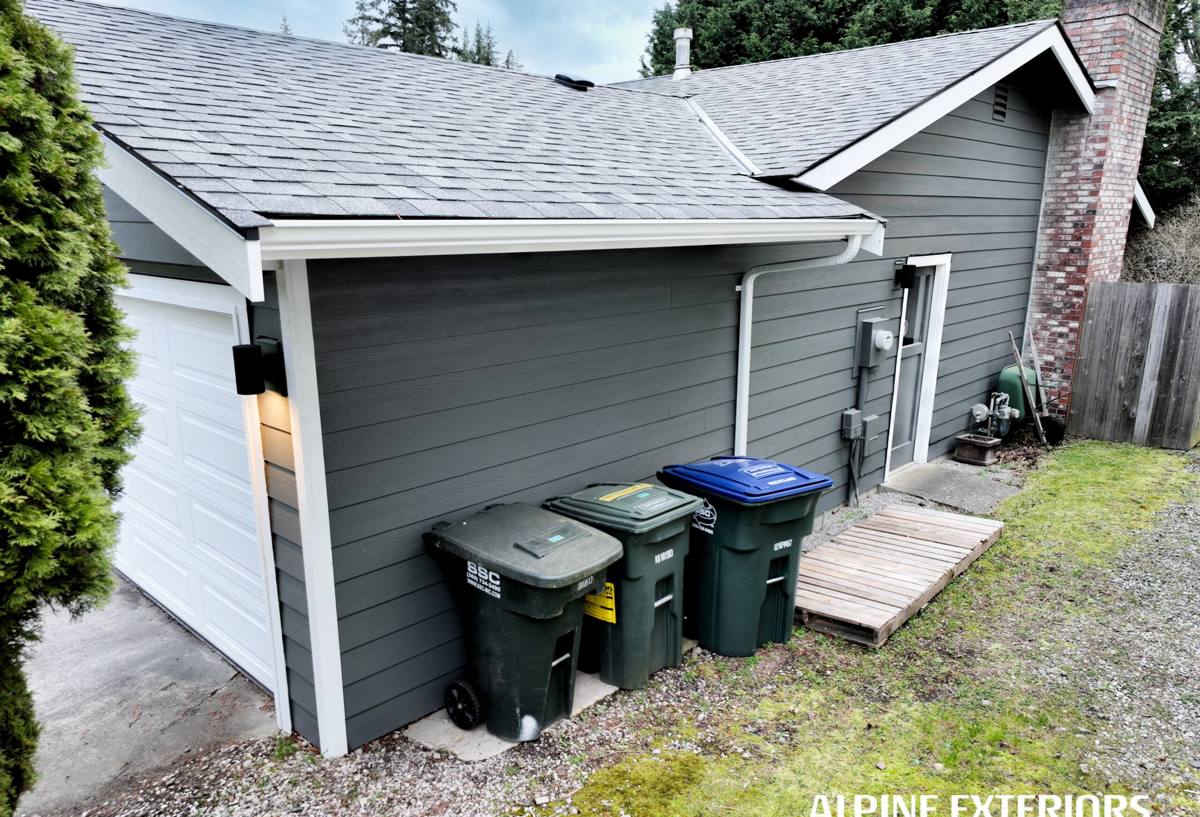
How Salt Air, Driving Rain, and Moss Show Up as Repair Problems
Salt Air and Fastener or Finish Failure
Homes with any real exposure toward the water pick up salt-laden air that accelerates corrosion in exposed nail heads, hardware, and any metal flashing that isn't fully protected. On older siding, that often shows up first as rust streaking below fasteners or a finish that's chalking and fading faster than it should. It's rarely dramatic — it's a slow wearing-down that eventually needs attention at the fastener and finish level, not just a fresh coat of paint.
Driving Rain and a Hillside Wind Profile
Elevation changes how a house takes weather. Wind-driven rain on an exposed hillside wall gets pushed into laps, seams, and fastener points harder than it would on a sheltered, low-lying lot, which means flashing and clearance details that might get away with being marginal elsewhere tend to fail sooner up here. When we're called out for a repair on South Hill, a wind-exposed wall orientation is very often part of why the damage happened where it did.
A Long Moss Season and Sustained Dampness
South Hill's older tree canopy and shaded lots are part of what makes the neighborhood attractive, but shade also means walls that stay damp longer through fall, winter, and much of spring. That's exactly the condition moss needs, and on wood-based or wood-look siding, prolonged dampness isn't just cosmetic green staining — it's moisture sitting against a moisture-absorbent material long enough to soften and eventually rot at seams and edges.
Common Siding Repair Issues We Find on South Hill Homes
Every property is different, but a handful of issues come up often enough on this hill that they're worth knowing before you're staring at one yourself:
- Soft or spongy siding near ground level, window sills, or under downspouts, usually a sign of trapped moisture rather than a surface problem
- Cupping, warping, or separating seams on older wood-based or engineered wood siding
- Persistent moss or dark staining on shaded or north-facing walls that keeps returning after cleaning
- Paint or finish that's failing faster than a normal repaint cycle, especially on wind-exposed elevations
- Gaps or cracked caulk around window and door trim that let wind-driven rain track behind the siding
- Rust streaking below fasteners or visible corrosion on exposed hardware
- Sections of siding that were patched or replaced before without matching flashing detail underneath, which tends to fail again in the same spot
Repair or Replace? How That Decision Actually Gets Made
Not every problem on an older South Hill home means the whole wall needs to come off, and not every soft spot can be patched and called done. The honest answer depends on how far the damage has spread and what's underneath it.
| What We Find | Repair Is Usually Enough | Replacement Often Makes More Sense |
|---|---|---|
| Isolated soft or damaged boards | Yes, if the surrounding sheathing and house wrap are still sound | Not necessarily, unless the damage has already spread |
| Cosmetic moss staining or fading | Yes — cleaning, spot repair, and repainting usually resolve it | Rarely on its own |
| Widespread cupping or warping across a wall | Sometimes, if it's contained to one material run | Often, especially on older wood-based siding nearing the end of its life |
| Rot found at sheathing or framing under the siding | Only if the affected area is small and clearly bounded | Usually — patching over compromised sheathing doesn't fix the cause |
| Recurring failure at the same spot after a prior repair | No — a repeat failure usually means the underlying flashing detail was never corrected | Yes, worth addressing properly rather than patching again |
We'll walk a property and give a straight read on which category it falls into. Patching a symptom without correcting what caused it just means paying for the same repair again in a few years, and we'd rather tell a homeowner that upfront than let it become a pattern.
What a Correct Siding Repair Actually Involves
A repair that holds up does more than replace the damaged board. It means pulling back enough surrounding material to see what's actually happening underneath — checking the house wrap or weather-resistive barrier for gaps, confirming flashing at nearby windows and penetrations is directing water out rather than trapping it, and making sure the replacement material is fastened and cleared correctly for this climate, not just fitted into the existing hole.
On James Hardie fiber cement specifically, that means matching board profile and reveal, using the correct fastener type and spacing, and re-lapping house wrap properly at the repair boundary so the fix doesn't create a new seam for wind-driven rain to exploit. Skipping any of that step turns a repair into a temporary cover-up rather than a real fix.
Matching Existing Siding on Older Homes
A lot of South Hill homes have siding that's been through at least one prior renovation, which can make an exact match harder to find, especially on discontinued profiles or older paint-grade material. We'll be upfront if an exact match isn't available and talk through the realistic options — a close match on a less visible elevation, or, if the damage is widespread enough, whether a full wall or full house replacement in James Hardie fiber cement is the more sensible long-term answer.
Why We Repair — and Install — Only James Hardie Fiber Cement
We don't install or repair with vinyl, LP SmartSide, primed spruce, cedar, or other fiber cement brands. That's a professional standard, not a limitation on what we know how to work with. In a climate that puts this much salt air, wind-driven rain, and sustained shade-driven dampness on a wall, the products that tend to need the most repeat repair work share a common thread: they either absorb moisture directly, rely on a coating that has to be maintained indefinitely, or move enough with temperature and humidity swings that seams eventually work themselves loose.
James Hardie fiber cement doesn't share that weakness. It's non-combustible, it doesn't swell or feed moss the way wood-based siding can, and its ColorPlus factory finish is baked on and warrantied against the fading and chalking that comes from years of moisture and UV exposure. When a repair calls for new material, this is what we use — and when a home's existing siding has reached the point where patch repairs are just delaying the inevitable, it's what we recommend replacing it with.
Our Repair Process, Start to Finish
- On-site inspection. We look at the damaged area and probe the surrounding siding and trim, since visible damage is rarely the full extent of the problem.
- Diagnosis, explained plainly. We tell you what we found, what caused it, and whether it's isolated or a sign of a broader issue — no vague answers.
- Honest scope and estimate. You get a clear picture of what repair actually involves, what it costs, and what to expect if we find more once we open the wall up.
- Correct repair, not a patch. We address flashing, house wrap, and fastening at the repair site, not just the visible board.
- Cleanup and a final walkthrough. We show you the finished work and explain anything worth keeping an eye on going forward.
Maintenance That Extends a Repair's Life on South Hill
- Rinse siding periodically, especially on shaded or north-facing walls where moss and grime build up fastest
- Trim back trees and shrubs that keep a wall shaded and damp longer than it needs to be
- Check caulk and trim around windows and doors once a year and re-seal before gaps let water track behind the siding
- Look for early rust streaking below fasteners, since it's easier and cheaper to address before it spreads
- Address soft spots or bubbling paint right away rather than waiting for the next full inspection
- Keep gutters and downspouts clear so overflow isn't running down a wall it wasn't designed to handle
Why Hiring a Crew That Already Works South Hill Matters
South Hill's mix of older construction, hillside wind exposure, and heavy shade means a repair here benefits from someone who's already seen how those factors interact on this specific hill — which walls take the worst of the driving rain, where moss tends to establish first, and how older homes in this neighborhood were typically built before current flashing and moisture-barrier standards existed. A crew learning that on your project, rather than bringing it in already, is more likely to miss something that only shows up after the repair is done.
Working in South Hill and the surrounding Bellingham area regularly also means a more accurate estimate the first time — because the inspection accounts for how this hill actually behaves, not a generic checklist applied the same way everywhere in Whatcom County.
If you're dealing with a specific problem area on your South Hill home, or just want an honest look at how your siding is holding up, we're glad to take a look. Reach out using the form below to schedule a free, no-pressure estimate.