 Bellingham
 Storm Damage in Barkley: What Bellingham Roofs Are Actually Up Against
Barkley sits close enough to Bellingham Bay that roofs here take a different kind of beating than roofs twenty miles inland. It's not usually one dramatic event that causes the damage we get called out for — it's the combination. A windstorm loosens a ridge cap in November, driving rain finds the gap over the next few weeks, and by the time a homeowner notices a stain on the ceiling, water has already been working its way into the sheathing for a while. Storm damage repair in this neighborhood is as much about catching what wind and rain started as it is about the storm itself.
We work on roofs across Bellingham and Whatcom County regularly, and Barkley's mix of homes — many with mature tree cover, several decades of roofing on the older streets, newer construction on the infill lots — means no two storm calls look the same. What stays consistent is the climate they're all fighting: salt-tinged air off the bay, wind that comes in sideways off the water, and a moss season that runs longer here than almost anywhere else in the state.
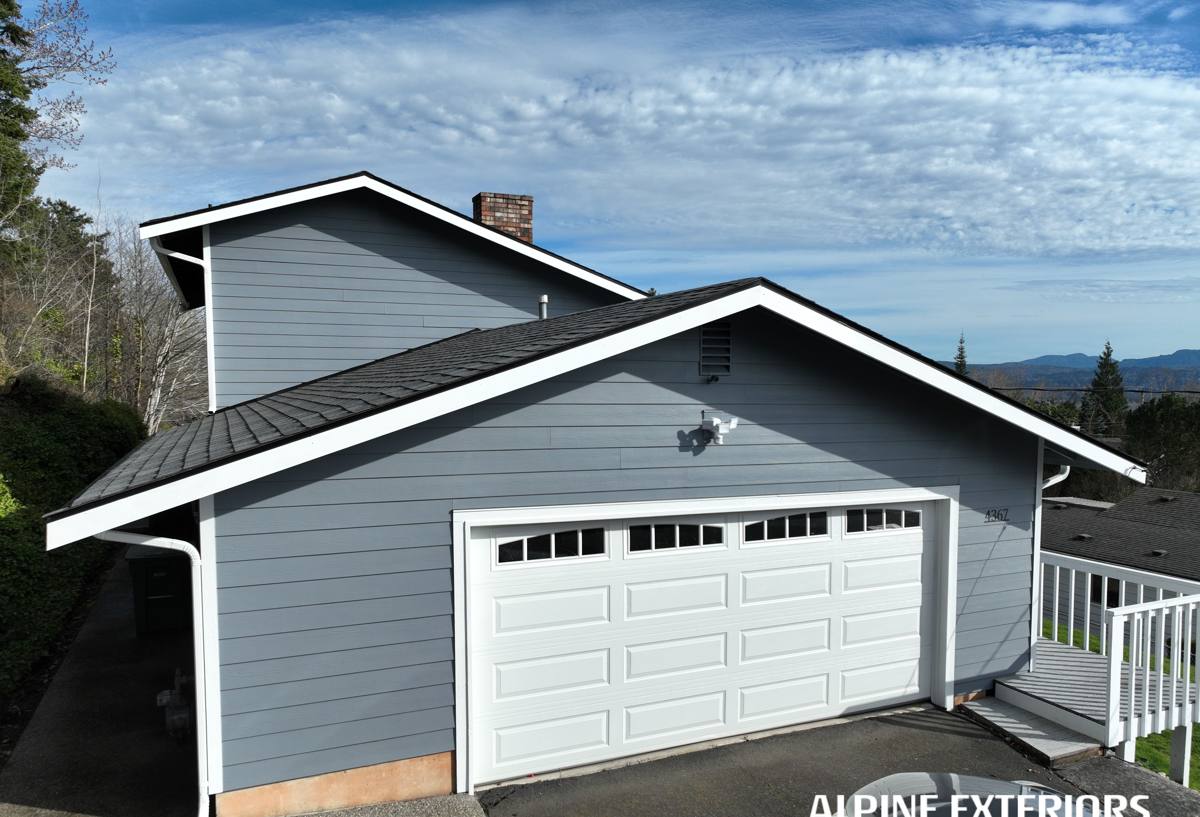
Why Local Weather Hits Roofs Harder Than It Looks
Driving Rain, Not Just Rain
Bellingham doesn't get the heaviest annual rainfall in the region, but a lot of it arrives at an angle. Wind-driven rain gets pushed sideways under shingle tabs, around flashing edges, and into vents that would stay dry in a straight-down downpour. A roof that's fine in light rain can leak in a storm simply because the water is being pushed uphill into laps and seams that were never designed to shed rain in reverse.
Salt Air and Metal Fatigue
Proximity to the water means airborne salt settles on exposed metal — flashing, fasteners, gutter hardware — and accelerates corrosion over time. A fastener that's rusted through doesn't hold a shingle down the way it should, and that's often the first thing to give way in a wind event. It's a slow process, but it's a real one, and it's specific to homes this close to the bay.
Moss: The Long Game
Whatcom County's damp, mild winters give moss a long growing season. Moss holds moisture against the roof surface, works its way under shingle edges, and lifts tabs just enough for wind and rain to get underneath during the next storm. A lot of what looks like sudden storm damage is really moss damage that a storm finally exposed.
Signs a Barkley Homeowner Shouldn't Ignore After a Storm
Most storm damage isn't obvious from the ground. Missing shingles are easy to spot; loosened flashing, lifted tabs, and small punctures from wind-blown debris are not. After any significant wind or rain event, it's worth checking for these:
- Granules collecting in gutters or at downspout outlets — a sign shingles took an impact and are shedding their protective surface
- Soft spots or discoloration on interior ceilings, especially near chimneys, skylights, or where roof planes meet
- Shingles that look curled, cracked, or slightly out of alignment compared to the rest of the roof
- Flashing around vents, chimneys, or valleys that looks bent, lifted, or separated from the surface
- Moss buildup that's thicker on one section than the rest — often where water is already pooling or draining slowly
- Gutters pulling away from the fascia, which can mean wind stress on the whole roofline, not just the gutter
None of these guarantee a major problem. But any one of them is a reason to get a roof looked at before the next storm rolls through, not after.
What an Honest Storm Damage Repair Actually Involves
Assessment Before Anything Else
We start on the roof, not on a quote. That means checking the full roof plane around the reported damage, not just the spot the homeowner can see — wind and water damage rarely stay contained to one shingle. We also check the attic or interior ceiling where accessible, since staining patterns tell us a lot about how long water has been getting in and where it's traveling before it shows up inside.
Matching the Repair to the Damage
Not every storm-damaged roof needs a full section torn off. A localized wind event that lifted a run of shingles along one edge can often be repaired with matching shingles and correctly re-lapped flashing. Damage that's been sitting under moss for a season or two, with sheathing that's started to soften, needs more — sometimes a full tear-off of that section down to the deck. We tell homeowners which situation they're in and why, rather than defaulting to the biggest job.
Flashing and Underlayment Get the Same Attention as Shingles
A lot of storm leaks aren't shingle failures at all — they're flashing failures. Step flashing at wall intersections, valley metal, and vent boots take the worst of driving rain and are the first things we check and, where needed, replace. On any repair that opens up the roof deck, we use self-adhering underlayment in valleys and vulnerable areas, which matters more here than in drier climates because it's the backup layer when wind pushes water past the shingle surface.
Repair or Replace: How We Help You Decide
| Factor | Points Toward Repair | Points Toward Replacement |
|---|---|---|
| Age of roof | Under 10–12 years, otherwise sound | Nearing or past expected lifespan |
| Extent of damage | Localized to one section or plane | Spread across multiple areas or planes |
| Deck condition | Sheathing solid, no soft spots | Soft, delaminated, or water-stained deck |
| Moss/algae history | Minor, surface-level growth | Long-term growth with shingle degradation underneath |
| Shingle availability | Matching shingles still obtainable | Discontinued or badly weathered mismatch |
| Insurance scope | Adjuster approves targeted repair | Adjuster approves full slope or roof replacement |
We lay this out plainly rather than pushing toward whichever option is more profitable for us. Plenty of storm calls genuinely are repairs — a full replacement isn't automatically the "safer" recommendation, it's just sometimes the necessary one.
How We Handle a Storm Repair Call in Barkley
1. Fast, No-Pressure Inspection
We get eyes on the roof and document what we find — photos of the damage, the surrounding areas, and anything relevant for an insurance claim if you're pursuing one.
2. Clear Scope, Clear Reasoning
You get a written explanation of what's damaged, what we recommend, and why — including if we think a smaller repair is sufficient instead of a bigger job.
3. Insurance Documentation, If Needed
If you're filing a storm damage claim, we provide the documentation adjusters typically ask for — photos, damage description, and repair scope — and can walk the roof with an adjuster if that's useful. We don't handle the claim itself; that's between you and your insurer, but we make sure the roof-side facts are clear.
4. The Repair Itself
Matching materials where possible, correct flashing and underlayment work where the deck is opened, and a finished result that blends with the existing roof rather than standing out as an obvious patch.
5. Cleanup and Follow-Up
Job site cleared of debris and old materials, and a straightforward answer if you have questions afterward — no disappearing once the invoice is paid.
Why a Crew That Already Works Barkley Matters
A roof in Barkley is dealing with a specific combination of exposure — bay-driven wind and rain on one side, tree cover and moss on the other — that's different from a roof further inland in Whatcom County or on a more sheltered lot elsewhere in Bellingham. A crew that works this neighborhood regularly recognizes those patterns quickly: which roof orientations take the worst of the wind, which planes hold moss longest, where flashing tends to fail first on homes of a certain age. That familiarity shortens the diagnostic part of the job and reduces the chance of missing damage that isn't obvious on a first look.
It also means we're not learning the permitting and inspection expectations for the City of Bellingham on your job — we already know them. That keeps a repair moving instead of stalling on paperwork.
Reducing Storm Damage Risk Before the Next One Hits
Storm damage repair fixes what already happened. A few habits reduce how much damage the next storm causes:
- Keep gutters and downspouts clear so wind-driven rain has somewhere to go instead of backing up under roof edges
- Have moss treated and removed on a regular schedule rather than waiting until it's visibly thick
- Trim back branches that overhang the roof — they're a source of both debris impact and shade that keeps sections damp longer
- Get flashing and fastener condition checked every few years, especially on homes closer to the bay where salt air speeds up corrosion
- Address small leaks or lifted shingles as soon as they're noticed, before a storm turns a minor issue into a deck-level repair
If a recent storm has you wondering whether your roof took damage, or you've noticed a leak or missing shingles and aren't sure how serious it is, we're glad to take a look. The estimate is free, there's no pressure to act on it right away, and you'll get a straight answer about what's actually going on. Use the form below to get in touch.