 Bellingham
 Why Sunnyland Siding Wears Out Faster Than the Brochure Suggests
Sunnyland sits close enough to Bellingham Bay that salt-laden air is a daily fact of life for the siding on your home, not an occasional nuisance. Add in Whatcom County's long wet season, frequent driving rain off the Strait, and the shaded, tree-covered streets that keep moisture from drying off exterior walls quickly, and you have a climate that is genuinely hard on siding. Homes here don't fail because the materials were cheap or the crew was lazy. They fail because standard siding products and standard installation habits were never engineered for this specific mix of salt exposure, wind-driven rain, and moss season that can run from fall through spring.
Siding replacement in Sunnyland isn't just a cosmetic upgrade. It's an opportunity to correct water management mistakes that may have been baked into the original install, and to put a material on the house that's actually built for a marine climate rather than a national-average one.
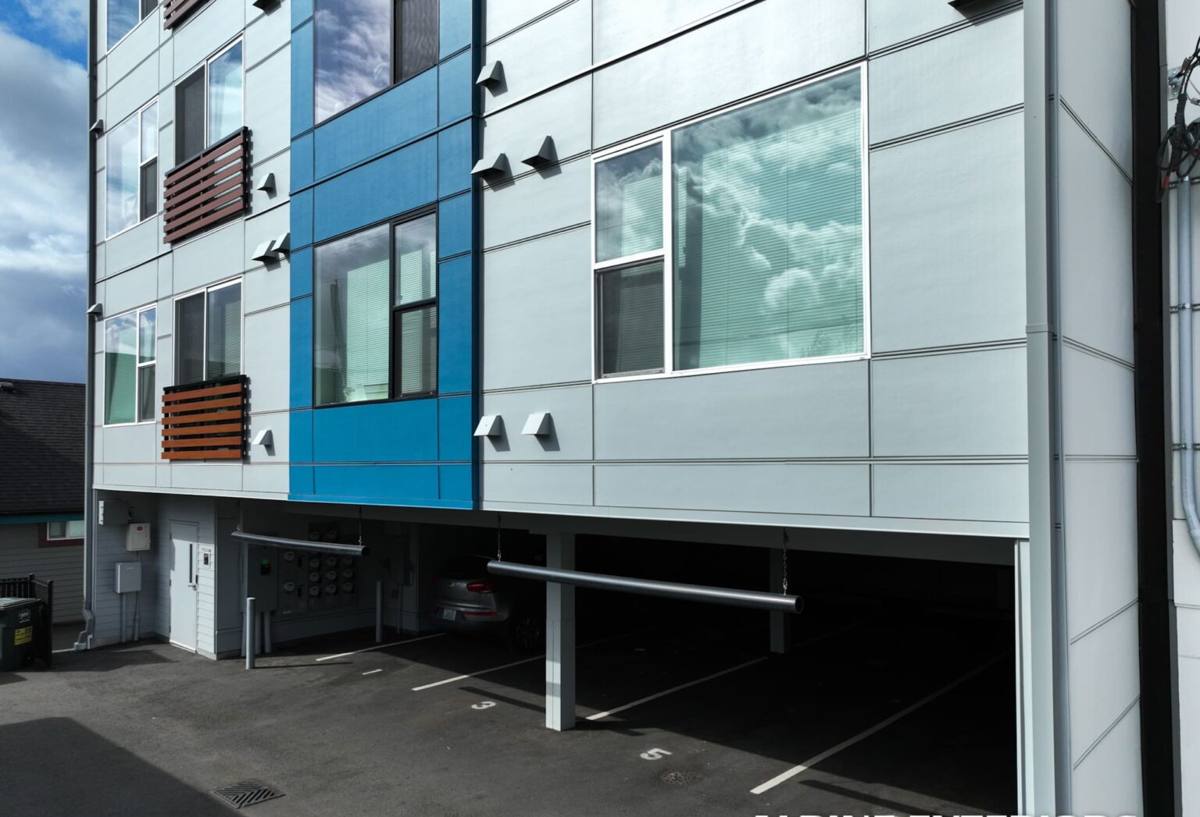
What Correct Siding Replacement Actually Involves
A siding replacement done right is mostly invisible once it's finished — the real work happens underneath the new panels, not on the surface. Anyone can staple new siding over old sheathing and make a house look decent for a photo. Whether it holds up through a Whatcom County winter is a different question entirely.
Inspecting What's Underneath
Full tear-off gives us a direct look at the sheathing, framing, and any window and door openings that have been hidden behind the old siding, sometimes for decades. In a damp climate like this one, that inspection matters. Rot, soft sheathing, and hidden mold are common findings once old siding comes off a Sunnyland home, especially on north-facing walls and anywhere tree cover keeps a section of the house from ever fully drying out. We flag and repair that damage before anything new goes on — covering it up only guarantees a repeat problem in a few years.
Flashing and Water Management Details
Most premature siding failures trace back to flashing, not the siding material itself. Window and door head flashing, kick-out flashing at roof-to-wall intersections, proper weather-resistant barrier overlap, and correctly shingled housewrap seams all matter more here than in drier parts of the country, because Whatcom County rain doesn't just fall — it drives sideways into walls during winter storms. We install flashing details specifically because this region's rain patterns punish shortcuts that would go unnoticed somewhere drier.
Why We Only Install James Hardie Fiber Cement
We install James Hardie fiber cement siding exclusively. We don't offer vinyl, LP SmartSide, Cemplank, Allura, primed spruce, or cedar, and that's a deliberate standard, not a lack of options. Each of those alternatives has real strengths, but each also carries a trade-off — moisture sensitivity, maintenance burden, or long-term appearance — that we're not willing to put our name behind on a Sunnyland home that has to survive salt air and a genuine moss season year after year.
Built for This Specific Climate
James Hardie's HZ5 product line is engineered for Pacific Northwest conditions specifically — the freeze-thaw cycles, moisture exposure, and coastal air that define our region. Fiber cement is non-combustible, doesn't swell or rot when it stays damp for extended stretches, and holds its shape and paint line far better than wood-based alternatives when it's wet more often than it's dry. The factory-applied ColorPlus finish is baked on under controlled conditions rather than field-painted, which means better adhesion and color retention against UV and salt air than a job-site paint job typically achieves.
The Warranty Backs It Up
James Hardie backs its siding with a strong, transferable limited warranty, which matters both while you own the home and if you sell it. A warranty is only as good as the product's real-world track record, and Hardie's is one of the more established ones in the fiber cement category — a big part of why we standardized on it rather than mixing product lines.
Signs Your Sunnyland Home May Need Siding Replacement
Some warning signs are obvious from the sidewalk. Others take a closer look, especially in shaded areas where moss and moisture hide problems longer than they would on a sun-exposed wall.
- Persistent moss or algae growth that returns within a season or two of cleaning
- Soft, spongy, or bubbling spots when you press on the siding
- Paint that's peeling, bubbling, or failing faster than it used to
- Visible warping, buckling, or gaps between siding boards
- Cracked or crumbling caulk lines around windows, doors, or trim
- A musty smell near exterior walls inside the home
- Rising heating bills that suggest the wall assembly is no longer performing
- Siding that's simply original to a much older home and has never been replaced
If more than one or two of these apply, it's worth having someone look before the damage spreads to the sheathing or framing behind it.
Our Process, Start to Finish
Estimate and Inspection
We walk the exterior, look for the signs above, and give you a straightforward assessment — including telling you if replacement isn't actually necessary yet and a repair would do. No pressure, no inflated urgency.
Prep and Tear-Off
Old siding comes off, the sheathing gets inspected, and any rot or moisture damage gets repaired and documented before we move forward. This is the stage where problems that were invisible for years finally get addressed properly.
Weather Barrier and Flashing
We install a correctly lapped weather-resistant barrier and flashing at every window, door, and roof intersection, sized and sequenced for the way water actually moves down a wall in a driving rain.
Installation to Manufacturer Spec
James Hardie siding is installed following the manufacturer's fastening, clearance, and gap specifications — not shortcuts that speed up the job but void the warranty or invite moisture intrusion later.
Final Walkthrough
We walk the finished job with you, point out the details, and answer questions before we consider it done.
What Siding Replacement Typically Costs
Every home is different, and the only accurate number comes from an in-person estimate. That said, several factors consistently move the price on Sunnyland projects, and it's worth understanding them before you start comparing quotes.
| Cost Factor | Why It Matters in Sunnyland |
|---|---|
| Extent of hidden sheathing damage | Damp, shaded lots often reveal rot behind old siding that must be repaired before installation |
| Home size and wall complexity | More corners, gables, and trim details mean more labor and material waste |
| Siding profile and accessories | Lap width, trim boards, and soffit work all affect material cost |
| Access and site conditions | Mature trees, tight lots, or slopes common to older Sunnyland streets can affect staging and labor time |
| Flashing and water management upgrades | Correcting old or missing flashing adds labor but prevents repeat failures |
| Paint versus factory ColorPlus finish | ColorPlus reduces long-term maintenance and repainting costs |
Be cautious of any quote that's dramatically lower than the others — it usually means shortcuts somewhere in the details above, and those are exactly the details that determine whether siding lasts 10 years or 40 in this climate.
Why Hiring a Crew That Already Works in Sunnyland Matters
Siding contractors who work across a wide range of climates tend to install the same way everywhere. A crew that regularly works Sunnyland and the surrounding Bellingham neighborhoods knows which walls take the worst of the driving rain, where moss comes back fastest, and how much clearance and detailing this climate actually demands versus what a generic install manual assumes. That local pattern recognition shows up in fewer callbacks and siding that's still performing well a decade or two later.
Local experience also means fewer surprises with permitting, inspections, and the practical realities of working on Whatcom County lots — mature trees, drainage patterns, and the kind of weather windows you can actually count on for a multi-day exterior job.
Maintenance After Replacement
Fiber cement is genuinely low-maintenance compared to wood, but "low-maintenance" doesn't mean "no maintenance," especially in a moss-prone climate. A yearly rinse to clear moss and organic buildup, prompt attention to any caulk lines that crack, and keeping gutters clear so water isn't sheeting down the wall will keep new siding looking and performing the way it should for decades.
If your Sunnyland home is showing any of the signs above, or you'd just like an honest opinion on where your siding stands, we're happy to take a look. Estimates are free, there's no pressure to move forward, and we'll tell you straight whether replacement makes sense yet or not.